You Can't Stop Deepfakes. You Can Prove What's Real.
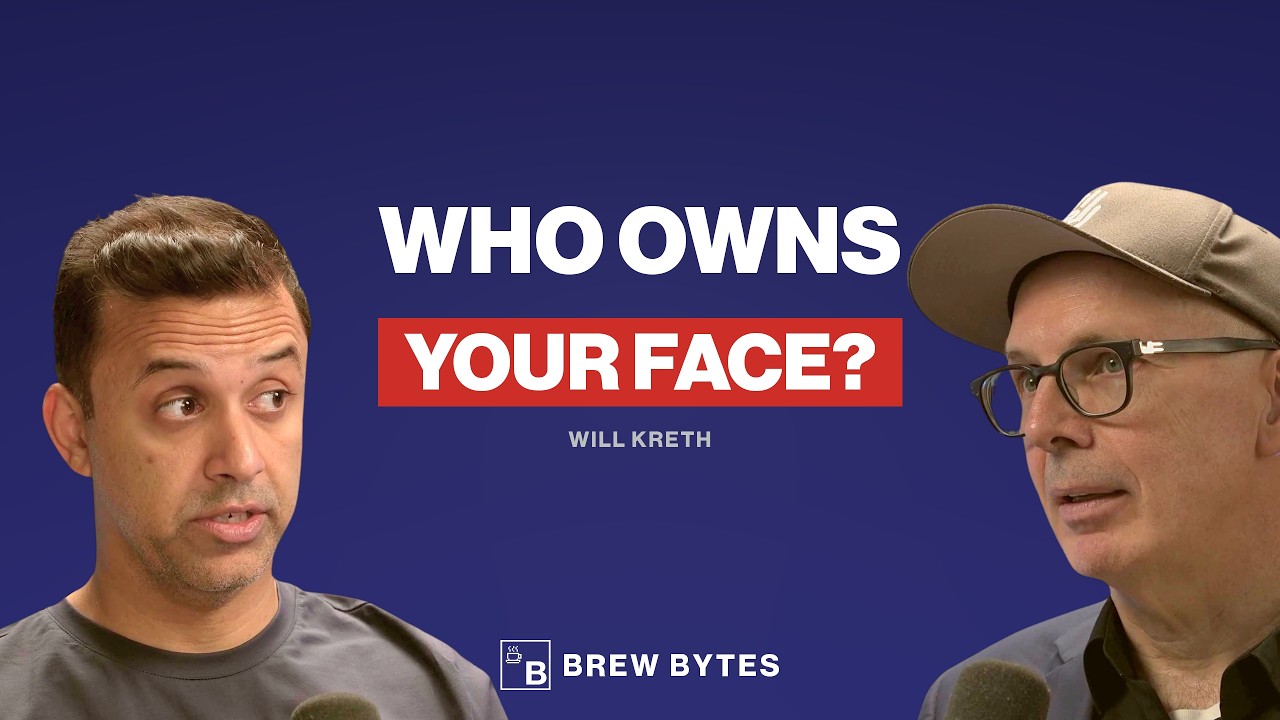
Will Kreth, founder of HAND, on why detection alone won't stop deepfakes, and how consent and a universal talent ID can prove who is real in Hollywood.
In this episode.
Will Kreth used to run the registry that gives every film and TV episode its own ID, and now he is building one for people. He explains why deepfake detection alone will never keep up, how consent law and estate licensing already govern voices and likenesses, and why a universal talent ID, numbers instead of names, could let actors, athletes and creators prove who is real and get paid when they are copied.
Guest: Will Kreth. Host: Nadeem Ibrahim.
Read the full transcript
Writer director producer Will Smith won an Emmy Award, and he's not the Will Smith who punched Chris Rock. I talked to a fashion model who showed me a deepfake that was made of her by a fashion magazine blog that she had worked for. It was a spitting image of her. You want numbers, not names, to positively identify someone. It doesn't mean that the dead shall rise and walk the earth again. Would you personally be comfortable watching something of someone who's passed away, like a Whitney Houston or something like an artist? Like. Because in your mind, they've passed. I've often seen Michael Jackson rock up another song. I don't know if I would be like, it's a different, utility. Satisfaction, I would say.
Media post wrote an article about Tom Hanks deep fakes selling diabetes cures on YouTube. Right? And, how do we want to live in a world like that where fraud is the cost of doing business? I don't think we want to live in a world like that. Well. First of all, welcome to Beauty Bytes. Thank you. Yeah, in New York City. And I'm so happy and so privileged that you were able to take the time out to come and have a great conversation.
It's great to see you again. Today we're going to be talking about a lot when it comes to deepfake ownership of rights, how AI is coming into it, how is affecting Hollywood, right. Yeah. And you've probably seen there's been a lot that goes on, and especially across social platforms. Deepfakes has become quite, you know, quite a big thing now. and I think it all then comes down to who owns a voice, who owns an AI, an image. An image.
Yeah, a likeness. And I think that's what we see a confluence of events with around the name, image and likeness licensing world evolving and changing quite rapidly, from professional sports to college athletics to Hollywood to musicians. you know, fully AI generated bands are now on Spotify. the claims around what's authentic and what's not, the kind of the chain of custody chain of provenance back to the people who creates whether it was AI created or whether it was done through cameras and recording equipment. All of that, I think, is going to get sorted out. And I think that's good because there's an effort, a movement, if you will, around trust and authenticity and trying to find ways to inject the elements of the connectivity back to the creators, the creator assertions.
Yeah. I mean, we're going to get into we're going to unpick a lot of this. and it affects everybody. You know, even if you just look at identity graphs of a, of individuals. It affects, you know, most people before we go into it though. if Hollywood had to make a biopic version of you tomorrow, who would you be and would you let AI actually generate? I'm quite curious to find out. Well, that's a great question. I would say sticking to the bones around what they call informed consent, which is the law in California. And that was went into effect in January around the notion that, digital replicas, a twin or a likeness of someone made, whether using, you know, photogrammetry or generative AI model or, what have you.
cannot be created without the consent of the individual. It is made from the high fidelity, the image of that individual or the voice of that individual cannot be cloned without their informed consent. And that brings out a world of opportunity for licensing and utilisation of especially talent. Who are the ones that deepfake the most? They're the ones. These high net worth individuals and sports and entertainments and fashion and elsewhere, who really are at risk for fraudulent appropriations of their identity, their soul, in a sense. And I talked to a fashion model in May of this year who showed me a deepfake that was made of her by a fashion magazine blog that she had worked for, was a derivative work of her identity.
It was a spitting image of her. and I've used that in my talks since that time about that, even just kind of casual assumptions that we can, without your consent, use, your likeness and then stick it in a new context is something that's right. Now it's kind of in it's in not in dispute. It's in the courts. Right. We're already seeing a lot of, post-mortem representations of identity. Right. So 11 labs, for instance, is a company that, their iconic voice collection they announced last year as of Judy Garland, James Dean, Sir Laurence Olivier, Burt Reynolds, celebrities from the past no longer with us, but their estates have, with their informed consent, licensed their, blood relatives of the estates, voice to be modelled and used for, you know, answering machine messages or you know, reading you a bedtime story and, you know, just you hear that with, you know, other apps and products have done that for, quite some time, and it should be up to the individual or their estate, as in the case with James Earl Jones, for instance, the all future Darth Vader's.
If from what we read in the media and the trades will be with the informed consent and the compensation to his estate, okay, right. So that his voice can, with folks at risk feature and other companies will become that forever. Based on his natural voice. But training an AI model to read those new lines in the future? Well, we'll definitely get into this in a minute because it's very, interesting that you say that. But I think for someone who's new, who's listening to this or watching this, it they'll be thinking, what is an identity graph and why does it matter to Hollywood?. I think that we live in a time where there's a lot of uncertainties, that we believe our eyes. We believe our ears are things, you know, whether it's, you know, we're not going to stop deepfakes cold. We can't stop spam text and spam emails and robocalls. Although we should find ways to reduce those things and hopefully, you know, make them less invasive because. Maybe help someone understand what is an identity graph. Identity graph.
Identity graph is yeah. You see that mapped out in social media platforms for years, whether it's LinkedIn or Facebook or Instagram, it's those elements around the connectivity between you and one, two, 3 to 6 degrees of separation. The Kevin Bacon story we've heard forever. an identity graph, like a knowledge graph of related facts and semantic linked data relationships is a graph of an individual and their connections.
Right. So a classic story is like what example would be your you and I are first degree connections on LinkedIn, but we have a lot of second and third degree connections in common, and that's fine. But I think we're also going to live in a world where reputation is going to become that much more important. And there are a few projects out there that are looking to find ways to use trusted, identity graphs to provide ways to verify, the, a referral or an individual based on their linked data relationships to others that are reputational in nature.
And how does that affect Hollywood?. How does that happen in topic? Right. Yeah. I mean, there's already been if you go back just a couple of years, the Sag-Aftra strike against the Association of Motion Picture Arts and Motion Picture Television, a union said we don't want bad actors scanned as background actors and used indefinitely with without their consent in multiple instances in perpetuity. That a blanket or a long term or indefinite licensing of one's likeness was something they were opposed to. Okay, right. And made that much easier with AI. AI to clone a crowd scene for Ted Lasso or any television series to put tens of thousands of cloned replicas in the seats. Now is trivial. Easy to do. The faces are not all Brad Pitt in that crowd scene.
You can bet, right? Because the most notable individuals are not giving their consent to make no compensation on the usages of their likeness. So the four C's we talked about in last year, we did a project with the International Broadcasting Convention was, digital replica, provenance, automation, consent, control, credit and compensation. Okay. Those things are what the creative actors and actresses and people who are in front of the camera are looking to find ways to build a kind of a hardened system of trust and a chain of custody between them and these works that are based on them. And we got to be honest, there's a lot that's not been figured out.
There's a lot of grey areas. just as recently as February, Media Post wrote an article about Tom Hanks deep fakes selling diabetes cures on YouTube. Right. And, how do we want to live in a world like that where fraud is the cost of doing business? I don't think we want to live in a world like that. I think that we want to find ways that people can protect their identity. They have ways to, for, to remediate, infringing usages and ways to protect licensed consent based authorised usages of their likeness, especially for those individuals who are deepfake the most.
How do you catch the perpetrators who are used in someone else's image in AI? It could be just. It could just be an influencer, for example, that just uses it. Like, at what level do you enforce some form of legal mandate that it can't be done? But well, that is a great opener to talk a little bit about my company. So right now there's hundreds of millions of dollars going into deepfake detection companies. Start-Up founders I know well, I think they are doing an amazing job at what they can do with regards to detection and takedowns and, allowing people at multiple companies who are looking for infringing usages to detect and find and then, you know, reach out to YouTube and others to say, you know, that's an infringement.
But the story around provenance of consent based usages of individuals, a way to fight fire with fire in that space needs what it needs a way to track that. And, well, more importantly, kind of a way to protect it. Right? Tracking is part of the story, but it's also what does an identifier do in that space? My company has. And the universal talent identifier is an ISO level standard ID, much like the music industry, has a unique number ID for every song called a esque code, packaged goods and the consumer products industry. CPG has the G10 number of global trade item number, which is type which connects to the UPC number.
Every barcode out there. This cup doesn't have one, but that notion of machine readable data resolve ability, the ability to say definitively, For instance, there at the Emmy Awards last Sunday, a writer director producer, Will Smith, won an Emmy Award. And he is not the Will Smith who punched Chris Rock. There are two Will Smith's, maybe three in Hollywood. Two in Major League Baseball. There are a lot of basic, solid reasons why you want numbers, not names, to positively identify someone a legal, a natural human, a person, because names repeat. And we know this right and still have to look very far. And so having basic clarity on the attestation of the authenticity of the individual and their true identity, linked to their works, linked to their filmography, link to their song catalogue linked to things that provide that unique profile that this individual is not to be confused with another one, even in the same industry or same sport, or same field of creative cultural industries.
So giving a unique identifier through the hand. ID to that is a talented story. I want to tell you a little bit about that goes back to 2018. I was the executive director in 2018 of the entertainment ID registry, a sibling organisation to my company today, under the Doi Foundation, the Digital Object Identifier Foundation, and I was approached by a representative from CAA, the one of the world's largest talent agencies, who said, hey, love what you guys do for Hollywood.
This unique ID for audiovisual works for film television episodes. Series. Seasons. this bar code for the film and TV industry. Basically. Could you do the same thing for talent above the line credits in Hollywood, actors, writers, directors, producers give them a unique identifier so that we can stop using government IDs like Social Security numbers, so that we can positively identify them and clarify exactly who we're talking about, so that we can help them with royalties and residuals and easier, more automated, verifiable payments for their work.
And if it's nothing matters, if it doesn't tie to money, as we know in this world, because ultimately, at the end of the day, people have to get paid. But they also have to find ways to run a business that's efficient. That and hopefully more efficient and optimised over time. So CA comes to me and ask me this question can you this non-profit trade association for Hollywood? Around my table I had Sony, Disney, Warner, universal, Google, all the majors were there. Paramount in the room. Okay. They're my board of directors. They CAA comes and says, could you create a talent ID for the industry? Much like this content ID and we said we'd love to do it. We took it back to the board.
We didn't have the money in the bank right at that particular time. The pandemic comes along. Everyone changes jobs. Everything kind of goes up in the air. By 21, I'm looking for what to do next. And I asked my friends in industry, did we ever create that talented thing? And the answer was no. The second follow up question was do we still need a talent ID? And the answer was resoundingly yes. So I went down this path to build this company starting in 21, but really kicking in at 22 and then building the tech stack in 23 and doing the business development and outreach work all the way up here to 25 to grow the company and talk to the largest studios in Hollywood, the largest talent agencies, some of the largest tech companies who are now keenly interested in provenance, trust, verifiable credentials, the work of the Content Coalition for content provenance and authenticity.
You see my little pin here? Oh. This one. There we go. KR content credentials. That is a bug that appears a little watermark appears on LinkedIn photos these days. Okay. If it was generally created or and more increasingly as you're going to see it, even for cameras that support it, Google pixel ten supports contour credentials at the chipset level. And what if you said that's what. You take off? I take a photo of you. It's going to say it was generated with this camera. All the they call the forensic metadata, the technical.
The metadata. All the metadata. Yeah, absolutely. And we and you see that in when you look at a photo, this Exif data about the, time, the place, the camera model, the f stop the GPS coordinates. There's a ton of metadata out there already. Sometimes it gets stripped, sometimes it travels all the way through to distribution. And for you to be able to, look back and to examine it by Google and Leica and Sony and Nikon and Canon and others embracing content credentials. What they're doing is they're creating a chain of custody from the moment of capture of that image with those kinds of cameras, like the cameras in this room, to have that set of verifiable, traceable source verification of what, model made this.
but also, can we protect it and harden it through its journey through broadcast automation workflows, through Hollywood workflows, through social media workflows, and where ultimately you'll be able to say, this is, we know the source. Yeah, we know the source, the piece of content, in that metadata that travels with that watermark, an identifier for the talent is something that can absolutely, along with other media identifiers, be part of the kind of the composition and identity composition.
But that mean then platforms take any social platform without naming specific ones. Then do they have an obligation in this process? And when something comes on to a feed that is written to the KR essentially, is that what. That's the conversation. The conversation is happening at very high levels across the industry, and some of the biggest tech companies is if there's to be a system by which social media platforms and others. LinkedIn is a social media platform. Let's just be honest about it.. Embrace this and want to say this is an ingredient, label. Like organic food. That's a great example. People talk about, like, you know, I want to buy conventional or commercial or. Organic food.
There's a logo or a label on the food says it was made with or, organic farming. That's one of the easiest ways to bring an analogy to content and content credentials, and how this effort to provide that attestation of authenticity, be it or just provenance, it was AI created with ChatGPT or with, you know, nano, banana, or it was created with a camera. And that way allowing people to say, it was done in this one fashion versus another. Could it have been manipulated? Those are all key questions because, you know, we've had Photoshop for 30, 40 years now. Things have been manipulated for a very long time.
We just haven't seen it. Whether we knew or didn't know. Let's talk about deepfakes. Let's go. When I say life after death. Yes.. How? I mean, there are artists who have passed away. Left us ten, 20, 30 years ago before this technology was around. Yes. what's the implications on them? And then I guess the next part of the question is with technology here. And I say to Michael Jackson for an example, now, what is not preventing them to replicate them and use their voice or their image in an AI way that will compromise their existing, I guess, royalty structure they have today?. What's the difference now that AI and tech has come involved, if that makes sense though.
Let me talk about an example that's a little more tangible than a speculation on a celebrity. Like re-enacting or reanimating into a role. my son's a sports video game fan. and sports video games have for decades been licensing the likenesses of professional athletes. Madden, NFL, NBA, UK, MLB, The Show. Those are examples I often point to in talks and say, guess what? Informed consent. Legal licensing of human likeness has been going on a long time.
Nothing new here. Before AI, before generative. It's been going on been operative in these various platforms and games and the athletes benefit. Right. And whether to negotiate the deals themselves or through the player association, they benefit. So, last year or the last two year before NBA, UK had like a special focus in addition on Kobe Bryant, the league. Kobe. Right. And you can only imagine like, you know, how much, you know, empathy and feeling and, you know, fandom of course, stands and fans of Kobe, were pleased to see, new game elements, new high fidelity versions of Kobe playing inside of NBA, T.K. and his estate, you know, is the natural, benefactor of that license, like licensing.
And so we don't have to look very far for the notion that human image likeness licensing has a been around for quite some time. B has been kind of, systematised and codified into legal contracts and languages and, rights, negotiations. And then see also we're looking at a world where both voice and image likenesses are going to increasingly be used in Hollywood. We saw a little bit of that with the Anthony Bourdain documentary, where he was voice was trained to read as a model, to read a letter that was, that had never happened before. There's some, you know, feeling out there in the world of like, is that ethical? Is it right? Was it done with the consent of his estate?
Yeah, of course it was. It had to be. Right. And that's the same story with our iconic voices collection from 11 labs of the estates, of those of the long gone Hollywood stars. And there's a new, Warner Brothers Animation film that uses the voice of, acting, the music great Edith Piaf. and, it's not trained on the images of her from the, days, but it's trained on her voice. Right. So, again, with the informed consent of the estate, and we're going to see, I think a lot more of that. It doesn't mean that the dead shall rise and walk the earth again.
But is this something that those artists will now be having in there? Well. Sometimes, and I think you're going to see them put in their contracts. Yes. I want to let my estate monetise my legacy and my likeness. Or my talent ideas. Or. No, I don't want my estate to like it, to monetise my legacy and my like through my likeness. Technically will be linked to your talent ID, right? In both cases, that's already the case. And so every for every instance of a replica created, be it Lady Gaga's in Fortnite or, you know, so many different examples of likeness licensing abound today, whether especially in gaming. we can create a unique ID for any and all of them to be resolvable, verifiable, linked back to them as a person to create that chain of custody from the usage and the implementation and the representation in a virtual world.
Or have a holograms. Yeah, true. How do you stop deepfakes or. That question comes up a lot, and that's not the business we're in. We're here to tell people, this is Wisconsin, this is real. And. We're not here to put the brakes on deepfakes because there are incredible companies working on detection software. The bad guy is nefarious. The threat surfaces are everywhere. The bad actors are going to be with us for, you know, indefinite amount of time. Right. But so stopping deepfakes is not our biggest problem because it's not really our main problem.
We're here to provide trust, automation and measurement for legal likeness licensing for both humans and their likeness, their replicas. Fair enough. I mean, that makes sense. I mean, there's this case, in fact, that what happens to my estate after I pass for any artist will be thinking, right? You also, you know, you can think of it as artists who maybe have been diagnosed with an illness that they know is going to come about. Michael J. Fox.
Also Randy Travis, recently, the country singer had his voice train a model, and he completed a song that he didn't finish before he because he has a I don't know whether it's what the condition is for. His voice, his throat, made it impossible for him to sing. There are other outstanding singers still with us alive today who have lost their voice through chemotherapy or what have you. And, it's possible that they could give their consent to train a younger version of them to, on a voice model to sing a song today. And again, that's where I think those are legitimate good usages of human essence and human creative talent connected to they themselves from a legal and a rights perspective, as opposed to appropriated and used by people who want to give nothing back to them.
Nothing back to them. Right? Yeah. I mean, just thinking about those actors, I was I'm a big Michael J. Fox fan.. You know, and with this illness that, you know, that's just progressively becoming what it is. You know I would love to see him re-enact back to the future in today's world for example. And oh he could do it. They could do. It. You could do it. Yeah. Again, what we want them to do it is with the consent. Consent of these and those and of the everyone involved. Right. Christopher Guest.
Did you think, Christopher Lloyd. Sorry, not all my Christopher is. Yes, but do you think would you personally be comfortable watching something of someone who's passed away like a Whitney Houston or some like an artist? Like. Because in your mind, they've passed. I've obviously seen Michael Jackson rock up another song. I don't know if I would be like, it's a different, utility satisfaction, I would say.
Right. Well, it's also that if it's done in a tasteful way. Right. I think if there's a cameo appearance by James Dean in a movie, let's say for a new generation who never knew James Dean or only see his older films, as an example, or River Phoenix, right? Yeah, Stars who were taken from us before their time. one could argue. then that would be something that again with the estate, Wall Street Journal years ago wrote an article about, licensing firms for dead celebrities, and they're in the business, I guess they're called celebrities. Wow. I did not come up with this.
They're their liberties, not celebrities. That's a new one, though. And the management of the celebrities exists. The licensing deals. but to do it with the again, the, legal authorisation of the family or the estate or the rights holders is the key. And again, I think it should be done tastefully because if it's done in a gratuitous way, just like anything, I think it costs some blowback because we saw he's still living. Mark Hamill aged with both a lookalike actor and a face swap for his role in Mandalorian.
Right. And so that was for the closing, where young Luke Skywalker helps rescue Grogu, the Baby Yoda. Right. And so the technologies win with us. Did it add to the storyline? Did it make people feel like there's young Luke Skywalker? Yes. Did it create a people marching in the streets to saying, don't, bring back Luke? Luke Skywalker in The Mandalorian? No, it did not. We spoke about rights and royalties and some to some degree. To some degree. Oh, I got this Deloitte start in 2024. And I find it quite interesting if 42% of execs say rights and royalties are the most complex challenge in entertainment contracts, I'm okay with the whole talent ID we've been talking about.
And how does this add to that complexity? So let's not just look at Hollywood. No. Let's look at sports. Networks. Which I think has got one of the most complex sets of royalties, talent IDs. When this comes in to play. Yes. How does it account for all these complexities outside of the individual? Because they've got affiliations with so many. And surely that has to be accounted for. No. Or is talent ID specifically just looking at someone's appearance on a digital platform?
It's about identifications. And there's an old saying that goes around is if you, can't identify it, you can't automate it. And if you can't automate it, you can't monetise it properly. Yeah, right. And, automation is only going to increase in the years to come with the, genetic AI and other tools to provide, ways to script and programmatically do things that may have been manual in the past. So it all goes back to do you have quality data? Is it verifiable, fact checked information about the individual or about the object and the media and the scene? Right. Brands and logos. There's so much you can decompose a sports sporting event. There's, you know, hundreds, maybe thousands of different elements, objects within that. You know, there's the crowd, there's the players, there's the pitch, there's the brands, the corporate sponsors, the logos. There's so much going on. Those are all measurable impressions from an advertising perspective.
Right. And, you know, let's be honest, advertising kind of is the engine inside the bus or in the plane. and in looking at ways to optimise and provide value around how can we have a positive identifier for the talent for the individuals who I say are the those high net worth individuals who are potentially the most important object in a media broadcast stream or a audiovisual work. Then if you had a way to rely on something verifiable and trustworthy, what we say is we bring greater trust, automation and measurement to talent identity in the global media supply chain.
And that right there is we don't say that we're trying to solve all the world's problems or boil the ocean. We're just trying to provide a piece of the puzzle on the path to the solution of greater connectivity and chain of custody between rights holders and IP and intellectual property holders, and the distribution and the measurement and the monetisation of their work. Yeah. So it's not just identifying. It also could be used as a measurable source to negotiate also. Right. So.
Right. Especially with regards to up and coming talent, rising stars, scouts and recruiters and people who give scholarships to college athletes are looking to provide a kind of greater trust and authenticity. They know who they're talking about and also to track and measure and protect that information. When it goes to saying, you know, they may be a competition for the same athlete from multiple schools or multiple teams. And so they want to have a set of kind of a bill of materials, a, manifest, if you will, of all the information be as, trustworthy and measurable and verifiable as possible.
So who benefits from all this? And in the, world of Hollywood, is it the artist or is it studios? Everyone benefits. It really is basically a level playing field there where in that sense of having a resolvable, Interoperable. Unique identifier. Everyone benefits because it's not gate kept or walled, garden or trapped behind some pay to play model. It's something that everyone benefits from. Having it be kind of a just like, an ISC code is back to the song, right? Everyone benefits by having that because it's traceability. It's like, you know, how you play. Counts happen on Apple or Spotify. You know exactly what songs that have the same name and there's so many which artists created it and what particular version of said song it is.
You talked about how difficult it is in rights and royalties. Is that number you quoted a minute ago? that's a huge area of discussion, debate and a kind of a long term struggle and challenge for the music industry. I have many friends who work in the business who talk about the splits on a song with 20 songwriters, right? Yeah. And some of them have unique IDs, and some of them don't. Some of them have IP numbers and some of them don't. Or is these numbers and don't. And so what the hand ID does is it can be a bridge and connect a lot of different identifiers, because we can then contain those in a what we call an alt ID manifest.
Okay. And it provides a way to have a car. The, you know, canonical reference ID is the phrase they use. And also around the notion of that. Back to the idea that the value of an individual's worth from as a public figure, going from a private, citizen to a public figure is a journey. It's not a one and done. Right. So a TikTok phenomenon or a YouTube phenomenon was like a ten year in the making success story, not an overnight success story. And so I think the world looks at this and says there are opportunities to provide signals of trust and, verifiable, credentials about people early in their life cycle.
We've been quite fascinated by how many, draft picks in professional sports are identified, but not very well. They could be better identified. They could have more information. Still public knowledge, not personally identifiable information and not private information, but information about their basic name, country of origin or place of birth. Birth date. For So for someone looking from the outside, looking in on this, conversation, how does that benefit when you talk about like the draft pick for example, how does that benefit? Like what? At what point in the process are you talking about whether this becomes beneficial.
Because it allows you to. And I've talked to the pro sports leagues and the players associations about this. It allows you to have a reference ID early on that even if you don't even you keep an internal identifier, you can map to that reference ID, and it can help bridge the gap of the structured data and the, transactions and multi-party transactions with others. And so, you're always knowing verifiably who you're talking about because it resolves to a persistent, unique record of that individual.
To also run the risk for the talent, irrespective of whether it's in Hollywood or in sports. that, you know, you have got an idea of me behind the ID now, you know, things that are linked to that, whether it's, you know, deals that I have with other maybe other brands or, how much or how exposed I am in other areas, and can that also lead into where either Hollywood or, you know, the sports franchise themselves are going to squeeze more out of superstars to get more out of them now, because you mentioned something about from advertising perspective also.
So if it's more about bringing in revenue of this one individual who's on my team or one individual who's in Hollywood, for example, I know they're great at this, but actually me as a person, I could be better at that. It's going to drive more revenue if we focus on this one area. Am I right in thinking that this is how it could be utilised, or am I just completely missing out on something? I think there are a lot of use cases and we've got about like 23 different vertical industries. We've mapped out where the critical metrics of how the handed can impact the bottom line are demonstrable. And because it's should be a little harder to get than just going to get a library card or something or driver's license, right?
we have this concept of what we call citation back notability, which is I describe it to my kid, is it's who you are, what you've done and who's said. So that's measurable, that's quantifiable. And it in some cases out there people have a negative example of that kind of, attestation of notability would be a blue checkmark, which may have started off with the best intentions in social media, multiple platforms, but eventually turn to a commodification of for 12, 50 or 50, you can buy it, right.
And there was even before that with, article in ProPublica a couple of years ago about Instagram blue check marks, how easy it was to pay somebody to be a fixer, to go make you look important, to fake it til you make it right. You make it, fake it til you make it. And you say you, see this?. Sorry, I know you. I cut you here, but you. I just wanted to add to that because I have seen in my lifetime where you have a sea level, which is like contact these guys. I want that blue tick or contact these guys. I want this gold tick or I want this authentication on LinkedIn or like, where's this coming from now?
And you can pay to make it in some cases right. The hustle you know the. And so that fixer model is weak authentication. It's it there needs to be a different way to provide gonna say it meritocracy like can you through the those citations prove you've done things. And the number one way we have seven different indices of critical notability, the critical metrics and notability. The top two are number one, how many databases are you in the world today? Right. Tom Hanks is over 200 databases around the world today. Lady Gaga like these are highly notable, 100% confident, high confidence that these iconic figures are who they say they are and also have this body of work and references and linked data and citations and awards and nominations that make them impeccably, incredibly legendary and iconic as notable public figures.
There's also the element of like, so let's say. Volpi plays shortstop for the New York Yankees. He's affiliated with the Yankees. And, or Aaron Judge playing right field out there. he's got the citations, he's got the metrics. He's got the awards, the trophies, the MVP's. But he's also affiliated with the team that is a legal entity. So the top two elements for us are, you in five databases in the world that are legal entities that have a legal entity identifier, glyph or addendum?
Bradstreet. that's one way to get in the hand database. The other is are you affiliated with a legal entity that is a itself a notable party, An entity out there could be an actor's union, could be a director's guild, could be a player association, could be a sports team, could be a college. Because those individuals now have a contractual relationship with that entity. And that trust model of I am vouching for this person being a real person in the world. And they are they're on our team or they're in our organisation because we've scouted them. We've recruited them, we brought them in and they are indeed public figures now. They've gone from that world of private individual to public figure by the affiliation with that organisation.
It's not just Aaron Judge. It could also be, you know, a creator as a member of the Creators Guild. That's my next question was. Danny Abbas and the Creators Guild, right. How does it cascade into sort of the influencer world? Absolutely. And so there is a there's a play here for influencers who are looking for these attestations of authenticity, who are looking for these elements of these distributed reputation in a composable identity model?
Is there a special club that you're building to be part of? It's not so much that because here's the thing. This is the beauty of it for us. Can I have a hand ID? For example. We can talk after. After that, though, I think it's possible. This is when blue by blows up. You are in. It's the element of like I said, those database attestations. How many databases rented out, you know. Mr. beast was once upon a time nobody. Yeah, But did Jemmy is everywhere now.
He's massive. He's on TV.. And there's always a journey, right? What was it? 20ft from stardom. Was that documentary right? the backup singers to the front of the stage. And that's a journey that people make. And we don't have to say, you are special and you are not. We look to others who are sources of the truth, who are North Ground truth and North Stars are public databases. IMDb is me and others who have created a, signal and a trust marker within their registry, their own databases that we aggregate that up and we put a hand ID on it.
But the all these production houses that you're speaking to, whether it's one or part of mine, so forth, is it ever the risk that they can replicate? And then before you know it, you have different forms of IDs you can have. It's that a risk? Well, if it was easy, it would have been done before. the standards route is a long game. Yeah. We went the standard route, not because it was easy, but because it was the right thing to do. And it was a long term play to create that level playing field. And I never want to say the word democratisation, which gets you misused all the time.
Time. Yeah, right. It's a level playing field because a, just like when you look up a website, you're using DNS name resolution. We're using object resolution through the handle system, right. Which is almost as old goes back to the 90s. The organisation we work with has been around since 97. Doing object resolution at scale for scholarly papers and scientific research journals. And then they moved into building materials with British Standards Institute, and they moved into Hollywood with Iter. And they won a technical Emmy in 23 for audiovisual work resolution and a registry of, you know, Breaking Bad. Among other shows that we talk about today. and so all the this show itself, all the seasons, all the episodes, the behind the scenes covers, the making of the Pts, it's all they're all uniquely tagged and labelled meta tagged data labelled with a Ider ID.
We are essentially doing that for talent. Notable talent at various stages of their career from the TikToker. just getting started out, potentially, but who's a member of the Creator's Guild or another organisation? The affiliation metric, all the way up to your Hank's and your Gaga's and. A domain that's interesting. That's basically, you know, usage of rights and royalty. It can be and it's but it's a to provide that traceability. Right. So and just and a sense of trust that we know who we're talking about. Right. And when CAA came to me in 2018 to asked me to build this, when I was running Iter, I had an aha moment of like, this could be huge. Not because any one person would like control it, but because it is so valuable for so many players out there.
Just as the world runs the markets that were made and changed and moved by barcodes, supply chains. And it's not a sexy word. It's not a glamorous word to think about, the media supply chain. But we're a valuable part of the trust model within a future global media supply chain that has all of the elements, all the objects correctly identified, from soup to nuts, from start to finish, all the way down the whole to the whole stack.
This could not be an easy conversation to be having with Hollywood, who is probably made up of, you know, imagine thought leaders of technology. Yes. And laggards or legacy. Right. Right. How did you have you would have had to change your approach to things and how you, know, through your experience that your father, your time and your journeys, you know, very fascinating. But when you got to the point where you are today to be able to have those conversations with images in the rooms, people who are more legacy driven. How did you break that and merge them together?
Every studio is different. Every network is different. Every, I would say every sports league or federation or player association is different. And every conversation has to start from a point of saying, we're here to help. We're here to help with named entity resolution, with identifying your talent, your actors or actresses, your athletes as not personalised or dehumanising, but they are essentially objects in the media supply chain who need just as much protection as DRM and rights management software and rights expression around positive identification.
Resolve. Ability, persistence, unique verifiable credentials. Identity graphs or tunnel IDs. Right. And they're just to track like celebrities. Yes. You'd mentioned to me about fuse that with consumer data. Would you see this going. Well a lot. Well essentially because we have an A wrapper identifier that is a public in nature, those any usage downstream is really up to, companies out there who are looking to, Create a composite portrait of information. So by its very nature, we can't control how people use it. And we can, but we can definitely show use cases of it and make it fit for purpose, valuable business use cases.
Interesting. I love the conversation when it comes to, you know, identity graphs. Right? And so one more thing too. I mentioned that, we split the company into two parts. Did we talk about that yet? No, actually. And this was I wanted to get into actually, you know, you have a this the feeling I'm getting the more I speak with you is that you have a personal mission here. Oh, it's a mission driven enterprise. Absolutely.
And I would love to know, you know, how you got to how you are, I guess, tackling and addressing your mission through the two different entities that you have... Do you mind just maybe like spend a bit of time in. Absolutely. So in we started off hand human and digital in 22 as a combined DUI registration agency and a business intelligence and predictive analytics company. no one had ever done that before. maybe a little crazy to have gone down that road as long as we did, but, we definitely got some headlines and we got some, exposure and, we definitely made a name for ourselves.
But in April of this year, I decided to split the company into two parts. One, a public benefit corporation, which is called Hand, the Universal Identifier, a non-profit, PBC that is on its road on the way to becoming a trade association. A trade association in this country, in the US is called a 501 C six tax designation of the IRS. It allows for companies in across industries, who often are competitors to come together to agree upon a technology or a set of standards, or a set of protocols that they all benefit from. And the rising tide that lifts all boats from that level playing field. So that's the journey we've been on. I had a chance, the pleasure of announcing this also at the Creator, the Content Authenticity Summit here in New York at the Cornell Tech.
It was hosted by C2 PA, the Creators Content Authenticity Initiative, which Adobe started, and also the news industry's standards body, the International Press Telecommunications Council. IPCC, a 60 year old organisation that has been operating to provide the news industry with technology technologies for transmitting news with trust and automation and measurement. Right. So that conference that happened on June 4th was a place where I got to spend ten minutes on a big stage talking about this new entity, the PBC, the talent identifier, and how it's here to help. Ethical licensing of human images, human voices, and human and digital. On the flip side is the always been.
Our name is the legal name. It's the for profit company that is a data transformation business intelligence predictive analytics company, which does the lifting the work of candidate record sourcing and qualification, and then doing the work to create in a public database two databases. Human Digital's got its own database that does master data management. all that work around deduplication and normalisation of data. The Public Hands Talented Registration database is a resolvable resolution database where, just like an IP address, you look up a number, it comes back with a record and you say, oh yeah, that's the Will Smith that was slow horses. Not the one the other Will Smith, who's actor and a writer director to and, but also mostly known for being an actor from Philadelphia.
so that public resolution database is a critical value proposition for the industry, just like the entertainment ID registry databases for, content. This is ones for talent and three types of talent legal, virtual and fictional. Okay, that's the one part I haven't talked about yet. The fictional talent is your Spider-Man and Batman. It's your Barbie. It's your Mr. Darcy from a Jane Austen novel. It's like it's gonna be just any fictional character from history and from literature and from comic books and from Potter universes and Star Wars universes. And there's all kinds of story worlds and character universes in Marvel and DC who have identifiers out there today, but they're not part of something like what we have in our building is a.
Connective tissue of the legal, the virtual and the fictional. I like. The talent. Right. And because, for instance, Batman or Spider-Man two. Is it? Tom Holland, is it Tobey Maguire? So many interchangeable portrayals of those fictional characters on the big screen. it's nice to know from a measurement and accounting perspective, you know, was it, Christian Bale's Batman, or was it, you know. Robert Pattinson's Batman? On and on.
You got me thinking about Lego as well. Lego movies. Which you've got. You've got the characters and character universes of Lego characters, and you've got the voices. The voice actors. Yep. So there's lots of, let's just call them, objects to identify the voice of Jack black in multiple movies. Minecraft and the Mario Brothers movie. is iconic voice, right? Very much in demand used portraying different characters over time. You get a nice composite identity graph, portrait and ways to look at and saying, you know, we need to cast a movie in a couple of years with the following types of characters. Who would be the best actor or voice actor to do that work?
And so it's great to have it. We'd have a database connecting all that types of the linked data of those different kinds of talent types. Nice. Very interesting. I mean, I think it's not the fact that Hollywood or the entertainment space had a broken system. It just didn't have a system there. Not at the ISO standard level. With the written to the business requirements of Hollywood. There were some standards that came from the book publishing industry that the that has that have been adopted to some extent with a ten year lifecycle to get them into the music industry. that's the International Standard Name Identifier, but it's a name identifier.
It's not a talent identifier. Our criteria. Our threshold. Our velvet rope of what makes talent notable is different than theirs. But it's also looking at like, trying to provide a modern, agile, forward facing schema of these are the types of talent that need to be identified. They're the ones that get deepfake the most, and they're the talent objects that need to be measured and monetised across multiple utilisation.
Okay, well, so let's think of five years from now. Okay. What does identity look like in Hollywood? I think it's more verifiable with credentials, more trustworthy, more automated and more measurable. I think it's something where it becomes a world where the hand tide adds value and helps in that supply chain story of saying, let's reference all these parts of the content and the electrical property. We are building and we've greenlit and we've done deal memos and we're supporting at every stage of that process. We've got the credentials and the sense of trust that we have looked at all the potential valuable parts of our IP, including, you know, the animations and the visuals and the brands, but also, of course, the talent, which I think is, you know, nothing happens.
And also the writers behind who write the voice, write the, lines of dialogue for the talent. Those are super valuable individuals who are notable, who also need to have their work protected. Are artists prepared for this or they already get it. They'll get it. And it's and we're starting off in a B2B model, Nadeem. And looking at the notion that the folks who are most interested in providing identity resolution for these talent types are the ones who are trying to automate multi-party transactions across the industry, across the ecosystem, and they feel the pain of dirty data and unstructured data.
I'm. Sure. Yeah. Yeah. Then you've got ultimately in the creator world. we'll start to see a world where we can, through, different bodies they work with and belong to, folks who are willing to, work with us around that. but we right now have access to a data lake of 4.4 million talent records. Right. And if we stood up, you know, under a quarter million now that are verified and have those linked data elements, those five IDs or affiliate ID, like a first class ID, might be a major League Baseball player, ID might be a ID from a major film studio. Right. That they have that contractual relationship with that person.
And it's a known thing and they, positively vouch for. This is, exactly who we're talking about here. You got me thinking. All sorts of stuff when it comes to ID. My touchpoints. And if you're a new creator coming into Hollywood or into the scene of entertainment, what advice would you give them to be prepared for? I think belonging to an organisation that can help you, whether it's the, you know, the actor's union like Sag-Aftra or whether it's the Creators Guild or whether it's, an affiliation. And some of those metrics can be, you know, as much as, like YouTube studios as you have a thousand true fans who, like and subscribe, right?
True. That is a metric. Absolutely. And we think that's a valuable metric. but we also think that. It goes beyond that, though. Oh, it's going to be. Yeah, absolutely. Because, ultimately, you want to have lots of signals of trust as to someone's, their true identity as opposed to a single signal of saying a click farm, clicked on a thousand times and brought a thousand followers. That's a good point because I got him in a few jobs ago. I was speaking to this one major global research company, and they were trying to build something that looked beyond an engagement or a click or a like on social. And but they find it very difficult to sort of be able to quantify that. Right? Yeah. So what is the end effect of that individual both organically and from, you know, a paid effect? So if I bring in, you know, whether it's living or non-living celeb to help with my brand, for example, what value are they driving for me as a brand, but also for themselves?
That quantification has always been missing, right? I guess this is where you come in to sort of help fill that. Up, part of that story. Yeah, part of that puzzle. And there's a lot of different squishy metrics, vanity metrics of like what makes talent notable out there? and I think the what keeps me up at night is like in the same era. Could there be worlds where people are so skilled and so convincing at pretending to be in the forget to make it model again for someone they are not?
And you know, like the fool the world, right? Trump them all. right. And so there there's that notion of if reputation can be distributed and then built into a composition, and you've got lots of signals of trust, not just one single point of failure, but lots of signals of trust, what I call distributed reputation, multi-factor attestation, all these things that are not foolproof, but they're a lot more difficult than a blue checkmark to get.
To get. Right, because there's, you know, earned media, paid media owned media. I would say reputation has followed a similar line earned, paid and owned reputation. And ideally, it's owned reputation and earned. And that matters the most. Through citations of other companies organisations. That said, we think you are worthy. For the following reasons we have internally. But we're going to attest to that your worthiness, your notability by putting you into a public database that we share with the world.
Love it. Absolutely love it. Yeah. Love it, And let's take the heat off a bit now. Have a bit of fun. I've got two cards here. Yeah. Okay. Beneath the skies. The question one is the question left by a previous guest. Okay. And one's a question that's been sourced from your friend AI. Okay, I'll put these here. And you choose which one? Oh, I gotta, do the, three card money here, guys.
Oh, here we go. Right. Okay. Okay. This one. Here you go with that. Yeah. You know which one is right? I don't know. I don't know. You just go. Watch your watch. All right. Oh, you got a question? Oh. I almost feel like this was the, previous guest, but it could have been the AI. And I will read the question, shall I? It's for you to answer. Yeah. Cool. So how do you use spirituality in your line of work?. Okay.
I love them. I'm an agnostic by belief system. Don't know. You know, I would say in between the world of, you know, I was raised religious, went through multiple changes and belief structures in my life. I think ethics and more and values. And, there's a sense of inner morality, I guess, about what we're trying to do here. That on the right side of history. I talked about this when we did our panel at IBC last year, that we don't have to be in a race to the bottom as a society around trust. We don't have to be in a race to the bottom around the notion of, people overwhelming us with misinformation and disinformation, misinformation.
And I think there's something distinctly unspiritual about disinformation. I think it's meant to deceive. It's meant to pollute the mind space of us, of the society, of the citizenry. And I think the closest I can get to this question is, ethics and values and what they teach and increasingly should teach in business schools, and multiple places and educational and academia, and then just in public life, you know, because we should all be lifelong learners is this notion of, can you stand up a business based on ethical principles and values that are trying to help, like a first responder tries to help around a crisis situation?
I think we are in a crisis situation, a disinformation or misinformation. As a society, I think we have not fully thought through, what happens if we do nothing? and also, we're still scrambling, trying to get a grip on what to do, how to react. The World Economic Forum said in the last report that disinformation and misinformation is the top one global risk for the next two years, until 27. Why? They only said it took me for two years because I could be for five years, right? Could be 20 till 2030. But I do agree with this. The sentiment and the analysis from World Economic Forum that disinformation is a clear and present danger, as Tom Clancy might say.
Well, they also say by 2030, 90% of online content may be synthetically generated, which is a concern also. Right. Because and I think that's a danger, right. I think that it's like because just as they talked about deepfakes and humans confidence that they can detect and then blind tests which show we're not as good as we think you are on detecting deepfakes and by no means especially imagination. So I would say values, ethics, guiding principles and a sense of obligation to help the artist, the creator, the maker, the guy with a camera and a studio doing animations, or someone prompting an AI to make something creative from their imagination with their unique perspective on life and protecting their work.
Whether it's done with a pen and a pencil or is done through a generative prompt. those are all things that are valuable. Super. Yeah. Thank you so much for breaking down identity and what actually means, you know, in a human way. And also, given that sense of urgency of how it needs to sort of a Hollywood. And yeah, there's the alarm bells are going off. especially with deepfakes. Absolutely. And, it's also the notion that we may think we can fight fire with fire, But how are we going to provide the like the structure to do that? The scaffolding, the framework? What's the framework for licensing and protecting people so they can choose or not choose to license their identity for ways to benefit them and their states and their families?
No. Well, thank you very much, And for those who are watching and listening, if this episode has made you rethink differently about what identity actually is or, you know, the ethics behind identity, I'm definitely going to be asking this guy for my own talent idea at some point. Please share it like. I know a. Guy. You know a guy. I know a guy who knows a guy. No, please. I'm going to see these vanity metrics now. Please share it. Like it. And until next time. Bye.