Corporate Life Kills Creativity: AI Brings It Back!.
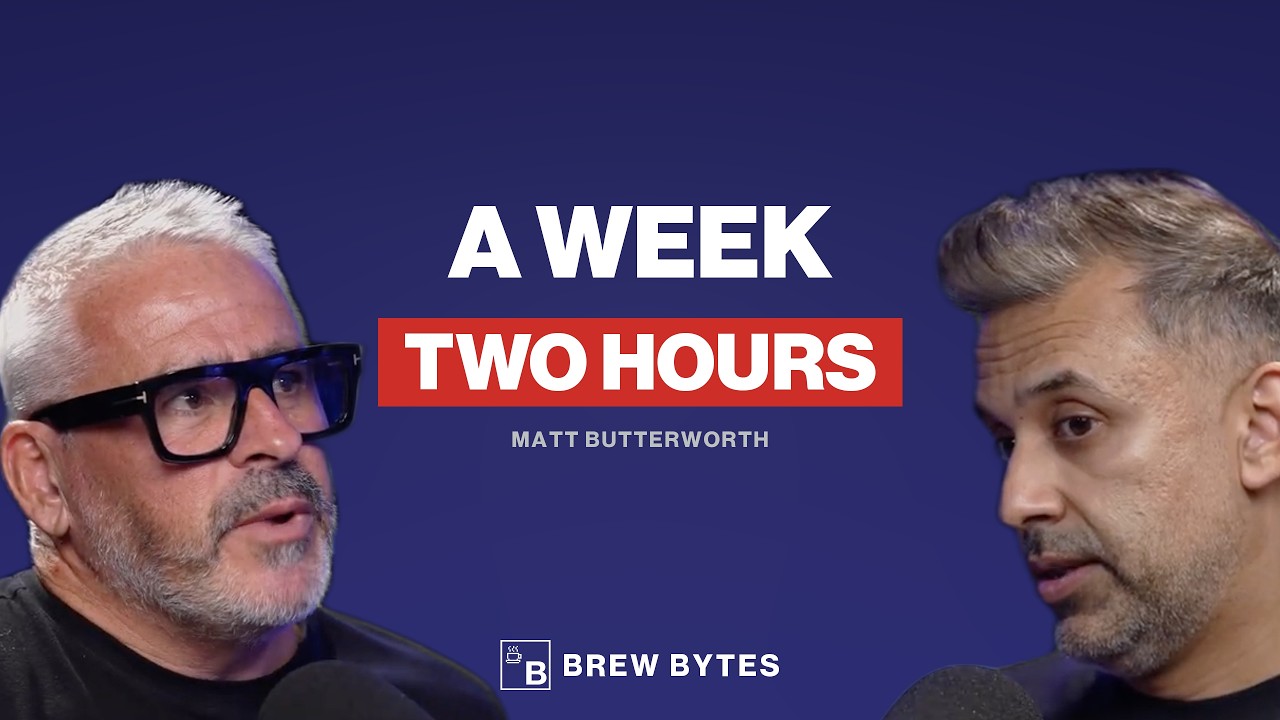
Matt Butterworth spent 30 years climbing the creative agency ladder — then walked away. He discovered AI replaced his entire 4-week strategy process in 2 days. A candid conversation on corporate creativity, Andy Warhol, and whether we can ever trust an AI we've taught to lie.
In this episode.
Matt Butterworth, former Regional MD at top creative agencies with 30+ years in design thinking, explores how corporate life suffocates creativity, how AI is transforming strategy overnight, and the philosophical question of trusting AI we've trained to deceive.
Guest: Matt Butterworth. Host: Nadeem Ibrahim.
Read the full transcript
Do you think we see creativity these days? I think we do, yeah. You do? I've seen ads that are built by AI now. And you can see the difference. But then again Well, I'm not saying it's a bad thing. No, but again, I'll go back. So, in the days in the '50s and '60s and '30s, you had Jackson Pollock and Bauhaus movement and everything else from an arts perspective where there were one-off pieces that you bought and that was it. You know, Leonardo da Vinci, wow, amazing piece of art. Andy Warhol and Lichtenstein come along and they commercialize art. They take a picture of Marilyn Monroe, do a screen print and they sell it 150 times. All of a sudden, art is now in everybody's house and it's the genuine ones that the actual artist has done it self. So, he's commercialized it. Is that not creativity? Hey everybody, welcome to another episode with me Nadeem Ibrahim. Eh, today we have a lot to talk about. I'm talking industrial revolution, I'm
talking sports data, creativity, quite possibly. There's just a lot that I have we have in store today. And today I'm in I'm joined by I would say quite a thought leader in the space of creative. Somebody who's made a lot of game-changing moments. Is very bold. Is we've been so far bold conversation. and he's recently gone AWOL. Would you say AWOL would be the right word, Matt? Yeah. AWOL, yeah. I'm joined by Matt Yeah, so I'm joined by Matt Butterworth. So, Matt, I've known you for quite some time. We used to work in a previous life together in all shapes and sizes, right? Did a bit of traveling as well to Saudi. I think we traveled to Saudi one time as well. Brilliant. Which was quite interesting in that cab journey that we took back to the airport. That's one of my finest moments, I think. It let alone the meeting that we had, which was a bit surreal. Look, you have a lot of things that we're going to unpick in
this episode. You've been in creative for as long as I've known you, but clearly longer than that, right? And then you have 30 years, right? There you go, man. And you made a game-changing switch recently. Okay. Can you maybe just like talk about like what prompted you to change from being leading a creative agency at the forefront of a lot of great work that you've done, a world-award-winning work that you've done, to then suddenly have a pivotal moment where you thought, "Do you know what? I want to go down this road because sometimes we get a bit of a midlife crisis moment where we think, "Do you know what? I've done this for too long. I want a bit of a change." Like, but clearly not for you, right? Oh, I've had about four of them over the last five of them, but I think it's interesting. I think I got tired, got bored. I was getting frustrated with the overall creative process of what we were going through. And sometimes it's just intuition.
You don't really realize why you're doing it. Sometimes you think, "Oh, I need a bit of a break. I've been in this industry for 30-odd years." You know, need that break. But for me, I think it was just more I needed a bit more time to think about things in terms of what my next step was and what I was doing. And obviously, coming probably talk a bit about it later on. I do a lot of cycling, endurance cycling. And that was a big focus for me as well. And I'm kind of getting that age now where I'm thinking, "Well, if I'm going to live the rest of my life, I want to be able to do it on my terms and not be dictated to by a corporate machine, if you like. And because of the role away I've come from, I kind of moved from creative and then went into strategy and then went into management. And it's you know, I did it for like 10, 15 years. And you lose your I'm not saying you lose your creativity, but what you do is you become bogged down with all the other stuff
that goes on that doesn't allow you to be as free as you want to be. And I'll be honest with you, I wish I'd have done it 15 years ago. It's been a massive transformation for me. I think one of the things I said is that I want to work where I want, when I want, with who I want. It sounds quite arrogant in that sort of way. but what I'm finding is that time for me is the most important thing. And when you find yourself time, you start to learn.
And one of the things being in the corporate environment doesn't give you is time because you're constantly you know, chasing your tail all the time, running around at a million miles an hour, trying to solve problems, there's client issues, all sorts of different things. Whereas now you're kind of sitting there going, "Right, twiddling your thumbs, what am I going to do?" And the first thing was going starting to look into AI again. Which I wasn't we weren't really doing when I was working as a you know, regional MD at the agency. Whereas now it's given me the time to be able to look into that stuff. And the more I'm looking into it, the more I'm finding and the more I'm playing. And the more I'm playing, I'm starting to learn not just about myself, but I'm also learning around how to take the skill sets that I've had over the last 30 years and use it within the technology that's there. And it's amazing what's actually happening. But I
like freedom versus structure is where I'm going with this, right? Corporate or I guess more Yeah, it's structure, right? They have a structure in place and process in place. And now you have the freedom. Do you think Does it Is it a case that freedom and structure can actually impact creativity in that case? That'd be one question. And I go on to that further along the lines of is there a reason Could that be a also another reason why creative agencies potentially hire freelancers because they're not strung by structure? They have more freedom. Okay, so creative will always argue they need freedom. I'm of the opinion because I come from a design background, which is about design thinking. So, it's about logic, it's about grids, it's about systems. So, I'm a big believer in structure and discipline, right? But then I think it's how you then how you weave the creative narrative and the thinking in and around that structure because you need to
conform to certain ways to be able to get to something. So, I think you need the structure because otherwise creative specifically they'll go off on tangents and they're not working within parameters, which is why we have strategic departments that kind of help them to come up with you know, the ideas and the vision and the strategic footprint for where for what they're doing. But I think for me more than anything else is that creative is all of a sudden now in the world that I that I'm finding is in a lot of ways the thinking and the process that you would needed to have gone through before has been redundant. So, I was having a conversation with a colleague this morning. And I'll give you a good example. If you think in any big ad agency or digital agency, you would have strategists. You would know, right? I found that and you might have researchers, you might have a junior strategist, middle weight, and then a head of strategy and all that sort of stuff. And I know cuz I was part
I was part of the strategy team. I've kind of developed as that. I found out in the last 3 months you don't need strategists anymore. You might need one. Because you can use AI and tools to be able to interrogate, if you think about it in the right way, and be able to ask by prompt the right questions that get in the right question that get in the right answers out that you need from and then probe it even more. And then you can then start to create strategic frameworks of which you can then come up with propositions, if you like. All the information's there. If I was to ask a researcher to do half the stuff that we're doing now, it would take them a week. Right? Yeah. Now I'm doing it in 2 hours and the quality of the information is right. And by the way, it's not ChatGPT cuz I don't use that. So, the whole point is that I'm then using the certain So, if I do stakeholder workshops, for example, cuz I need to understand you know, what the trigger points with the client, I might
use a Firefly. Cuz Firefly will then take all that information, right? And I'll build what everybody's talking about. So, I'm not even taking notes anymore. Right? It's doing it for me. The interesting thing from that is that I'm then using another tool like Otter, if anyone's heard of Otter, and I'm using Otter to basically look at what are the strategic themes that are coming out of those stakeholder workshops. Then I'm going, "Right, so for example, there was I was working for I'm working for a sales development agency at the moment. So, I wanted to look about the history of sales and why there's so much skepticism around the sales process and sales people. When you start to look into that, the specific themes have come to all right, fraudulent telephone calls, scams, that sort of stuff. So, I then started to say, "What does that look like?" So, then I'm going using another tool to do the research on based on some of the
strategic themes that have come out. And all of a sudden you can then take all that information, you can put it back into one of the AI engines and go, "Right, develop me a unique proposition based on what you think this is that's going to have legacy for the next 5, 10 years." And then you can then build on it from that perspective. So, that's how we're starting to use that's how I'm starting to use it. But what would have taken two, three, four weeks for an agency to do, 2 days, a day. So, is it is this ongoing debate and interesting you say that. AI, I mean, I don't how many episodes I've done we've spoke about AI. Okay, I'm moving away from the no, It's a good thing. I mean, the fact is I've been saying this year, this is the year of the practitioners' use of AI. Forget about the theory now. We've been dwelling on theory for 5 years and scaremongering all this stuff. Now it's the reality of how we actually use AI. I've got a guest
coming on in a few episodes and he's written a book about generation AI and it's very interesting what he talks about. But we had the I had the debate with him last night around about are we the guinea pigs of AI this generation and maybe the Gen Zs are also. Will it be the Gen Alpha's and subsequent generations like my son, for example, that will be native to AI in that way? But today, what he was saying was AI is being perceived as an efficiency-driving tool to probably either cut your workforce, to speed up what you're saying, the thinking process and things. My view is the quality element, do we miss out on that? So, do you miss out is it a big difference from something of a Is it take a workshop or take an ideation or storyboarding that would take a few weeks and back and forth debating the guy or you know, the lady behind the idea has given it so much passion so much thought that when that person narrates the storyboard, you can sense that passion coming out and seeping through,
right? To a point where they live and breathe the story of it, right? And that's how they can convince the client you know, to say yeah, this is the right idea for me they get behind it. When you take AI out of that, do you foresee there being an element of that sort of wisdom and energy of passion that's not No, because the creative of the person that's behind it has the energy that if I take somebody I'm quite a passionate individual, right?
And that passion and the way I am I'm inputting into the AI. So, is it And look, you mentioned something before which I think was really interesting and I think play is really interesting, right? If we go back 30 years interestingly around this time, right? The internet came about. It's actually CD-ROMs before the internet, right? If you if you're that old like me with the silver hair. Yeah, right. Well, even before then '96 I was using CD-ROMs for the first time and I was going from graphic design I was doing an annual report I was in Forest and I saw some DNA D manuals that were done, right? And it was all on CD. I was like, that's really interesting and it was using Macromedia and Director. So, I decided I wanted to do my very first annual report on a CD-ROM. Came to London, we built it, we did it. That then got me into thinking, well, how can I make something on a piece of paper move on a screen? So, I started to play with it, right? And this is what I was doing and
and when you're talking about it's used for What did you say? You said type utilization and saving costs and everything else. I don't think we're in that phase yet. I think we're still in the phase of play. And play is when we're finding and discovering stuff. And when you find and discover, you intuitively if you're in that mindset which is where we were in the mid '90s, actually a whole lot of new things come out and things get quicker and different tech technologies come out and it helps and it you know, the internet all of a sudden you're going from just doing a brochureware site to doing internet banking to then when we were in the day we were doing interactive TV where you could go we worked on the next platform with Sky to be able to buy on your TV for the first time. And this is back in 1999, right? Why? Because we were playing all the time. We were inquisitive and we were looking at it in that way. So, I think the creative mind is always like
that. It's always inquisitive. You're just allowing the technology is always going to be there. And so it's something you were talking about when you said, you know, your son, you know, around technology tech technology Yeah, technology is anything after you were born yeah, as far as I'm concerned, right? So, you have to and you grow up with it. But there are ramifications for the way in which society cuz a lot of technology is about speeding things up. So, you talked about speed commercialization, saving costs and everything else. Interestingly, I was working with a company I'm working with a company at the moment who that is a dating app in the region. And actually what I've uncovered is that just two minutes these just there's a new phenomenon that's coming out and I spoke to my daughter about this which is called slow dating. Because the swipe left swipe right people coming fatigue with it. So, the speed is so much that they're going, no, I need to stop. Okay. And actually now
I'm reflecting on what actually is it a real relationship is and what does that mean? So, I now need to slow down. So, interestingly what technology does you kind of go through these that it's always there but the beha- and the behavior and the mindsets are always stay the same but the difference is that the tech changes and with it you'll get peaks and then things drop and then things change and that's just something that I'm rambling but I think No, I think that's just something that's part of how we're made as humans, right? And there's always We talked about this before but there's always patterns of behavior that always stay the same no matter what and technology is just a part of that, right? So, on that actually cuz I remember one of our pre-calls or when we met for a coffee once we spoke about the we sort of said this is a modern day industrial revolution or the AI revolution that's taking place, right? how do you see those differences between the actual
industrial revolution back then where a lot of changes took place, right? Mining coal all this, right? To now what we see sort of like 50 years or 60 years like fast forward then. Yeah. We were in this time now of AI and it's another revolution that's taking place by tech. How we breathe it, how we live it, how we adopt it, how we endorse it, how we implement it in our day-to-day lives, right? And we'll come on a bit later how that's impacting what you do on you know, in space of sports and cycling.
But do you see cuz I when we were speaking you were quite passionate about the differences between the two. What are the biggest differences that you've seen between then there versus what we see now? That's a really good question. I think the difference is now is the speed of which things are going. You know, if you think about the industrial revolution at the time where it was you were moving from manufacturing to from agriculture to manufacturing. Essentially, that was a quite a slow process, you know, first because people get in their heads around it and the whole idea of building a car a Model T Ford at the time rather than having a horse people trying to get their heads around it. They were expensive, you know, then putting the infrastructure in place in terms of the manufacturing plants whether it be in the coal mine or a steel works or whatever it may be. That took time but that all then started to have an impact cuz you were talking about machinery which then made trains
which then had cars and then there was the infrastructure for the roads and then everything else and that takes a long time to be able to kind of build that ecosystem. I think with technology now the ecosystem was already there. The difference is that and it's all been based on data as you know cuz you know, that's what you're doing but I think all of a sudden it's just there's just so much of it now that actually I think to answer your question is that it's running at a million miles an hour. And I think what's happening is that's forcing people consumers to stop I was having a conversation with a teacher the other day actually and they were saying, we need to stop the tech for a minute. We want to go back to the old-fashioned ways of potentially teaching you know, with books and you know, get rid of the whiteboard and all this sort of stuff. And I kind of whilst I agree with it, I think sometimes you can't not think about how the future is
developing. You need to be able to embrace it but then embrace it for the right reasons in the right way and I think now it's a lot more difficult to be able to do that because of the speed. But interestingly, when you talk about it, whenever you go through these revolutions this is from what I've read and what I understand is the same things happen. So, you have fear because people are fearful of change. And the reality is that AI is changing everything. So, if you look at the industry of the creative world that they're really scared. They're scared about what's actually going to happen if their job's going to be there or anything else. So, as a result it was the same then. Agriculture industry in the 1800s turn around when on the 19 early 1900s when the T Ford came out they were all like, what's going to happen now? And everyone's going, no, the horse will never be replaced. Well, hey ho, it was and it happened. Why? But what happens out of that? You
then get you get polarizing views within the political establishments because people want to take sides. And then and it's about what's happening in the UK, you're getting in France, wherever you're getting these polarized views. Why? Because they're extremes ends of what's actually going on and they're basing it on fear because the world is changing and therefore it's more globalized as well. It's not so insular because of what what's happening. So, as a result different things start to happen. So, out of the industrial revolution I don't want to give a history lesson, you know, the political world changed. The Labour Party happened. Why did the Labour Party come in socialism? Socialism came in because the working class person wasn't represented cuz you're a blue collar and white collar. They had no health care. They had no education. So, education comes along because every child deserves an education, health care everyone deserves to have, you know,
healthy and happy life but somebody needs to represent the working class person because it was very elitist at that particular time. Same thing again, I don't know what the new political establishment that will come out but I think something will change within the world in which we've happening now because it's happening at breakneck speed and there's not a lot that we can do about it. It's there and it's happening. True. And it's I can say I was going to say scary times but that's how I feel I'm in, right? Yeah, people either embrace it or they're scared of it and you're always going to have again it's those polarizing views, right? But it's not going to go away. No. It's there for good and you know, we have to embrace it for the right way in the right way and that's why I still feel that it'll take a couple of generations where AI becomes so native that we'll still be that generation of
discovery. Do you think? I think so. Because if I even look at the mobile phone of my dad that he has you know, he recently I think in the last couple of years went to an iPhone. How old is he? Dad is in his 60s. Okay. Is he on TikTok? I don't think so. See, my dad's on TikTok. My mom is on. My dad's on TikTok. Okay. He's looking at content and sending it to us. I don't even have TikTok. He's sending me and he keeps sending it me, right? And I'm I can't view it half the time, but he's on it. He's there. He's so and I understand where you're coming from, but I think from my perspective I kind of challenge the fact that when we had the internet, people were saying the same thing. When we had CD-ROMs, they were saying the same thing. And all of a sudden when we had Google, oh, that's we need a prompt for somebody to be able to use Google. They were saying the same thing and all of a sudden everyone's using Google now. But your daughter's
consumption of how he utilizes a platform like Tik Tok would be so different from how a student would utilize Tik Tok, right? Or like your daughter. Yes. Right. So from a creative perspective then, how does that change? If you're a brand and you want to get to these two different types of people knowing the behavior of it so different. You have to create content and creative that's relevant to the specific audiences. You can't which is at the heart of what Yeah, which goes back to the basics, right? So I was in a conversation yesterday with a couple of clients and we were getting to the heart of the problem of, you know, what actually is it that what the problem that we're trying to solve. Now you're dealing with I might be dealing with expats, Southeast Asian continent, they might be dealing with European Westerners. The point is that they've all got different needs and need states. They're all different in terms of their thinking. One size doesn't fit all. But
do you not think the difficulty we face now is sort of like algorithm fatigue? Algorithm fatigue, right? Algorithm fatigue in the sense of Take the space of creative and advertising for a moment now, okay? You're speaking like a media man now. Unfortunately, I promised myself I would never do this, right? But you're doing it. This is not a media This is not a media show, but Tik Tok for an example though, where creative in any form, right, is designed or content, right, is there to give you the right content for you to be relevant as an individual, right? Whatever's relevant for you, I'm going to show that to you, okay? Whether it's organic, whether it's paid, or whether it's come from a brand, or whether it's not coming from a brand, a publisher maybe, okay? That has become so like automated now. Right? Yes and no, but yeah, okay. But do you not think that the actual true creativity is at risk from tech? So you No, because you always need the authentic emotional side of things,
right? You need to people to be buying into something. And I think if you're just buying into an offer or tactical-based stuff, which can be generated by AI, can be done all that stuff, then that's fine. But people need a reason to believe as to why they're buying into that in the first place. But the creative industry from a from tech angle is kind of based on that, which is you know, you have a message that you want. I'm going to now hash out five, six different variations of that message and I'm just going to pump it out there to different audiences and that's it, done. Yeah. Which takes the finesse out creativity. From what AI is doing out there, right? But it depends on where the where you're seeing where the finesse is. So again, for me it's more on the bigger the purpose, what we're standing for, and that's where the creativity element sits, right? When we're starting to do tactical messages in and around different audiences, whether it's your
dad on Tik Tok or mine or whatever, his need states are going to be different, but the framework of what we're selling in the first place, the principles of that still are still there. So that that's the bit that I think is where the real creativity is. Right? And that bit is emotional, it's authentic, it's real. It makes people cry, it makes people laugh, you know, and sometimes that can sometimes work within the specific messages, but if you don't have that at the top, then you're right, it becomes very templated driven. But it's easy, you see, because a lot of the media agencies, for example, will go down that route. They'll go down the programmatic route. Yeah, exactly. But actually, you still need the creative layer that excites and intrigues and makes you laugh and you know, that's the sort of stuff that where a real creative lives and dies by, you know, what they're producing. But do you think we see true creativity these days? Well, yeah.
I think we do, yeah. You do? I'm seeing ads that are built by AI now. And you can see the difference. But then but again okay. Well, most things are bad thing. No, but again I'll go back. So in the days in the 50s and 60s and 30s, you had, you know, you had Jackson Pollock and Bauhaus movement and everything else from an arts perspective where there were one-off pieces that you bought and that was it. You know, Leonardo da Vinci. Wow, amazing piece of art. Andy Warhol and Lichtenstein come along and they commercialize art. They take a picture of Marilyn Monroe, do a screen print, and they sell it 150 times. All of a sudden, art is now in everybody's house. Right? And it's genuine ones that the actual artist is doing itself, so he's commercialized it. Right? Is that not creativity? It is. Andy Warhol went through a process, he commercialized art so that everybody had access to it. Access to it. That's commercial, right? Right? Like getting somebody to sign on something on
a click, that's commercial. But he made creative to get to that point. He allowed creative to be for everybody. Right? So if you look at it again, everything's cyclical, right? It's exactly the same. Everyone went, "No, you can't do this art. This is you know, it'll be a fad and you know, hey ho, 20 years time where we go to the you know, we go to the Museum of Modern Art in New York and half buildings dedicated to Andy Warhol. True. You've got me there. I think you've got me there. Look, let's go off of that advertising for a second and creativity. You're a serious cyclist, right? Never judge a book by its cover, right? I think when I first met you, I thought you were more into your music, okay? I'm into music as well. Into music, yeah. Don't know what it is. I always say to my family that, you know, if you didn't know me, what would you think my name would be and what do you think my background would be? And I always do this and I have a habit of doing
this, so I have it in my mind. So when I first met you, I thought I'd say looks like you could be a guitarist or a drummer. Oh, really? It's probably because I'm all in black, right? Yeah. By the way, I hate rock. I can't stand it. Okay. See, the tattoos have a perception linked to rock as well like back in those days. Not so much now. But you're a serious cyclist and you do a lot of performance tracking. One thing I was mesmerized about was how much data you use to track your performance and to track your health and to track how you optimize your performance going forward. Like how has that shaped you in terms of how you Has that shaped you in any way when it comes to creativity of how you use all that assets or even to the point of leading teams? I think the It's funny actually cuz one of the last things I did when I'd left was I talked about what it is to be an endurance athlete and in terms of managing teams, what you need to do from a HR perspective to look out things. So
I'll get on to that bit in a minute cuz it was a really interesting talk of how I use cycling as a as an example of how I look at data, how I manage it. So I go back to the cycling thing. So for me, you know, I got a nutritionist, I've got a strength coach, I've got a cycling coach. I probably do about four or five events in the year. I go towards one big goal. I've got one coming out in August. I qualified for the Worlds in Australia this year my age group. But the thing is for me is that there's a couple of things that I think are really key in the data which we've never had before. The first thing for me is I think if I look at Training Peaks, it's telling me my power output, it's telling me my heart rate, it's telling me my cadence. Yeah. I can look down and if I've got a set to do for my coach and let's say I need to be doing 320 watts for 15 minutes, right? And I can't get my heart rate up, right? That
means I'm fatigued. And I can look at a number and I know I did it yesterday. If I'm hitting 131 beats per minute and I can't get to 135, it means I'm fatigued, which means I need to rest. Means I'm not recovered properly. Right? So then I start to look at remember recovery patterns and then I start to be in aura. And then I start to look at sleep Did I sleep very well? Did I not? How am I optimizing my performance from that perspective? Am I eating the right things? Did I fuel myself properly? Right? Which is you wouldn't really think about these things, but because so much of it is Did I go to the gym and do too much of a session the other day? Because I've got the data that's in front of me there, the data doesn't lie because it's reading what you're doing every day and it builds up models to say, "No, this is where your zones are. This is what you need to do and go away and do it." And if you can't do it or you're struggling or whatever, yes, it's
the body telling you to either stop or some days you're on it and you feel like you're flying, you know? So I think interestingly, you can then what I'm starting to do is you can start to look at those patterns and start to say, "Right, if I'm building up towards a race, right? what did I do last year that didn't really work? How can we improve on that this year?" Yeah. Right? So you're looking back at the data points to really understand, you know, how you can be the best that you can be at that particular time. Now, the reason why I when you were asking about in terms of work life balance and everything else, one of the key things for me is like recovery. If you don't recover well, you can't perform. And yet when we're in a working environment, we never think about recovery. No. Recovery is having a decent holiday, right? But recovery is also when you get home at night having a decent night's sleep, not getting stressed. Right? Recovery could be when you've got brain
fog from a creative perspective, I need to back off here, you know, what can I do? We don't think about recovery in the mindset of our day-to-day work. But we don't have data to show when we need to recover when we're in work or whatever. But actually, there are triggers that you naturally would have as a normal human being which would tell you when you're not at your most optimal. Normally we wait until we die of a cold and then, you know, we're off for 3 days or whatever it may be. I think there's a few organizations. I don't know I'm getting a bit of deja vu now. Where they give the employees a ring and they wear the ring. Yeah. And that kind of gives them an idea of when an employee is becoming fatigued or not in the way they're thinking or like basically lethargic. Yeah. Right. And allows them to then give them the ability to for them to sort of take a break, get some head space, maybe go even home for example. Surely that I mean we talk we spoke about technology and AI and, you know,
in all shapes and forms, but I think that's a missing piece actually. How do you optimize your workforce in a way that you know, we're no longer living in a world of 9:00 to 5:00. Nope. Right. We're always working around the clock. Whether you're your own at your own shop or you're working for one of the big firms. They're always going. They're always going and as much as we sort of say it's a 9:00 to 5:00 but hey, working life it's not. We take work home. We work at home. Like you said, do we get ourselves that space? But surely then there's a missing trick there from if I'm someone in HR or if I'm someone that's looking at my workforce in terms of how am I going to build that keep that energy flowing. Yeah. You need to optimize it. Now the simple form is like in China they switch the lights off at certain time in the office and everyone sleeps. I went to one here, okay, a Chinese manufacturer. I went there for around about 1:00 for like a lunch meeting and I go in
and I'm thinking, what is going on here? The lights are all off. And I'm just seeing people with their heads on their desk sleeping or people lying on the floor. All right. What is this? And apparently that's a culture thing. Right. Where some organizations in China will switch the lights off let people recover and then after an hour they go again. Okay. And maybe that's to get people to work around the clock quite possibly. Maybe. But there has to be a bit of optimizing, right? So when you speak about you know, getting the right sleep, fatigue, are you eating right and these things. Now that we have everything that's accessible that you had mentioned, AI is making things accessible. Why then are businesses that have big workforces then are not looking down this route where they can actually retain a lot of their staffing optimize them in a way that maybe works around the clock but based on their energy levels, fatigue endurance and so forth. Because I could go home tonight and I can eat, you know,
like two jacket potatoes for example with cheese and beans and all the works on it and I can have a bowl of ice cream. The next morning I'm going to be brain fog. Or I go home and I can have my salad, maybe do and next I'll go to the gym in the morning and I'm full of energy. Yeah. But I can give maybe not 9 hours, I could do 10 hours worth of work cuz I'm motivated by that. I'm driven by that then. But the guy who comes in, he's had like quite a lazy dinner the night before you know, it's not to say it's bad what he's doing. That's just his lifestyle. But you can optimize how he works throughout that day that maybe he starts at 12:00, not at 9:00 and But why are they not Are you asking why corporates are not doing it? Yeah, why are we not bringing this technology in? because of bureaucracy. Because it's too big. It's because you've got a generational divide at the top that doesn't understand about some of this stuff and they think the old ways are
working. I'll never forget I did a workshop and one of the workshops was with a HR team. And they one of them was around how do we create flexibility in a contract? Go with me. Get bear with me for a minute. Okay. And one of the thing they said was we had somebody who wouldn't sign a 3-year contract with us cuz obviously in the UAE you have these 3-year contracts. And they basically said we can't sign this 3-year contract. We're done.
I'm not I refuse to sign it. And they went, well, you can't have the job then. Now that person could have been a great employee. The reason why they wouldn't do it they went, no, but you can't do it because our legislation that says in New York that you need to do this, and as a result that means that actually you need to work these hours to these hours and the person who was involved said, well, what happens if I want to take a gap year? I want to take a break. And they went, well, you can't because we've got client obligations. And we went, well, how about we reframe it and start thinking about it in a different way. But the problem is that the corporates end up becoming institutionalized. So going back to my point with this, it's exactly the same with tech. And we're seeing the same things happening where the corporates will get left behind. And the reason being is cuz they don't have time to play. They have bureaucracy.
Right? They're not really thinking about the right things, right? From an AI perspective in terms of how it can help them. They're just seeing it as a threat. Why? Because it's fear. So this is when the independents start to come in and they start to change the things because they're already adopting it. They're playing with it, you know, and I'm working with different types of companies and where I'm seeing it day in day out and they're testing it and it's actually working. So the thing is that you know, you talk about data. If you're not willing to embrace it, you can't embrace it if you've got bureaucracy. And it's like turning a big oil tanker. It takes days. These organizations will never survive because of it. But Mark, like now that you're independent Yes. Yeah. how are you hoping to change how things are done in the creative space? I don't know how I will change things. All I know is that things are
changing and by playing and researching and doing things differently like I did 20 odd years ago, I'm finding new things out every day. And what's and because of time it's allowing me to spend more time with my clients on the things that are actually really important to them which is not just about marketing or anything else, right? No, So while someone might spend four or five days or five weeks on a strategy for somebody now I can spend two days doing it because of the tools and technology in front of us and it's just as strong and just as good which then allows me to spend the other 15 days of the year helping the client solve problems that maybe that they need even more. Yeah. So I think so for me that I think that's how I'm starting to see things and how I'm starting to change. And I'm also of the belief as well that actually the offshoring model where people can work from wherever they want and the quality of the work that I'm starting to
see in places like India, Malaysia, the Ukraine for example where I'm working with a company from an SEO perspective Nice. the costs are low and the productivity is amazing. The quality of the work is amazing. So all of the sudden you can then start to not charge a fortune to clients, but you can give them the value where they really need it. And I think it's almost turning the model upside down. Yeah. I think and this is sad to see though, right? Because I guess it's just a readiness by other markets where you're seeing such a big difference. Yeah, I mean I think you know, you what you would spend 35,000 dirhams here on a salary you can get for $2,000.. And just as much productivity. So now people will tell you this is that exploitation or whatever it may be, but it's just the way in which the world is because it's a global we're living in a globalized world and tech is allowing us to do this now. So as a result for me who benefits? The clients benefit from a savings
perspective, but they're not just benefiting from it from a commercial perspective. It's allowing you to give other value that you would not have had the time for before. Yeah. Which can really help them which is where I'm it's where I'm becoming really interested in it because you know, that's why I'm helping SMEs and companies towards IPO and so on and so forth cuz you can give them the time. So that kind of feels that we're at we're going through a creative revolution as well. I think so, yeah. Yeah. What do you think would be like the what do you think would be the principle that needs to be rewritten or reimagined in that revolution? Well, that's a deep question. I'll have to go off camera and really think about that one. Say that again. So if we're if this is a creative revolution okay what do you think what principle needs to be rewritten or re- or even reimagined in the space of this revolution? From a creative perspective? I think so,
yeah, because it's changing, right? You're talking about you can go into platforms and you can find people in different countries that can do the job for half the cost and even better quality.. yet businesses are you know, struggling today to retain some of their clients and the and some businesses some clients are also thinking about maybe sort of trying where they can get freelancers from different markets to really do what they're doing, right? So there's a read of it's a like the industry is redefining itself. Yeah. Okay. And then in this revolution then going from the principles of having a workshop having a playbook, having, you know, this process, that process, having this workshop the archaic way that we live. I think of Mad Men and how that's evolved. Yeah, So in this revolution what I'm asking you is, you know, what's the one principle that you we think you think would be redefined or reimagined? That's a really I mean I think
oh, bloody hell. I think I'm trying to do it without rambling and really thinking. got an answer. I've not got an answer, but it's difficult because creative is always a and changed through the years because of the surroundings of what's actually gone on in culture and you know and I think you know we talked about Warhol commercialization of creativity the creativity thinking was already there they were just saying that actually the masses could have access to art if you like. So I think the process of creative thinking will always remain the same which is it's really when we're in the advertising world or we're in whichever way we're creating something is based on an insight or it's based on something that somebody's said. The thing is that I think and again I'm rambling a little bit but I don't think that process will ever change. You need that. I don't think it will change. I think things will move on but the reality is that
you still need to you still need to throw things around. You still need to brainstorm. You still need to look at different insights in different ways that come up with different things. But yeah but I don't see that process even now using all the technology that I'm using I still probably go through the same processes that I did when I was a student at art college. Okay. And yeah I've got all this tech and I've gone through all this thing the principles remain the same. I still go through a structured way of thinking about things. I think it will change out there right? If you've got AI that's just on autopilot and it's going to prompt you every now and then. You still need the structure around it to know what you want the output to be right? It could challenge in your structure though to say that structure's wrong. You need to keep changing it. It could do and maybe it will do over a period of time but I think it will be structures within those things. So for example let's say we have
you talked about a stakeholder workshop. So I'm going to interview clients to try and get some insight. I'll do some probing around that. Right? And you'll still start with a conversation because you're a human at the end of the day that wants to have a conversation where you're trying to solve a problem. Right? They'll give you some anecdotes of which you can work with. You can then take those anecdotes flesh them out and put them in technology and go right here's a load of stuff tell me what you think. Fair. It comes out again and you look at it and you go that's interesting. I've got some thoughts around one two three four. I'm going to put that back in. Tell me what those things are and eventually you'll drill down and you'll get to a point and you'll go that's the idea. Right? The creative process is exactly the same. I remember years ago in college they used to go pick a book out pick some metals and
plastics out pick some colors out. Now in that take a poem and with that poem using these materials and that book describe that poem. You've got three weeks. You had to go through a process as to what you were actually going to come up with at the end of the day. That doesn't change. But for me I think what's going to be rewritten I mean reimagined maybe is infinite thinking. What's the power of technology? Okay. What I mean is that you have an idea. Yeah. You've took all that insight. Yeah.
You've allowed technology to refine it give it back to you. Yeah? Yeah. From whatever workshops that you've run whatever focus groups you've run it's all there and it's refined. You then as a creative director you come up with the idea. Yeah. Okay. You've tried to validate it with your focus groups. Yeah. You've then got to a point where traditionally you'd be like okay that works. I'll take it to the client. And it's like yeah that works but typically clients will say actually we need more of this or we need more of that or we want more and more. Depends how you want to package it. But the thing is the human mind is not infinite. Right? I feel that. But then technology I feel over time has an infinite process. And like you mentioned at the beginning of our chat here is you can challenge your research over and over again. You can dig deeper as you want until you get that right
output that you think okay this works. But the human mind can't do that. It'll take three months four months five months God knows how long it will take right? So you have that idea and I think technology will layer it with infinite thinking to a point where you can be somewhat content as a maybe creative director or producer to think okay I have the safety net now that my mind can only do so much. Come with the wealth of experience I'm laying this extra layer of expertise that I've now upskilled myself in. You're almost going what do you think technology? Yeah and then it will come at you as your companion to say we need to take it up a notch and this is how we're going to take it up a notch. But you would not have thought that unless you went through the whole process of two or three months of going back and forth testing this testing that to get to that point. I think it'll be infinite thinking. How do you know it's telling the truth?
Is it What happens if you tell a AI to lie to you? Have you tried it? Have you tried any of the engines? So try going into the engines and go do me a favor I've got a project here I want you to lie to me. Oh gosh okay. Don't give me the right information give me the wrong information. This is black mirror Teach it to lie. This is black mirror I'm going to die right? No but this is the point this is when you're talking about the scarier where it goes right? It's like you're only as good as the person who's inputting it right? Yeah true. Right? So I can have all the information that comes out around the sales process and what sales people are like they could be lying. Imagine you've then got people who go we want it to lie. Yeah. Right? And then all the information that sat there that we thought was believable actually is not believable at all. Because we're all following and we think it's the right thing to be doing it
might not be.. We're trusting it right? Yeah trusting it. But trust is a really interesting thing cuz if you read a book called it's called We Think by Charles Leadbeater. It talks about how in social movements we all like to follow because we believe it's the right thing to do. But actually sometimes when we're following it's the wrong thing to do. Okay. But because they're the right people that we think are saying the right things we assume it's right. So he used a good example of the bubonic plague in 1666. Yeah. And if you listen to the Catholic Church at the time all the priests were saying that it was the witches that were creating the plague. Right? And therefore as a result it was the what happened is witches were executed if they were found. And the cats were also killed because they were part of this evil force that it was creating the plague. What caused the plague? Rats. Okay. What eats rats? Cats. Okay. So they killed the actual thing that
would actually could have saved them from having the plague. Well okay. Why? Because they all followed the Catholic Church thinking it was right. Okay. Okay I'll leave that I'll park that now for another day of conversation right? Yeah Look we're coming towards the end of this show right? and I'd like to have a bit of fun with you. I kind of hope you pick up the right card that I want you to pick up. I call it a special counters. I'm going to give you two cards. You choose one card.
Okay. One of these cards is a question that's been left by a previous guest. The other one is a question that I've thought of through an AI for you to answer. Okay. It can be a nervous here. So I'm just going to like I really hope you pick up one of these. I really hope you do now. I can choose. I'm right-handed but I always wanted to be left-handed so I'm going to go left. Oh you're going with that one? Oh man really? Okay. Yeah? Yeah. Let's see how we go. So it was a question not written by the last guest it was a question that has been thought of with an AI engine. So if you could sync your brain to any device past present or future Matt what would it be and what would you use it for? Yeah. You could have gone with the other one. If I could sync it to any device sync your brain to any device past present or future what would it be and what would you use it for? Wow. Past present or future? Yeah. I'm hoping you're thinking iPad there. No do you know what? I was
I was listening to a talk I was listening to a podcast a couple of weeks ago and it was around some stuff that Musk is doing with a guy that had motor neuron disease. Yeah heard about this. And he implanted a chip into the brain. And the chip allowed him to do things that he would never been able to do. So it re it reworked the brain so that he had the power to whatever he thought actually happened. Actually made happen. So I think that's quite a dangerous thing but I think sometimes from a technology perspective if you had the power to be able to think from a tech but I don't know what the tech would be but if I could at the moment I'm thinking about my bike.. If I had tech that could allow my body to be stronger and think right I really need to hit 330 watts for half an hour today. then that would be the most amazing thing on the planet. But then it wouldn't be real right cuz you wouldn't have to go through all the hard work No that's true
actually. to get there. That's true. It's a bit of a crap answer but I think that's how I I've always embraced technology but I've also seen it for what it is and I don't think it should go away from the way the human. is emotionally We might get to a point of that though. Not in our lifetime, but definitely at some point. Think of the Matrix, right? You plug yourself and you go into another world. I don't know. Yeah, I mean, have you seen her? No.
So, if you watch her with Joaquin Phoenix, so that it's really interesting cuz I'll spoiler alert if anyone watches this and they've seen it cuz I'm going to give the end away, but so it talks about he can't have a relationship, so he has a relationship with AI. Okay. Well, you know, and he falls madly in love. Right into ground, right? And he's like he's this person knows him, knows how he talks, knows how what meals to cook him, how to he just knows everything about him and every way that a relationship would happen But spoiler alert, sorry if to turn off now if you're not listening to this if you've not seen it. At the end, he gets betrayed. Okay. By AI. He gets betrayed by AI. Oh. And the reason why he gets betrayed by AI is cuz the AI is also having the same conversation with another 100 million people. Goodness me, man. Okay, I respect Right? Yeah. So, I think sometimes we forget about the human element of what we're about is I think to answer your Oh,
sorry. To answer your question, I don't think I would have any tech that could do whatever I wanted it to do. Okay. Because then you lose the human element of what's being humans, right? Yep. Matt, it's been a pleasure having you. Thank you. in all sorts of data, creativity, and some I would say like bold statements, right? But it's been really enjoyable. I hope you I hope you've enjoyed it as well. Yeah, it's been good. Yeah. And guys, if you've took something from this, which I hope you have done, I'm sure you have done, you know, please like, share, and subscribe. And until next time, bye.