The Psychology of AR & VR: How Virtual Worlds Reshape Your Brain.
Are we losing touch with reality as virtual worlds become more immersive? Vishal and Hassan from Atomic — the digital innovation agency transforming GCC brand experiences — reveal why AR is not just novelty, how cultural psychology makes the Middle East uniquely ready for immersive tech, and what AI-powered mixed reality means for human behaviour.
In this episode.
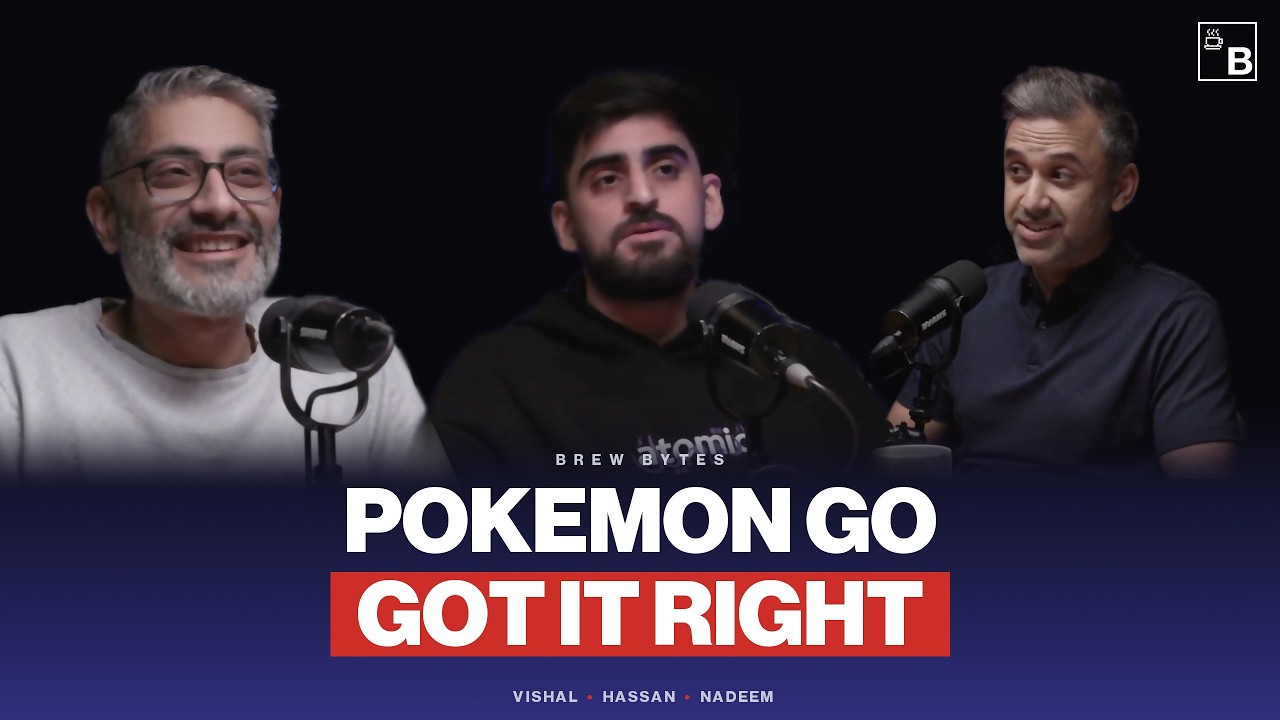
Vishal (former Snapchat AR lead) and Hassan from Atomic DXB join Nadeem Ibrahim in Dubai to unpack the psychology of augmented reality, real-world AR success stories in Saudi Arabia, and why utility-driven immersive experiences are the future of digital transformation.
Guest: Vishal Badiani and Hassan Shah. Host: Nadeem Ibrahim.
Read the full transcript
I think one thing that used to irk me was that this I think AR kind of got put into the space of it's just novelty which it isn't and that's a it is quite a tough challenge to overcome with a lot of people clients included because of what's already been done or because of what other agencies are doing if I had to put it simply just try it in the right way I think mixed reality virtual reality augmented reality will all become far more valuable far more you know utility driven but a lot of that will be powered by AI and machine learning. If you could invent a completely new sense that humans don't currently have, what would it be? And how would it transform our interactions with technology? This thing is way too clever nowadays. I think we got the short strogo. Hello everybody and welcome to another episode of Brew Bites with me Nadim Ibrahim. Today I'm actually joined by two game changers I would say when it comes to AR technology and digital innovation and these guys for the last
couple of years have actually been making some leaps and bounds through the GCC and especially I would say in Saudi Arabia. Today I'm joined by Vish and Hassan from Atomic. It's Atomic I would say. That's right. Atomic. Yeah. Nice. And today we're going to be exploring how they have transformed or transforming the industry in this region particularly across AR and other technologies. But before we go into this guys right I got a small question I'm going to ask you normally ask about what's your go-to game when you've grown up but I want to ask you Vish first. Okay growing up what was the one piece of technology or you know like transformation piece of item that you were mostly close to? Yeah. See, this is going to be bad because Hassan's so much younger than me. He's going to say something and he's going to think about what I say and be disappointed. I would probably say the Game Boy changed my life. you're making me the old the
Game Boy was a thing for me, man. That changed like the whole having something mobile, something that you can take wherever you go.. I think that was the start. And Hassan, mine was the Nintendo DS, the first iteration. Look, see, look, we're in the same space kind of. and it's actually so interesting because I've quoted that on so many occasions because I just it was I think it was the first handheld with two screens.
With two screens. Yeah. And one was touchscreen and the games at the time. And it was color, right? The DS. Yeah, of course. Come on. Oh, yeah. No, see, the Game Boy was Oh, you mean black and white. Well, no, it was kind of like shades of green. Shades of green. I had color. This was Yeah. But that for I mean, you are shown our age now, I would say, because like you talk about touchscreen. I can't even remember touchcreen. What was yours? Mine's Spectrum. The Oh my. Now, that's even older than the Game Boy. unusual on my age, but I think we're very similar age. Yeah, I was just cooler. You know, the Spectrum is where you had this cassette and you put it in and this you want to play Pac-Man, it would take about maybe 30 minutes or 20 minutes to load making this squeaker noise of Yeah, but like that was far from gamechanging technology, you know? Like that was at the time probably was it was because then you had like a joystick that you would then Yeah, I had an Amigga
actually. I think I had a Commodore 64. Yeah, but I didn't think neither of those made me feel like yeah, the world's getting amazing. Like, but the Game Boy did. That was But did any of these like pieces of technology you're talking about like ever shape your career? I wouldn't have thought yes at the time, but I could probably postrationalize an answer. Like I think the idea of having entertainment on the go, the idea of being able to entertain yourself and more importantly play with others. I think that made that was gamechanging. Like even on the like the Game Boy, yeah, the graphics were basic. Yeah. like you know it was batteries and whatever cartridges but the fact that you could play with you know your brother or your friends on the go wherever you were I think that did make a big difference and I do think that kind of handheld technology has been something which has maybe inadvertently maybe not directly but it has led to where we are today. Okay. I
think similarly playing with others, speaking to others. I think the DS at the time had like a chat feature, but I think you had to be within similar proximity. I don't think it was in I can't remember. But the super interesting thing is given where we are now. The DS is the first time I'd ever experienced AR and I've quoted this many times when we first started working together because they used to give you this I believe it was like a pack of cards you got and you had to use the DS camera to scan it and the card would come to life. At the time I was like, "This is mental." Because you could lay it out and make your game depending on how big you wanted it. And I mean, it was augmented reality, but Nintendo were they they've always been ahead. Yeah. Yeah. And they still are doing things. Yeah. Yeah. Serious. I think they've been pretty focused and pretty disciplined about their lane unlike a lot of other companies, right? I think most companies, they have a hit and then
they try and figure out where else they should play. but I think Nintendo have been pretty core to gaming and especially the audience within gaming that they're aiming at. And so, yeah, it feels like when you look at their entire history of products, they feel linked. They feel like they make sense. Look, I would love to see the Sega Mega Drive make a comeback because playing Sonic on a PS is just not the same as playing on a Sega. Yeah, I think that's fair. It was made for Sega, but that was about the only good thing on a Sega Mega Drive. Yeah. Fair, Look, today we're going to be talking about AR and digital innovation, which you guys have sort of, as I mentioned in the beginning, sort of been transforming. But before we sort of dive deep into that, there's definitely something I think is worth touching base on, and that's your personal journey to get to where you are. and I think it's commendable from what you read, what you see with those the type of work that you
guys have been doing. But fish, first coming to you actually, what was your personal journey like? Did you for did you come across any challenges and did you ever foresee yourself being an evangelist in AR if I put it like that? No. No, I didn't. so I came from a advertising and planning background. So I worked strategy, communication strategy, creative strategy for a bunch of big network agencies on a bunch of big clients firstly in London and then I moved out to Dubai. my last five years were with Snapchat and then a year ago me and Hassan set up Atomic DXP where a lot of what I had learned and we had learned together during our time at Snapchat led us into this field where we felt advertising, we felt experiences, brand experiences, we felt organic experiences could all be way more interesting and AR or augmented reality. That's just the label of the technology that we play around with. But the idea behind it is more how can we create something that is
accessible i.e. available on any phone and how can we make it more memorable, more interesting, more playful than a video. And that's kind of what led us down this path. It wasn't an obsession with the technology. Neither of us are developers. Neither of us code. Neither of us do 3D modeling. but we're fascinated by the power of these interactions and how on a simple seemingly simple device like a phone, you can now have these kind of experiences. Nice. And did you So, you never envisioned yourself being in this space, right? I always wanted to have my I always wanted to run my own business. I think that was something which was definitely a driving factor. what that was going to be. I didn't know until the lucky years I had at Snapchat. Do you experience any challenges along that way though? Running a business. Yeah. Yeah. Lots. Starting a business, running a business, growing a business, challenges throughout all of those. The thing is that this region is thriving with
businesses like what you guys are doing, right? Yeah. I feel like we're in a really nice environment. we spend a lot of time in Saudi Arabia. and the kingdom has a lot of exciting talent. people are creative and kind and community oriented. in the UAE and Dubai in particular like we come across founders in the tech space, in the digital space, in the innovation space all the time. Very rarely what we're doing. And there's often a little bit of there's a business in that. but yes, it is it feels like the journey's been worthwhile so far. Still a long way to go. We're only a year and a half in. Amazing. And Hust, I'm going to ask you a slightly different question. Okay. Cuz I think you're definitely part of a gamechanging era, I would say. Right. This is not saying it's not shown our age by anyways, right? But I think the first question kind of sort of put that barrier in place in a way. But you're part of a game changing era and you know
being in this region there's a lot of endorsement and there's a lot of like enthusiasm around new technologies. This is probably one of the few regions that I've ever been in where it's all about what's the next big thing? What's the next big tech that I could be part of? How do I create a trend, not be part of a trend? And from the work that I've seen you guys have been doing, you know, you're clearly trying to sort of make headways around that sort of trend setting thing. Do you see this being a space that will scale out very quickly or and how do you think this region is adopting to those types of changes? Scale quickly depends on what we consider quick. I think simple answer probably yes. I think the people are innately a bit more savvier. I think they just they're a bit more interested in this side. I think I don't know if it's because of like typically most technologies and most new things are adopted in the west first.
And then I think we've typically had to wait like me growing up in Dubai like I didn't even have an official Apple store. I know what a first world problem but we didn't have an official Apple store for so long but everyone had an iPhone. So now that things are happening in the region first and from the region I think there's a lot of buzz. I think as Vish said the kingdom is obviously leading the way in a lot of avenues. so it's kind of paving the way to that whole ethos of being the biggest and the best and the first. So the culture is already kind of ready to adopt it. So I do see it being adopted quickly. Second part is that endorsing like do you see a lot of brands, businesses endorsing this type of technology? I think so. I think obviously there's more there's some sectors that probably adopt it easier and more naturally than others. but from what we've seen from again like the years I had at Snap, there was such a vast array of different
kind of clients we worked with and they were obviously they were all over it. I do think probably the value proposition and the purpose of this technology is slowly changing or people are becoming more aware of what makes more sense for them. But I see on I think the more we go around I think COVID was a was an interesting time because the QR code became mainstream and the QR code for us is like it was depleted at one point, right? Yeah, exactly. The QR code when they brought it back like even now like you go to a restaurant to be able to pay via the QR code but the fact that you go to a table and people are typically looking for the QR code even now there's so much that we can do from that entry point. So adoption endorsement I think is like very easy. Very easy. Yeah. Yeah. I think at Snap they used to talk about camera being the new operating system. I think you know that's an interesting way to think you know right now the way you access information is through the keyboard. But what if that
was to change to the camera? Right? And that opens up a whole world of opportunities if your business is able to come up with creative ways to bring information, entertainment to life through the camera, which is basically what we do. I think the verticals and the types of business, the categories within which we're seeing more and more interest in our technology is Yeah. I think people aren't just seeing this anymore as a nice thing to have in an ad campaign. They're starting to understand how it can actually help their business grow, how it should be included in their app for wayfinding, how it could be in their website for product demos or 3D visualizations, how it could, you know, help you find, you know, friends if you are at an event. So there's all of a sudden there's a lot more touch points along the customer journey along you know an audience's experience of a brand that AR can now start to play role. I mean you've got the specs as well right the glasses.
Yeah specs headsets screens mobiles there's a lot of different ways which we can start bringing things to life for clients today. And Hassan did you ever envision yourself being in the position that you're in? Cuz if I recall a LinkedIn post by this guy actually. You need to get this guy's reaction. He claims to have done over was it 55 flights. 45 flights actually 44. That's impressive. 42 actually. Offic I think I've only seen the airport once. Right. When I was right do I know this guy? Does he know me type of thing? Yeah. Like did you envisage yourself to be doing what you're doing today? And like how did you end up doing what you're doing? Did I envisage? No. how I end up I think my story is a bit unconventional. back in so I just graduated from university studied law and then so I so did I did oh god I got two lawyers there well no that's the point that's exactly the point and I was in the UK so I grew up in Dubai I was in the UK and then I
just I think like most people most graduates are doing I had two like training contract offers which is the way the legal path would go for a listister in the UK Okay. But they were delayed because they were actually not starting for a while and then they got postponed late till later because of COVID. So I ended up like most people do you message as many people as you can on LinkedIn and see who's willing to at least have a conversation and that led me down the path of Ava Badani and yeah so it kind of started from there. he's got good chat on LinkedIn. Yeah. He's got good chat. I can't lie. So I mean nothing happened immediately but then like an opportunity arose where it was a short it was a shorter term contract and yeah I think I'm I think given my age which was I think people don't like talking about it but I think it is helpful because I am if especially if you are interested in it I've always been around tech I've always been interested in technology
media so I consume a lot use a lot I was making content at one point so snap as a platform was really interesting for me because I was already making content on the platform as a creator. So to be able to join and think from the angle of how do we get brands to use these lenses in the right way and how do we make them in the right way so people are engaging but fast forward now I wouldn't have I couldn't say if I would have stayed in the industry but like similar to Vish I think I knew I think it's probably like a it's a thing amongst so I think I'm Gen Z by a month it's very hard for maybe I am or maybe I'm millennial either way it's hard for us to which would you rather I think my friends are all millennial, so I can't be the only Gen Z. So, I'd rather millennial, but I think there's this I think there there's definitely like this entrepreneurial area era and people do want to do their own thing. So, that was always a goal. but I suppose in the right way and in an
industry that I like and it just so happened that my I had great three four years at Snap and I loved the technology I was around and there was obviously a wider world of it out there and here we are today. And then I happened to find someone that I could tolerate who replied to my Linked tolerate who replied to my LinkedIn message back in 2019 and here we are. Nice. I mean that's a you mentioned something about brands and using technology earlier, right? the AR space is I mean I was reading a piece of research set to grow like about 88 billion dollars globally. It's supposed to be like this big economy that's being created in this region. You see a lot of brands trying to sort of redefine their marketing strategies whereas to sort of plug in AR. Some are using AR as the epicenter of a lot of their communication. Like how do you see this playing out in this region? And are brands doing it right? Some are doing it really well. others are still trying to figure it out and they're experimenting. I don't I
don't think there's a wrong way to do it. I think the key thing and this is why I think having a strategy background is helping us as a business too. We are not in the business of selling. We're in the business of advising. So generally what we would ask a client is you know what's the problem you're trying to solve for? We're not there to try, you know, we don't put out our website which has amazing AR experiences and go which one of these do you want? Like that like what type of AR do you want? Like that's not the conversation we're having. We're trying to understand right you know where is it that you're having a particular challenge or a particular opportunity that you want to exploit and let me go away and explain how we can help you really you know turn up the volume or shift the needle in that particular space with something which is a little bit more participatory a little bit more innovative a little bit more immersive than a video. Now, you know,
I'm not saying you shouldn't be doing video. I'm just saying that, you know, there's a lot of agencies out there offering video. so we didn't want to do that. and we're both quite fortunate that Hassan was running production at Snapchat and I was running creative strategy. So, between the two of us, we had a lot of time talking with clients about why they should do certain innovations and how. So it just kind of made sense when the opportunity came up. So like there's some brands that are not endorsing it, right? I mean I think it it's pretty evident that some brands are a little bit hesitant to go into spaces that they might not see the overarching impact that it might have and most brands just look at a very sort of linear metric of my ROI, But you know this podcast is not purely to talk about marketing but about the technology itself and you can use the technology not just from a marketing lens you can use it to run many initiatives across the organizations right like if you had
to give a brand a piece of advice you know of how they can adopt AR you know what would be those two three pointers have a caveat I think he should answer because he talks with a lot of clients I'm looking at him right now Yeah. So, first of all, talk to us. Oh my god. No. No. It sounds like I'm being arrogant, but it's true because like I So, I think one thing that used to irk me was that this I think AR kind of got put into the space of it's just novelty, which it isn't. And that's a it is quite a tough challenge to overcome with a lot of people, clients included, because of what's already been done or because of what other agencies are doing. So, if I had to put it simply, just try it in the right way. Yeah. I think define an objective that you think makes sense, define a budget, and then speak to an agency that really understands what they're doing. I think those probably would be the three. Fair. Fair. There's like some markets are clearly adopting these types of
technologies of AR. I had a guest recently and he was he's quite big in the space of web 3 and he's got some creations that he's already done for like the Portuguese tourist authority which was really empowering what he was doing. and he was sort of saying my question to him is a similar question for you guys is like which markets are really sort of embracing this technology and have gone miles ahead and which markets you think are still like in this region are we quite there yet? So you look at China you look at the US they're quite they're leading that the GCC is growing in that space. you know what piece of advice would you give those sort of slow growth markets of what they should be thinking about because at the end of the day does it come down to the consumer end of endorsement before a brand can sort of get into it or does it come down to a behavioral change and where does that behavioral change come from then I think audiences are ready I people are ready to you know whether that be
through the QR code and how normal that's become all the way through to I mean how many times do we access our the cameras on our phone every day like it's not new behavior. I think brands are naturally going to be slower to pick that up but they will drive adoption. the more value and utility you can create through these experiences, the more they become part of how someone experiences your brand, whether that be your store, your website, your app, your advertising campaign, whatever it is. and we're getting more and more conversations like this happening with business owners. So, like we're seeing more and more what you would typically classify as small and medium-sized companies coming to talk to us about how they can use augmented reality or virtual reality or mixed reality to, I don't know, reinvigorate how they sell, how customers experience their product, how their service offering is brought to life. So, I I'd say we're pretty much at that
tipping point. I think the biggest challenge to date has been the strength and quality of things like network and hardware and phones and headsets. That's all done. yes, it will become more accessible as price points move down, but in terms of what you actually need, the infrastructure you need to develop these experiences and launch them, whether it be at scale or whether it be within a room for your showroom, it's all there. Interesting. look that I believe the technology we have today is the worst technology you ever have and Steve Jobs used to sort of express this quite often and it's something that landed with me quite nicely which is like the phone you have right now and that watch that you have right now Vish in a watch that's like something to be proud of in 5 years time right AR is al also going to keep evolving and evolving over the next 5 years what do you think would be like the biggest trends of emerging technologies outside of AR that you think would be coming in the space
because we're not just talking about AR, we're talking about innovation. So, if we just go down that route of innovation for a bit, what do you think like the next, if you were to call it one or two, what are we thinking? I guess we can call it mixed reality. So, I think when Apple announced the Apple Vision Pro, like even just announced it, that probably paved the way for the next decade of what's to come. obviously Snap's already been doing it for a bit with their spectacles, which obviously they've got a new iteration. wearables. I think wearables are I think it is, it's still quite a 50/50 thing. I think some people don't want to wear them, some people are happy to. I think as that starts evolving and adding more actual utility to people's lives like which is what you can imagine like a third iteration of the AP could do and people could wear it in the streets and stuff. I think that will be I think that will be big and I think we've seen wearables in other forms. I
think like we've seen the I used to think it was so annoying to have to sleep with like a strap like a wrist strap or whatever. So but like people get over those like there's like smart rings now. so to wear like a pair of glasses that are my prescription during the day, but it can give me some information. I could potentially see that like whether that's navigation or whether that's just like a notification. But I think wearables in general and that realm of mixed reality. I'm a big gamer. So for example, VR gaming is still actually only getting better because as you say, the technology is evolving. So a gamer by today, I'm not going to be proud of in like four or five years time. Well, that's a crazy that's such an exciting world to be in that I could like some of the games right now are already pretty advanced. so there's always this entertainment and novelty side of it. So, I think both of those are going to increase with as wearables and mixed
reality kind of becomes more prevalent. Well, I think all of these changes, fundamental shifts will be powered largely by AI, right? So the ability to scale mixed reality experiences and make information appear virtually around you in the world. That will all like right now AI generally we use AI a lot but it is generally for the back end of what we do. Yeah. You know it's not for the front end of what we do. I think it will move more and more to the forefront. For example, I don't know, right now if you have, let's say you're an ecom brand and you have 10,000 SKUs and you have a challenge with return rates because people can't fully understand when you write the dimensions of your product on your app what that actually means. So when you get it delivered, it's smaller or bigger than they expected. So they want to give it back, for example. That could be very easily fixed. with lifesize augmented reality. The challenge today is scanning and launching that singular product is
not a huge challenge but it doesn't make sense if you have 50,000 SKUs and those SKUs are changing and the prices are changing and again I think with the way AI is moving things like this will stop to be a challenge. so yeah, I think mixed reality, virtual reality, augmented reality will all become far more valuable, far more you know, utilitydriven, but a lot of that will be powered by AI and machine learning. Interesting. I mean, I was just, while you guys were talking, I was thinking about those supermarkets that you have. I know there's an Amazon few in London where you go in, you don't pay, you just leave with what you've got and it's just scanned what you've put in your basket, right? And then you got ones in Japan which you just select what you want and you just push it and then off you go and then it comes delivered to you. Those experiences are changing. Do you ever foresee that you know let's take those supermarkets as an example where you know is the future over the
next 5 years or so where you take commerce cuz social commerce is quite big now you take commerce and you bring that into an AR space do you ever foresee that becoming or do you see it more in a VR space because let's not forget when you speak to someone specializ in VR they get quite tight about when you mention AR being very similar but they're not similar they're quite different right but do you see those areas of experiences coming into spaces of AR or VR. I honestly like and I don't know whether this is because of all the Kool-Aid I drank while I was at Snap, but I hope not. I hope they're not virtual fully virtual experiences because I like the real world. I like the idea of going out to a shop and I believe that those experiences can be made so much cleaner and without friction without needing for us all to escape into goggles. So you would never want to. No, not that I would never want to, but no, I don't think I'd want to live there. No, Seriously. Yeah. I just think Yeah. Similarly, I think
and like probably like I think my generation spends a lot of time online as it is. But I think like for example, Pokémon Go was one of the best things that ever happened for me. Like the fact that there was a game that people would go outside was like it was nuts, right? And there was like all these there was a health benefit. It logged it like how many like if the more you walked things would happen in the game and stuff. I think that's so cool. And that's kind of like where like that's mixed reality. That that's the core of mixed reality where like yes, there are digital virtual things around you, but you are still taking part in the real world. And I don't know like we're human beings at the end of the day. We crave connection. We crave conversation. We crave, you know, all of like the good and the bad things that come with that. And you know, I like that whole like Ready Player One world. That is scary. That is a scary like and so yeah, if the world deteriorates and
we're no longer able to go outside, yeah, cool. Like then I would say yeah, cool. I'd rather I'll live in the headset. I'll live in the head. I find it quite interesting for someone who's borderline between millennial and Gen Z that you wouldn't want to go into a virtual world like that or to live in a virtual world like that. Nice. Yeah. The technology is advancing for us to go enter into that. I think is inevitable we're going to have a lot of experience like that where you think of travel, you think of even potential, you know, the healthcare industry, you want to see a doctor, maybe you have to pair goggles and it's much more immediate. There's definitely a benefit in some cases. 100%. Also, the guy I was speaking with recently was talking about that, you know, sensory signals of smell are being done by pulsing your brain. You put this like hat on and it sends pulses and you can just listen to what you're saying. It's crazy. Just listen to
how crazy that sounds. Like, who wants to do that today? Like I want pulses, but I wouldn't mind going into another world just to Yeah, but what for an hour? Yeah, I think it starts to be Yeah. Yeah. For an hour, but not for like a day. Fair. But the whole point of this was I just started this conversation of supermarkets coming into an AR or VR space because this we are all about convenience. So look, I believe that there could like if you re if your starting point was I want to create a virtual mall. Yes. I think there are ways you could draw people into that in that space the same way you would with a physical mall. I only offer brands that are available on Tokyo High Street. Yeah, cool. I will come to your virtual space to buy that because I can't get that product anywhere else. But would I go there to replace all my other shopping like to go to Tesco's or to go to, you know, car 4 or spinnies? No, I don't think I would. Okay. Interesting. And do
we need to like I can order you can order online anyway as it is. That's convenience. And VR will add that extra layer of convenience, right? So you'll be able to feel, maybe feel, but sense, look, observe. I want this and I want that. It's like, you know, you get these games, right? You get these like cooking simulators like just go to your kitchen. Like, you know, like why have I got a cooking? Again, I feel like the mixed reality hasn't got to the point yet today where it's fully integrated in your world. So, this is a great area then. Yeah. But I do believe, for example, cooking, learning how to play an instrument, even, you know, gaming tutorials right now, like the over the last 10 years, some of the biggest YouTube channels are people playing games and teaching everyone else how to play games. that could be done really coolly in a mixed reality space. Like if you imagine being able to in currently you type a recipe, you watch a video and you follow the instructions and you're going back,
you know, you're moving the video back and forth and you're scrolling to the bottom of the page to get your recipe list. That could all be done in your glasses. So you're still part of your kitchen. People can still want to cook with glasses on. What if you set yourself? I'm wearing glasses all I wear glasses like glasses. I thought you meant me like the octop. No, not the goggles. I mean just glasses, right? So you got full like overlay like this. This just an overlay. So there would be small screens in the distance telling you exactly what you need to do. So you wouldn't need to like, you know, your wife or your kids could still come to the kitchen and talk to you. They could still get, oh no, but I want my cake cooked like this. Like cool. Like that could still work. I think being fully in the goggles, immersed in a virtual world, I think that's still I still don't think we're I don't think we're quite there yet. But I can still see use cases for it. Like for example,
you know, if you're in a home office environment and you want to have really high quality cuz you know your office is virtual and you've got people all over the world. I can see an Apple Vision Pro use case for that. I could imagine using that instead of looking at a screen right now. I think it's a way better experience for communication, for you know, making genuine interactions feel more personal when you're talking about, you know, collaboration and creative work. But yeah, I don't see it as somewhere people want to spend like seven or eight hours a day yet. We can go on and on about this, right? because I think it's just a matter of opinion but also I guess it's always one of those topics where is the borderline on some of these now if you just for a minute it's like come a bit closer to home in this region right this amazing region of the GCC that I think is empowering a lot of new startups new technology advancements you've got
government initiatives whether you think of here in Dubai or you think in Saudi itself governments are making a lot of great initiatives and you know it's one of very few nations that you see that is really trying to transform the way things are and even change elements of the status quo right you have Saudi want to become a digitized economy by 2030 you've got this region who are also making a lot of advances I mean you just got to look outside everything is so smooth running right but do we have the right talent when we think of AR, VR, innovation, backed by blockchain technology and those types of things. Do we have enough or do you see enough talent out there? And if not, what do we need to be doing or what needs to be done, I would say, you know, to sort of acquire those types of people to come into this industry? I think there's plenty of talent. Yeah. Yeah. I think there's plenty of talent. I think like similarly to what I said earlier, I think it's about having the right opportunity. You may
have someone who's exceptionally gifted at like game design. There's no reason why they can't move into like this forwardinking technological world we're talking about. and then it's also people like us to be able to provide those opportunities. So by trying to get the adoption of this higher then you can utilize their talents more but I think the talent's definitely there but there's always things you can always do more like a lot of people are not formally trained.
We're still in an industry that there's no I think now like as we see it today there's some formal training by platforms and other players in the market but there's been no like I don't know I think now there's university degrees actually there are now university degrees there's always things you can do with like either local universities local institutions to kind of bring that more to the mainstream and give people the option of it and at least give like these younger people for example at the university and high school age to show them this is the outcome of this kind of learning because there's still that gray area people don't know this is what AR is or whatever and I think now especially cuz AI is a buzz word it gets mixed up all the time but in short the talent's there and I think it's on all of us that live in this region to try and at least help push the needle and get more people out there so can you still get into this space or is it too
late for some people like yeah if somebody wanted a career change right now who's listening in or watching in and they're just thinking a bit like Vish, okay, not being agist, okay, but thinking like I want to be current and I want to advance my next 10, 15 years and maybe I need to be thinking about getting into, you know, blockchain technology or maybe I need to think of AR or I need to be thinking something different. Is it too late for them? No, I think the amount of materials and the amount of information that's out there, we're in like a golden era. Like you can learn pretty much anything for free. M so like we don't even have to and again you don't have to leave the comfort of your home for most things. I don't think it's ever too late. I think I'm a good example as well. I started early but like I'm I've been in it for a fair bit probably more than most. I don't think it's too late. Well, interesting you say that. I was and it
could be a perception thing. I was at university giving a talk to a few students that were about to graduate and they were after sort of the presentation some of them came up to me and was sort of saying I'm a bit scared about going into the space of technology I was like why because one is so competitive and secondly is that I don't know if I have advanced myself enough beyond what my degree has taught me and I find that very interesting the fact that you could be studying for 4 years and you still have this fear factor. You guys were ex you study law and you're in technology. I did economics and I'm in you know the tech space. Those who are studying technology is a tech is tech space right for them and like what advice would you give those youngsters who are about to graduate to sort of remove that taboo of it's a scary space because I do think there's opportunities for everyone out there. The only difference is maybe the mindset of the new generation of graduates is a bit
different from maybe millennials. So I think I wouldn't mind asking you both individually because you got one who's on board of Gen Z and Millennial, you got a millennial here like what advice would you give those two guys? I think for graduates today it is competitive but if it's something that you're passionate about and it's something that you're willing to put the hours in to really master I think the key thing is knowing early on what it is that you're good at and what it is you can make money doing. I think with AR in particular or mixed reality, the challenge there is that even if you understand the technology, you don't know what the you don't understand the market, you don't understand what the value of that skill is. So, you are drawn to do other things. Like a lot of the developers we speak to have moved into app development because it's more obvious to see a path to making a return on your investment of time and investment on education if you're building apps. Oh
yeah, there'll always be apps. if you start moving into a space like AR and you don't really know how you're going to get paid for doing that, it feels like a risk, right? and you know and we've decided to take this risk after all that we know but would I have felt comfortable doing this 10 years ago when I first came into the region probably nowhere near as comfortable. So yeah I think I would say try and figure out try and do as much research and you know take a leave from us and go and talk to people like people are way more willing to talk than you might believe. So guys you could reach out to these guys on LinkedIn any given time. Yeah. Yeah. That might or might not work. It depends on how good your approach is. For sure. Hassan, or you I think there's always competition. So like it depends on how you take it. Like there's always going to be competition. There's always someone better than you depending on how you define better. but similar to what
Vic said, I think if you are passionate enough, like once you know what you like, I think hard work always wins. And if it doesn't result in the outcome you expected, you will get a outcome that could be. And now I know it sounds a bit cheesy and cliche, but there is always a pretty good learning in there if you take it the right way. and I can speak for myself. I think that like I it's also sometimes like hard work and numbers game. Like you just got to keep trying. It eventually works out. And if it doesn't work out, you'll have got something out of it. and you like I think Vish nailed I think you need to know what you're good at. And I think that's probably the biggest challenge nowadays because there's so and I think when you go online and especially young graduates, you're kind of drawn towards either the sp the shiny thing that someone else is doing or your friends doing this or you kind of want to gravitate toward but actually just sit and think about what are you
actually what are you actually really good at? Element of being envious, right? Yeah. like don't let I think it's also FOMO. We're in a digital like people can't even sit still when they see their friends at a concert, right? So like imagine when it comes to like a job opportunity like oh but he's making X but like maybe he's good at numbers. Well be yeah what are you good at? I think the worry is the fact that you see people who come into the space of tech media but they don't come from that background of study you know and they feel in this region or even anywhere in the world I guess that that's always going to be an obstacle that they're going to have to overcome you know but again going back to you think of Dubai itself and you've got Abu Dhabi who you know are thriving with startups bringing startups in Riyad you know there's a really nice sort of garage of tech startups coming to fruition out there whether it's in the fintech space or in other
verticals you know interesting I find that interesting I think you know what actually now that you say the other thing I'd say is try and go to where don't be afraid to go to where the heart of the industries are right so if you want to learn about AI well Paris has a huge amount of startups in that space go and intern in Paris, bring that knowledge back to the region, go to Silicon Valley, go to like don't if you're young, especially and you're a graduate. Yeah. Like go to where like you know if you want to be big in finance, go to Wall Street, right? Like you know if you want to be big in tech, go to Silicon Valley like go and find those opportunities. Even if it means you have to work for free, even if it costs you money to go and do this, that experience will be so powerful when you come back. Would you guys take on interns? Yeah, we would. You would? Yeah, we have. You have? Nice. Sometimes it's about that openness and willingness, right? To share knowledge
and share secret sauce of what you guys are baking and stuff, right? And yeah, and I think you don't like as I said, if you can do that, If you can't do that for whatever reason, like I think the just try like try and speak to people, try and you'd be absolutely surprised with how welcoming some people are and how much they're willing to teach you and stuff. and like just reach out to someone in that industry, whether it's physically, whether it's online, whatever. I guess pushing solutions out there in the space of AR, and other tech. Okay. What successes have you seen over the last year? I think we've done some really interesting activation work which was super successful. we've done a lot of work on social media on platforms like Snapchat and Tik Tok in particular which has delivered really impressive numbers in terms of you know impressions and all of that boring stuff that you know all about. to do. and I think beyond that, the biggest
the biggest I think the biggest campaign we've worked on, the most successful those campaigns have been where there's been a problem to solve. So, but the success is that dependent on the project or by the client. I think it's defined the success is defined by the client but for us it boils down to the solution that we were able to design for the problem right so for example we worked very closely with you know DA company for a huge event in London they needed and wanted to find a way to engage and entertain people when they came into a space and we think this was on to road at the so that was a really big success and pushed us in all kinds of ways that we weren't ready for, but we were lucky. We had a really great client and we worked tirelessly to make that happen. So, clients like that or brands when they when you say push you, is it pushing you on the creative side or pushing you on technological advancements? We're a small like we've
been we've been up and running for 15 months. We've been lucky enough to have the backing of our sister agency in Paris which has been doing this for 10 years plus. But I think the whole you know a small agency trying to you know manage all of the different stakeholders and all of the different touch points for of a big client like the company. That's probably what the biggest challenge was. They were actually very kind in terms of creative in terms of feedback in terms of you know understanding and being willing to accept the limitations or the possibilities of the tech. All of that was great but it's just a lot for a small agency to handle. and then I think the most recent campaign for Middle Beast was really cool. You talk about the problem that was solving. So I'm not from the media industry and so I and given like content creation background and stuff, I'm really big on organic. So I think once you give people the right tools, I think the numbers speak
for themselves. So we had a pretty good experience with we had we Middleb is a company we've been working with for a fair bit. Again, amazing people, amazing clients. Did a couple of things for them on social AR and I'm not sure if I can speak about the numbers. So TBC but the numbers were crazy. The numbers were phenomenal given it was a pure organic push and again that's like a different kind of success because the numbers are relative first of all the event is only for 3 days but it pushes us in a way where we can kind of flex on the other side of okay we've now made you this beautiful execution. It's got a lot of purpose. It's going to keep people entertained or engaged during these set periods. How do we amplify that further and to be able to kind of take that forward with them was pretty special. and kind of proved that this is like it comes back to something you asked earlier about you know what would you tell a brand I think a speak to us b figure like you need
to have the right kind of approach and the right purpose behind what you're doing and then it also has to be executed in the right way and execution doesn't mean just okay it's now existing scan the QR code it's actually how you're going to get that out in the world and I think that's where we were able to do something pretty nice with them and the concept was nice so H How do you measure success in a dynamic space like AR? I think strictly speaking like if we're talking I mean we don't like if it's metrics it first of all I suppose like you said the client defines success so let's try and achieve the success they've defined. So if we tick that box for me personally if we have like again being in the space and like you said earlier in a couple of years some of this stuff will not be night like it will it won't be like cool to look back on. How do we keep pushing in every single project we do? So, if we do even something a little like as long as it's
it has pushed beyond anything we've done before, that's successful for me.. And I think that's what we try to do on a lot of our projects. And I think obviously we've got limitations. So, there's platform limitations and stuff. And I think that's where it's very important for us to cultivate an innovation culture within our company and to have the right people that are always thinking similarly like how do we kind of take this forward? That would be if that's even a metric you can measure. I mean Vic has come up with so many metrics in his time that I've known him. Yeah. I'm sure he's got a metric in mind. I mean, yeah, it will boil down it'll boil down to the client. Some clients want followers. Some clients want time spent with brands. Some clients want impressions. Some clients just want it to work and they want people to convert when they have the experience. So it we will design the experience based on what they're looking to achieve. Like the
middle beast example is really interesting. It takes 25 minutes minimum for some for a set change on the big beast stage. That's 25 minutes that no one wants to move because no one wants to lose their spot. So how do you engage them for that 20 25 minutes? Well, you create a game that anyone can access from anywhere, point to the sky and play. That's what we did, right? So yeah, it's a huge success because it turned out that a lot of people soon to be fully revealed played with it and they played with it for a good amount of time like in each session. Now when you work something like that out that works out to be years of time spent with the brand, opt-in time spent with the brand over a 3-day period.. Now you can entertain them in you can entertain people in all kinds of ways. Yeah. right now that is that's what we try and do. try and find what that success point is and deliver against. I wish I had that robot that we had on stage once just to ask this
robot. I didn't like the robot. He was in my way. Yeah, that's a bit of a we I don't think it worked the first time. No, it did eventually work. I think someone was typing possibly. Yeah, but now that I mean that was only a year and a half ago or a year and a half ago, right now a year and a half is progressed so much in AI itself. Can you imagine having that piece of technology today? We've seen and played with another bit of tech recently which is fully you can literally converse with it and it's a moving head in AI. So you can literally you can upload whatever you want into that moving head and it will speak. Yeah whoever you want you can change the voices. So yeah it's come on a lot. You can make me we could Wow. If you want one of you another one I would love another one. I would love another one. And I think I spoke about this once is that I would love a piece of technology that can be another replica of me that can just sit somewhere and be me where I can't be
because I have to be somewhere else. It' be amazing. You can have that version of me here right now. Yeah, we need bigger sponsors to get that on board. Guys, it's been amazing. We're coming towards the end of the show now. It's this segment what I call Espresso Encounters. I'm going to put usually it's just one guess, but since I got you guys here, there's going to be two there's two cards here. You guys get to choose who picks the first card. Beneath each card, there's a question. One card will have a question that's been written by the last guest. One card will have a question that's posed by Chat GBT. And as I've been saying on previous episodes, chat GPT, I've been training Chat GBT over time about the brand. And then also when we sort of filter out the guests that we want to bring in, we let chat GPT explore about that person, okay, across the open web. So it already knows a bit about both of you guys and it's already given me some pre-defined questions which you didn't see. It
wasn't part of the read that you guys had. So I'm going to put this like the matrix, right? So can we use GPT to answer the chat GPT question? LA as they say. No, So, you guys get to choose. I'm going for this one. Okay. So, what have you got there? Is that a question? No. Oh, let's see. Chad GPT. So, you got a question from Chad GPT. So, Vish. Okay. This is a question for Vish then. Just so you guys know, it's a question, right? All right. So, I'll go with V first then.
So, this is from your last guest. Yes. All right. Okay. In a virtual world, would you be your real self or an alter ego? And why? Alter ego every single time. Like, yeah. No, an alter ego. I'd love to correct all my insecurities and be all the things that I was in my mind's eye. Yeah. No, absolutely. I would have an alter ego. Altergo. Yeah. Hassan, so yours. Okay. If you could invent a completely new sense that humans don't currently have, what would it be? And how would it transform our interactions with technology? This thing is way too clever nowadays. I think he got the short straw. Ultra ego. Whole new sense. I don't know if this counts though. Like a sense when you know someone's being dishonest. Okay. So if you someone's being dishonest, how would that change our how you interact with technology? With technology. Yeah. Well, imagine if you could only access the tech if you're being honest. If you're being honest. Yeah. I mean, he's asking and how would
it transform our interaction with technology? You can only have the cool stuff if you're being honest. Yeah. You could start I could start gatekeeping everything unless you're an honest person. Like you know there's all these like these things like you know we've all seen the crazy movies of like AI taking over. You can't be only honest people are allowed to access this. But you could be honest in your negative actions like oh I don't I want to do this but yeah but that would be crazy.
But you can take that into wearable technology to sense if someone is Yeah. But imagine if you got one price for something if you weren't honest or you know there's a gradient of honesty. But then if you're super honest you get a different price because as a for example as a landlord I would rather have someone that's honest. I'll have them pay less than someone who's disabled. I mean, it's getting a black mirror really. It's getting very black. Someone said this in my last episode actually. This is a very black mirror question. It is cuz like I mean it is you have asked a black mirror. Yeah. So it's a black mirror question. Yeah. That would be nuts if you could just tell like if everyone had an honesty meter and someone's like two out of 10. This is where you need Hey, imagine Jeremy Kyle. Yeah, that would be perfect. Don't need the lie detector test anymore. Guys, look, it's been awesome. I loved having you guys. Energy has been surreal. Hassan Vish,
thanks so much, guys. Hope you enjoyed it. Took something out of it. Stay tuned for our next episode. Subscribe, like, and peace out. Thank you.