Gaming Psychology Revealed: How Virtual Worlds Reshape Your Brain.
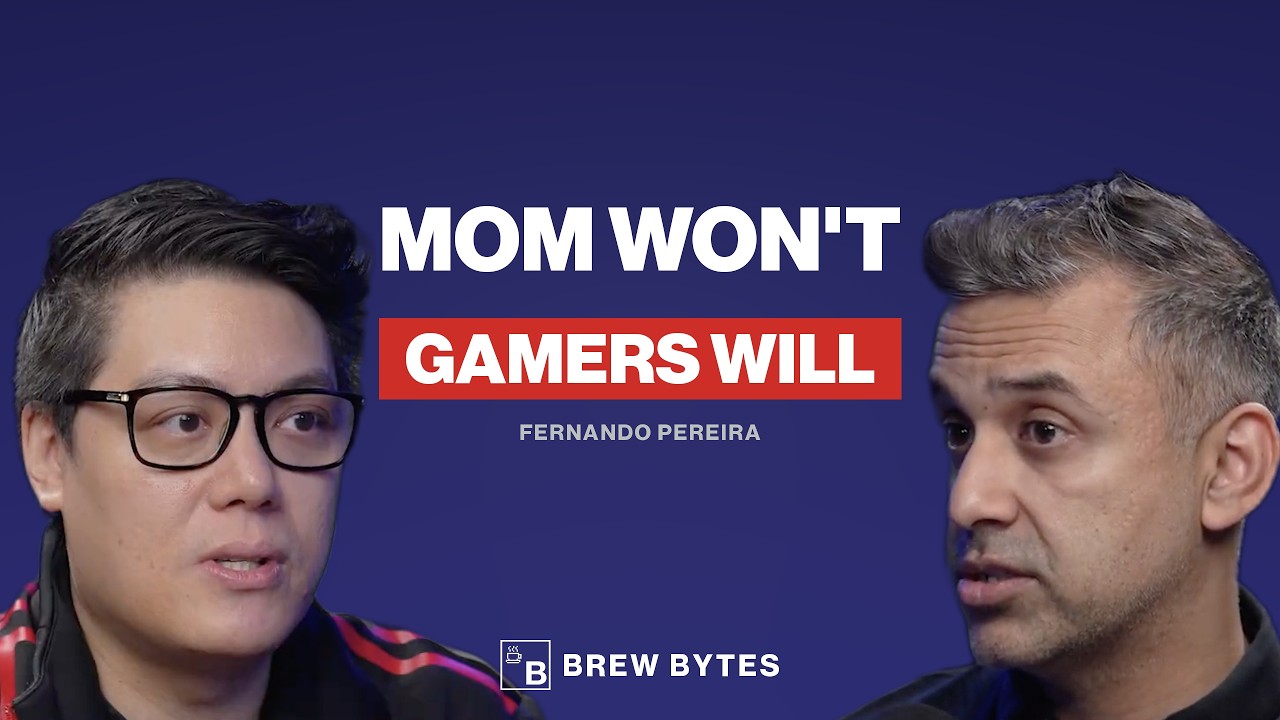
What if gaming isn't just entertainment — but cognitive training for the future? Fernando Pereira, Founder of Grow uP eSports, explores how World of Warcraft developed real leadership skills, why gamers are leading Web3 adoption, and the neuroscience behind virtual worlds reshaping human psychology.
In this episode.
Fernando Pereira joins Nadeem Ibrahim to reveal how virtual worlds are building the cognitive skills of the next generation — from leadership and teamwork developed in World of Warcraft, to the ethical challenges of moderation, anonymity, and the future of multi-sensory VR.
Guest: Fernando Pereira. Host: Nadeem Ibrahim.
Read the full transcript
I don't think we get we don't get that's a sad thing actually that's a very sad thing for anyone listening sad it's very sad you're making us sound very old because I think myself as a technologist a new as well I'm sure but then we're like oh my God we are old technologist we don't get what these kids are getting right there's a lot of trends that were popularized by other games like fortnite where for example they are hosting virtual concerts where it's attended by millions of people online just recently they had a Snoop Dog doing a at New York City Time Square what do you think would be the biggest opportunity and the biggest risk of living in a fully digital existence oh this is some Black Mirror this is some Black Mirror type of question hey there welcome everybody to another episode of Brew bites with me Nadim ibraim today we're uncovering a really interesting topic a topic that I feel quite passionate about and it's relatable to our day-to-day lives today
or perhaps the future it's around web 3 gaming Virtual Worlds and I'm actually joined by a very special guest that who I got to know a couple years ago but before we go into who this guest is he has made some amazing accomplishments he's nutured The Gaming Community he has had leaps and binds and made gamechanging moments around Virtual Worlds and spaces I won't go into more than that I'll let this person introduce himself in just a moment but welcome Fernando Pereira to the show everybody thank you so much for having me no it's a pleasure to have you Fernando look before we go into it right I like to ask my guest is that you know grown up what was your go-to game or video game and did it really have an impact on where you are today that's a little bit of a hard question because I've loved so many games over any different periods of my life I guess I started by playing Bomberman when I was really young with my sisters so for me kind of normalized the fact that I was a boy and I was
playing video games with girls and but I would say that life changing and defining moment was when I started playing World of Warcraft okay I think it was when I realized that it's such a dynamic game that gives the possibility of having and developing transferable skills to other real life workplace kind of skills as in like leadership teamwork collaboration and those are things that you can learn in the game and I remember being really shocked at that time because I read an article published by IBM called virtual world's real leaders and I was I never thought of myself as a leader of something as someone who would start a company who would be able to lead other people but I was kind of doing it as a kid inside this virtual world of Warcraft right and those are really transferable skills that you can develop through the game and then bring it outside and do something in real life with those skills so that really impressed me oh nice I mean that's
completely different from me the last few episodes I've not really come out with the game that I us I would I used to go to cuz it so diverse but when you talk about that and I think about my Super Mario Kart it's night and day I think I've experien this right absolutely did that ever did that have an impact of what you're doing today I think yes because what really made me like think about the what's happening in the ecosystem itself was that for me it was really normal to play with girls and it was just part of culture like in world of ourcraft but I remember at the time in my guild some of the girls I remember meeting that I did didn't know they were girls they were playing a male character they were like kind of not using the voice communication to not show that they are girls and I never really understood why but I guess after a while I started to realize that it was mostly because of the online toxicity that happens the harassment the thing that
you know it's kids playing video games behind a computer right so if they find out that it's a girl they are more likely to say some dumb stuff and to do a little bit of harassing and I think that toxicity is what kind of prevented girls from being so into games at least back in the day I think now things are shifting a little bit but back in the day it was a little bit strong it was almost like call it a dark web today but a different version of the dark web back then I would say right yeah a little bit it was not very friendly environment right and when you play games you want it to be fun so if you playing a game and you're constantly harassed and it's not really a fun experience then why are you doing it you don't feel motivated of course so today's topic is about you know web 3 H virtual spaces and worlds and you know before we go into that in a bit more detail I got to know you at a very special event in alola last year I think it was roughly and in that
Summit we were at we got to know so many people from different backgrounds and I think something that stood out from me with you was that you know your personal Journey around this whole ecosystem around Virtual Worlds and you know and from the Inception of gaming you know for the benefit of the viewers and listeners you know this understand a bit more about your personal journey to get to where you are today sure I guess it's really started as me being passionate about video games since a very young age I was growing up in maau during my primary school and I guess it was kind of part of culture to go to those arcades to play games together every time there was a birthday party or something like that we would gather at some marade to play games that passion just grew over time as games got better and a little bit it's hard to say more realistic because at that time it was still not that realistic but I think our perception changes for me it was really realistic I remember seeing
like Virtual Fighter one or two Mortal Kombat and thinking wow this is very realistic actually now I look back and I'm like wow this is it was actually pretty not realistic right at that time but our own feelings kind of Chang as technology develops so I got more and more passionate and interested in video games so back in 2002 when it was time for me to go to university I was playing games online a little bit competitively like first person shooters and I ended up joining this multi-gaming Clan the time called well at the time it was called the underworld preachers so it was a very like gaming culture kind of dark side of did they still exist yeah so that's how we became a grow up Esports which is the new organization we took the up from Underworld preachers and brought it into a more positive light because we kind of build it as a nonprofit organization out of Portugal and the whole concept is about personal development through games or
gaming for good so games are excellent storytelling mechanisms especially for young kids who are not paying attention to traditional media things like that so we try to use games as a mechanics to reinforce like positive reinforcement for preventing kids from dropping out of school basically creating all sorts of initiatives using gaming just as a tool to promote positivity and I guess that's what kind of inspired me more because as a community we were people from all walks of life sharing the same passion which was the passion for video games and from then we just started doing projects together so I think game has that power of uniting people of different ages different races different social backgrounds you know and coming together for a common cause common passion and then building something out of that we are building something more and expanding a little bit from there globally so it's a global foodprint organization now and I think it's really good
because we try to build this as a community and gamers are people who typically people who have an addiction so per se in gaming could be because they have some hard time in real life maybe with their family with their parents or maybe they're not very socially acceptable and I think that gaming has this strength of empowering individuals and giving them their you know their strength their uniqueness their voice in first in a virtual world but for example our organization we always try to do Live Events where we have Gatherings we actually meet in real life and this was back in the day when the internet was not that developed and I think that helped a lot from a community building perspective because we have people who are part of the community since very early they stopped playing games they started doing it their St but they are still part of the community when we have Gatherings anniversary every years they are always joining us so it's they're all Gamers yeah or they were
they are would I qualify playing snake on the Nokia I think it could gamers are everywhere now right it's hard to say that someone is not a gamer even someone who doesn't identify themselves as a gamer they're probably Gamers somehow yeah it was a stereotype about Gamers right Gamers were seen as that geek I always think of Die Hard do you remember that movie Die Hard yeah of course and he's trying to find the warlord and he goes into the bunker and he sees this big guy with a beard playing games and he's got like five screens on there yeah stereotype complete stereotype right and you're fast forward to today's world like you say everyone is a gamer yes by some background right and games are different as well it used to be very single player oriented that's why the notion of some fat guy in a basement eating chips and playing games alone and things like that now it's not like that now it's a is a social Paradigm where kids are finishing school they're going
home that's the way that they connect with each other with their classmates over fortnite over you know whatever game they're playing I think that's a cultural phenomenon now it's you dropped some things about some of the federations that you're working with right what what's been your gamechanging moments throughout your career that's LED you this point I'm not sure I would say that I've always wanted to allow so playing games and looking at the game scenarios I always felt that it's why is it based only on fantasy so I always had this internal passion and Mission that I Define for myself that I wanted to give people the ability of visiting places and getting to know real life places within a gaming environment I tried to do this back in 2007 2008 kind of out of University I actually use it as a as an excuse to drop out of University started my company that way and I think we were not able to be commercially successful at that time maybe because
technology was not where it is today there was a bit of a financial crisis happening 2008 2009 2010 especially Portugal I was doing it out of Portugal it was one of the most affected countries like Portugal Spain Greece so it was not easy to lift anything of the ground at that time but definitely technology was not at a good point but I would say that has been my passion and kind of inner mission that I always wanted to accomplish because I think as I was saying earlier games are such a good storytelling mechanism right it's the most compelling the most engaging the most like everything so using it for giving people the ability to learn things to have digital experiences to visit real life places I think personally it's something that I would use and I feel very compelled to but I would say that moment when I kind of decided to try and build something like that was for me was what shifted and did your did you don't mind me asking did your family
understand your passion behind the I don't think so I think I've always as many gamers myself I've always grown up hearing my dad and my mom saying that I'm wasting my time wasting my life playing games instead of you know doing something and now I think now they kind of understand a little bit better I think my mom still doesn't understand clearly what I do daily but I think now they accept and understand a little bit better just because the gaming industry has grown so much since then that there's a you know all sorts of careers being spun out from this for this industry and those are things that didn't exist back in the day like nobody thought that you could be a live streamer playing games and earning money nobody thought that you could be a professional commentator for a big tournament happening in some you know filling up 20 seats Arenas or something like that but those are the new generation professions yeah it is and you know one of the
areas we're going to unpick today is around about these viritual worlds I just find it so fascinating and if you think of just only a couple of years ago when zukerberg sort of announced you know the new of web 3 you know space it got people thinking but we were kind of already there in some respects right virtual space Virtual Worlds who do you see as the primary audiences for Virtual Worlds and we'll go into a little bit of what you've been building especially when you know you recently were at web Summit and you presented something was very insightful and inspiring actually I would say but for now I mean there an evolution and I go on the notion of the technology you have today will be the worst technology you'll ever have so nothing in technology is ever going to be the best that you ever have of course okay so we are we still at the Inception side of these Virtual Worlds and the second part of that question is who are the audiences that will be utilizing it in the early St of it and then where do
you see it going I do think that we are still kind of early because if you think about this new technologies like VR and it's not really new to be honest right I was working with some VR software and stuff back in 2014 2015 and VR has existed even a little bit prior to that with the Oculus with you know before you had cardboard you put the cell phone your cell phone inside those cardboard glasses from Google and you use it so it's been around for a little while and of course the use cases can be really good from a learning educational perspective but I do think that it hasn't yet picked up and you look at all these companies like apple launching this incredible Tech the Vision Pro goggles and they're really good I don't know if you had a chance of trying them I was very impressed and I had to use them without glasses so I was not even seeing that clearly but it was really Advanced really good problem is the price point obviously crazy expensive for consumer
goods like you could buy three laptops with that same price right and I think that that's one of the challenges for adoption but talking about Virtual Worlds I do think that the majority of early adopters are really going to be Gamers because they are the ones who understand how to navigate in 3D how to process microtransactions you know how to interact in a social online environment so those are the first wave of adopters of this kind of Technology eventually when things starts developing more I do think that there are professional use cases where you could have you know company headquarters people could do Meetings online kind of things that Facebook teased when they switch to meta and they did the name change I do think that those are still a little bit out just because the adoption of such technology requires certain types of knowledge that not everyone has it but as kids grow up as Gamers as we were saying that everyone are is kind of a gamer now especially you know under 20 years old everyone is
a gamer literally everyone but Fernando is like I read a recent piece of research and it values the space of which was basically about like $21 billion and it's set to grow by 15% by 2030 and then you mentioned that you know and we still to actually get to who are the audience of today right for virual worlds but is it not more of a generational thing because you mentioned earlier about your mom still doesn't understand quite what you do yeah and for our Generation you think we get it enough versus the Gen Alphas on I don't think we get it enough and I realize I I'm sad to be honest because I realize it when I look at the young kids playing games on their phone using their fingers like spiders you know doing their there crazy movements I cannot do that right and cuz that's not what I grew up with a traditional mouse and keyboard so I'm still this kind of old school Generation gamer I do think it's a very rudimentary tool you know being in
front of a computer with something that Scrolls on your desk to control your computer we still use it nowadays right but I do think it's kind of rudimentary in a way and these kids they are Next Generation they are really focused on using all these new ways of touch screens of new ways of interfacing with the machines that we just even if we understand it we just don't have the I don't know the dexterity I would say to use it so typically we don't I don't think we get we don't get that's a sad thing actually that's a very sad thing for anyone listening it's very sad you're making us sound very old cuz I think myself as a technology is a new as well I'm sure but then we're like oh my God we old technologist we don't get what these kids are getting right and they'll see it from a very different length than what we will see it right which countries do you think are the biggest adopters of these virtual spaces well South Korea for
once absolutely because they've just nurtured their gaming industry so much you can see a cyber cafe in South Korea like in every almost every other Street pile piling up and they're full which is incredible so I think from a gaming pers perspective South Korea is very developed on a cultural side and that has propelled them to have a younger generation who is much more open to adopt these kind of Technologies I would say maybe Japan as well since they have the arcades culture since very young and many years I think kind of progressive countries that try to have tried to include gaming as part of their culture are probably one step ahead one thing that I was amazed by was you recently presented something at web Summit in Portugal right I don't give it away I would love for you to go into a bit more detail because I think that takes virtual spaces of virtual worlds into another Limelight right and when you had demonstrated that to me on our sort of preall for this episode you know a month
ago I was amazed by the fact that how real it all felt and actually we're not just talking about theories we're talking about practical uses and that sort of stems with some of the initiatives that you're doing in Portugal as well that you we spoke about and I believe that these two are somewhat connected in some ways yes yeah can you maybe just elaborate what you presented at web Summit and of course I do think that one of the issues with this metaverse kind of thing is that a lot of people raised a lot of money Facebook burnt a lot of money like a lot of money with would be and I think that nobody really have been able to develop a product that had actual people using right with good user requisition and good adoption and that has kind of disincentivized people and investors especially from looking into this kind of Trends because the metaverse is a trend it's something that it is eventually going to happen and it's already happening in many places and in
many demographics it's just not our demographic unfortunately but it's already happening and kids are especially kids are spending a lot of time in this kind of environments and Virtual Worlds so what I was trying to build and I'm still trying to build is a basically a platform that allows people as we were talk talking about earlier to visit real life spaces in a 3D environment so we think gaming is an excellent tool for digital experiences and there's a lot of trends that were popularized by other games like fortnite where for example they are hosting virtual concerts where it's attend attended by millions of people online just recently they had a Snoop Dog doing a performance at the New York City Time Square and they had the equivalent happening inside fortnite and millions of people online watching the live performance right so I think that there's certain Trends and perspectives that are changing and these are opportunities that we want to try to
captivate which is basically allowing people to attend Live Events Within These virtual environments now the thing is that there's been a lot of Promise many other companies especially in the web3 decentralized space that promised and raised money to do such products and nothing compelling has ever come out until now and I think the rise of AI kind of shifted everything a little bit away where now people are more interested in ai agents all they want is anything related with AI which is fair right cuz it's a really good Tech now the thing is the metaverse is a trend that it's still Unstoppable especially with the Young Generation and you know as there's a generational shift where the future Professionals of Tomorrow are going to be the kids who are growing up with this Tech today they just they're just going to demand more of these things so we're trying to create a platform that allow people to experience places to visit places to
attend Live Events but all in a hyper realistic scenario where we 3D scan locations and we bring it into a virtual world environment social environments so that's kind of I mean I think that's amazing and you know first hand inspiring I mean what impact do you think they will have on some of the industries because you know you hear that in the tourism industry you know there's an investment of about $50 million already in some fo across some tourist boards investing in Virtual spaces because we live in a different world I think Co changed a lot of this and there was almost a wakeup call that you know the accessibility to different countries not so much because of diseases but also the fact that there's a lot of people who can't travel there's a lot of people who cannot experience places and or events absolutely and I like this idea you think of the cplay concert recently in Abu Dhabi that was a sellout and Al also in London if be a complete sellout and they just kept on adding new dates but
surely the expansion of that would be why don't I take a cplay concert into a virtual world and I can actually have 10 15 20 times size the audience that I'm going today Unlimited in fact unlimited yeah of course unlimited because you can instance it through different Cloud servers but exactly I think that now the technology really allows you to do like I wouldn't say even avatars cuz many of this performances over fortnite have been done with avatars and I think that many of the live streams that happen nowadays are still kind of like watching television and this is what gen Z and younger kids don't want to do they don't like watching television but watching these live streams is still kind of like watching television sometimes with a chat box on the side where you can throw some comments but this is not the real experience right so I do believe that real virtual experiences where you mirror events are going to be a thing where you can do volumetric scanning of the artists using a lighter
camera and basically hologram them into the virtual environments and they are really performing in a 3D virtual world and at the same time you can have an audience of like a lot of unlimited I would say people online maybe they couldn't attend the event maybe it's in a different country maybe it was too expensive to travel there maybe they are disabled and they are in a hospital bed and they've wanted to attend or maybe the event is sold out right there are so many people and so many reasons why they wouldn't be able to attend an event and having that possibility or having a real virtual experience online I think it's changing the technology is there but why are why is the entertainment industry kind of late to that adoption well the technology is there but you need a I would say you need a good platform that people would be willing to adopt right and as we were speaking early the first adopters are going to be Gamers which is not a small audience right but it's
still going to be Gamers it's not something that is generically like my mom my dad they're not going to download some game and go into some virtual events right it's just not part of who they are and what they grow up with so I think that it's something that will mature over time and yes the technology is here and it's possible but it someone has to come and put all those pieces together and then have to kind of hope that the Young Generation will come into this and be interested in using it and I do believe that that's the path forward talking about young Generations there's something else that you been doing with I think some of the governments right in Portugal especially what without being a specific example now where you're incentivizing children to if correct me if I'm wrong now you know to sort of partake in the space of G can you maybe like I think that's an incredible and quite clever idea to be able to instill in children to
advance their understanding of game technology especially yeah like just share a bit more detail about if you don't mind what that involves yes this is an initiative that we've been growing in Portugal my colleague Telmo is very involved in this and basically we are creating a space or spaces now where we want to exp expand it nationwide to many spaces so what's been happening is that the government in Portugal has many so-called youth spaces and when I say youth spaces it's a space that is supposed to be dedicated for the Youth for the kids but they are they have a ping pong table they have snooker table you know and kids are not compelled by that anymore so they're basically abandoned and empty so we did a first case study with the city hall of cintra where they got together with us as an organization and we built a Gaming Arena in one of those spaces right so we put state-of art computers we branded it as a gaming space everything we gaming chairs you know things like that and
we've started to work with the surrounding schools to have a connection with the school but the idea is to use gaming as a positive reinforcement tools to prevent kids from dropping out of school many of these kids who are in these areas in cintra are underprivileged they don't have access to computers at home maybe they don't just don't have this access to technology so our space has been able to nurture them and grow them as individuals who know how to use technology who are passionate about games and at the same time we are connected with the schools because the time that they get to play in our Arena to be coached by our players directly depends on their school performance so suddenly kids who are not interested in school at all they start were on the verge of even dropping out now they are very interested in you know doing their homework getting good grades and stuff because it's all connected with our space so this is like a
positive discrimination kind of situation where kids will have their fun time according to their school performance so they got to perform good at school to be able to play do you see that an it's a great initiative do you see that exponent to of other territories in the same manner yes we've had interest even from different City Halls whove wanted to do it as well now it's also a challenge because we need to grow our structure to be able to do it but I do see that this has Pro produced really positive results in the kids parents are very happy because you know kids who used to be in the street who used to not have any interest in school now they're actually running to help you know wash the dishes and things like that so they could come to the arena and play the games that they love look there was an interesting fact I read recently which was like of all blockchain usage of last year 49% of it came from gaming supposedly and when we talk about blockchain itself
you talk about web 3 now specifically in web 3 you know ambassadors in that space and even those who are champion in the space of virtual worlds and things you know have a certain degree of obligation and where I'm going with this now actually is that how can the community or the champions in the space ensure that one it's ethical and remains ethical and also remains to be inclusive of all because you know how I am today in this world here right now would be very different of what I could be in your space you know that you've just created for example right how can you ensure there's a level of you know this ethical approach to it and you know there's not the Dark Side of booing harassment and also the fact that it remains to be as inclusive as possible well you're putting a pretty hard question right cuz this is basically moderating the internet I'm not a master of opinion I suppose right it is how you regulate it I think it's going to be hard definitely especially
when you talk about web Tre and you talk about decentralization and you talk about anonymity which people love in the in this space right but at the same time one of the reasons why there's so much harassment as we were talking about earlier on the online gaming for women is because people are hiding behind computers right and when you're hiding and you just have your nickname there which could be anything you are you have a certain tendency of being a little bit more mean than you would if it was your face and if it was in real life so per se so I think that as things progress to a decentralization era I think that it could become a little bit toxic from a perspective of anonymity just because it's like Twitter right you look at Twitter or x and the comments that happened there and you go to see who made these crazy comments and it's someone with some Avatar it's not even their photo it's not even their name it's the anonymity that creates this sort of behavior
so it's definitely not easy to moderate and regulate I'm sure there's many different opinions about it I do think that if it was not from a anonymity perspective it would be easier right because you look at gaming in South Korea I don't know if you know but in South Korea they have about gaming where you need to have your real ID attached to your gaming accounts depending on which games you're playing and it controls how many hours you're playing it controls this is the a government initiative to prevent addiction to gaming because they even have anti- addiction centers right to cure kind of like drug addicts but gaming addicts so they try to put some measures in place to prevent people from being addicted but I think that's important though you know to have those measures in place because gaming can be addictive you could be playing for hours and hours on but this should be controlled by parents right especially in young kids but for that parents need to have an understanding of
a little bit of everything who are their kids playing with how long are they playing what games are they playing is it even suitable for their age but the problem is that because of this generational Gap many times parents don't have this understanding so they you know they go to they open the kids door at the room there he's playing a game he's like I don't know close the door there's I think they also have a built-in trust with the generation of kids to assume that they're making the right choices with the games that they play kids don't do the right choice they do the coolest choice right the coolest choice is so different from the right choice of course sometimes it's difference yeah absolutely but how do so on this concept I know I'm pushing a little bit when it comes to sort of Regulation or having measures in place it's just say what they have in South Korea is a good concept to have and I think when you mention about having your idea pended to some of those
games that you play with there's also security measure there also I'm presuming right and I think that's the other fear is you go into this I don't want to stereotype it as a dark space it's an it should be an exciting space but it's also that fear factor that I might not be harassed but I could be sort of bullied into thinking other things I shouldn't be thinking especially when you have gen Z's and gen Alphas who would be the biggest adopters in my opinion of this space they are the most vulnerable so is it an obligation on a on like country to country or do you think it becomes much more of a much more wider Global Manifesto where different organizations from government bodies the tech companies out there whether it's meta or whoever those types of ilks yourselves sitting around the table or tables you know to really sort of you know protect that space because you sometimes then start to think of these different scenarios based on the movies that you
have seen is it the Matrix is it you know I Robot like these types of craziness things that would happen yes but how like do you have a thought of it well I do think that there needs to be some sort of comma that comes together and starts to establish some sort of rules and boundaries of what can or cannot be done and how to go around it right but it's definitely a hard topic and ongoing topic and you see this happening not just in this virtual world space but also in AI space right where you have those Ai chatbots and they're supposed to be good they're supposed to be you know mental health coaches whatever but you do see some bad stuff happening to the most vul vulnerable people who are in vulnerable mental States and then chatting with these chatbots who sometimes could say the wrong thing for some reason which is a little bit unpredictable still and there goes a life right so of course because it's I mean we just look at social media and
with social media I think when some of those social platforms had picked up you some people have would have a sense of formal I'm not getting enough likes I'm not getting enough views or I don't have I only have 100 friends this person's got a thousand friends instant gratification feeling yeah and you know they were their most vulnerable and unfortunately it led to a lot of mental health issues for some it led to some unfortunate outcomes for some yeah you know Taking Lives you take that and then you say okay if I don't get this in this world I'm going to go to the web 3 world or the virtual world and see if I can be a doctor who has millions of followers who's coming to me for some advice in this virtual world y you you're at risk of replicating it but on a much bigger scale right you're living two different lives quite potentially MH you know it's interesting I think we'll I'll leave at that right cuz we can def challenges for the future
yeah no most definitely bring it back to Virtual Worlds so still like staying on that topic we talk about the evolution of it and you know my notion of it's the worst piece of technology we have today and it'll continue to get better and better do you ever see that multisensor will come into the picture I do think so but a lot of I don't know if you've ever experienced those 5D Cinemas where they spray you with some water they throw some smells at you things like that I don't think that's the way I think it's an interesting proof of concept so per se but I would much faster believe that the feature is going to be neuro simulation kind of like using Electro electrostatic magnetic stimulation so that it can induce your brain to feel certain smells or certain feelings or certain from your fingertips yeah you could do it not just from finger trips now there's people developing some neuro bands and stuff that is able to stimulate you magnetically or with some electricity to
feel certain things that freaks me out by the way replicating smells because what is it it's actually a chemical Connection in our brains right when you smell something so if you can replicate those then you can have a sense of smell without the actual physical spraying some perfume or something like that right I think that's probably more likely to happen rather than the thought of an electric pulse just zap in my head doesn't really sit well with me right oh is I mean right now you have a lot of reading applications right I don't know if you've ever tried those neural bands that you can wear like neural helmets and it can read what you're thinking you could be looking at a video game and thinking left and it's turning left and stuff like that this already exists it's reading your brain waves to do it so what I'm saying is just the opposite which is still a research field but I do believe it's going to happen do you think it'll have medicinal benefits
I think so it creates the experiences they it makes them more immersive right because then you're not just seeing them with your eyes you're also smelling the environment you're also you know I wouldn't say tasting yet maybe I don't know what I mean is those who have disabilities for example oh yes how would that would must impact them that must like unlock a completely different sensor for them that they can get today yes I really love this new developments and this new tech especially I've seen this Portuguese company and babble showcase their bands in a disabled person who wouldn't be able to even communicate and using AI they already interpreting this person's thoughts and transl into to the text to brain to text to speech right so he's actually talking but without being able to physically talk just by reading his brain waves so I think that there's a lot of research a lot of very positive application especially for disabled
people in this field brings us on to our closing segment of espresso encounters Fernando all right and I like this bit and I'm going to present to you two cards I still have the two cards here now okay I always do this all right beneath each card there's two different outcomes but like the metric Matrix but not quite the blue Pillow the red pill and you're not going to one of the logos should be red right it's true actually that's a good point actually but you're not going to go into a virtual world unfortunately right I'm zap you somewhere but one of these cards will be a question that's been left by a previous guest and the other card will be a question that's been raised by chat GPT okay and chat gpt's got to know a bit about you shared some information about you all right he's s of scrolled about you a little bit and he's put he's already like give me a question here worst case okay if that's the card that you unravel so I'm
going to put this here and I'll let you choose which one all right I'll do right one okay all right let's go AI it is so just so everyone knows it's is chat gbt okay I mean this other question would have been quite fascinating but maybe for another guest okay what he has said is if technology could allow humans to transfer their Consciousness into a digital Forum what do you think would be the biggest opportunity and the biggest risk of living in a fully digital existence oh this is some Black Mirror this is some Black Mirror type of question huh that is a very ambiguous question because I'm a I like when I was a kid maybe as all kids I was scared of dying and I always imagin a point where I would somehow reach a point where I could freeze myself wake up in the future you know realize wow everything is cars are flying and stuff like that and I do think that in a way these kind of AI Technologies do allow you to somewhat live forever kind of cuz you're not really leaving forever you as
your own physical self might will not exist anymore so per se but if you do download your conscience in such a way kind of like thinking of our brains are as hard drives right if you download it and you put it into some AI Avatar of yourself highly realistic yes it knows everything about you yes it's it has your memories it has your knowledge and things like that but is it really you not really right it just has it's just a clone that has all your information but it's not you don't exist anymore and you don't even know what's going on so per se but I guess that for other people that could be a benefit in a way that you know we nobody likes or nobody enjoys losing someone right and I think that if you had a way to keep someone alive to a certain extent just to facilitate your own feelings and to be able to have a some sort of a presence of this person who is no longer with us but kind of is I think that's an interesting angle to explore just
because it eases the pain for the people who stay I think that is an economy that's growing I'm sure you know I'm sure if not we've just created another economy Black Mirror economy absolutely but I think it's interesting Fernando it's been a pleasure having you H thank you so much for sharing a lot of interesting facts knowledge and especially your journey I find it very inspiring and I'm sure those who are listening and watching have got something out of it so thank you for having me yeah it's been a pleasure thanks very much and guys don't forget to subscribe share feedback whatever is the case and until the next time see you oh