The Agency Model Is Broken — And The People Who Built It Are Saying So.
Everyone blames AI for what's coming to the agency world. Sameer and Lawrence — two founders who've run agencies across the UK, Saudi Arabia and the UAE for a combined three decades — argue the model was cracking long before ChatGPT. Their charge: it's self-serving by design, and the people who actually power the work get the smallest share.
In this episode.
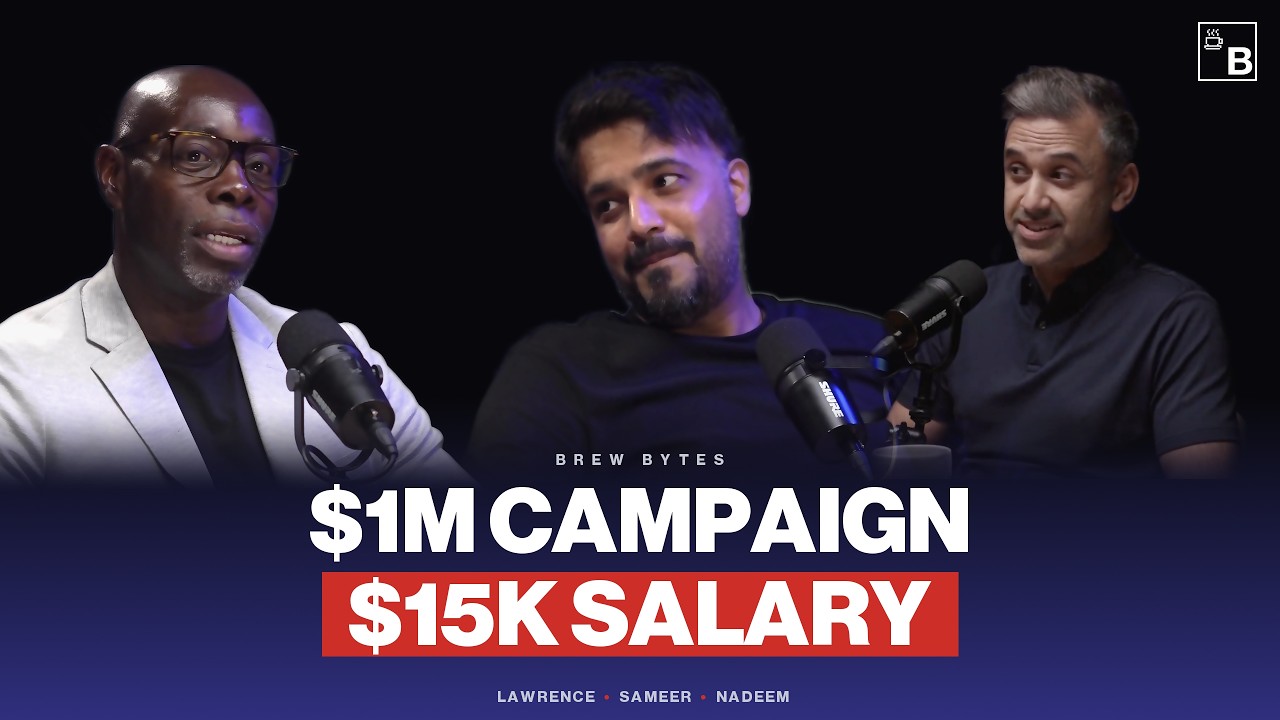
Host Nadeem Ibrahim plays devil's advocate — defending the craft agencies get right, from the Mad Men era to today — while Sameer and Lawrence make the case for tearing the model down to its studs and rebuilding it around transparency, specialists over headcount, and the one thing AI can't replace: the human element. A conversation for anyone who runs an agency, works in one, or signs the invoice.
Guest: Sameer Rehman & Lawrence Lartey. Host: Nadeem Ibrahim.
Read the full transcript
We disagree on so many things, but that's what makes it good. Because that means we challenge each other. And this is a personal opinion as an agency, when, you know, when we are together in one room brainstorming the energy of people, I think that's amazing. I don't think AI can replace that. But how you use AI and I don't these days, it's very cliche. Everyone is talking about that. How are you going to use AI? How are you going to do this? It's about the prompts and even AI. ChatGPT is hiring a content guy and paying him half $1 million. I don't know if you saw that. Yeah. Okay, so the thing is, the human element still adds to the finesse and stuff.
Assalamualaikum. Hey, guys. Welcome to another episode of Brew Bites with me, Nadeem Ibrahim. Today I'm joined by two guests, and I swear I think they're going to leave a sting if you're in the media or creative industries, respectively, or frankly, just anything related to media. these guys have been in Dubai for many years, and I've got to know them as some of my closest friends in Dubai and also acquaintances within the media industry itself.
I'm joined by Samir and Lawrence, and these two guys are trying to change the model of agencies. Would you believe that the model of agencies, and I've been in the industry for by 19 years, and I've seen people try to change the model of the agencies. I think with AI on their horizon is actually creating a gateway for that white space to occur. But I'm not entirely convinced, guys, and I'm playing devil's advocate here because it has to be somebody that plays devil's advocate in this manner. But I applaud you for what you are trying to fulfil. But I'm still not as convinced as maybe I should be. And I know we've spoken in the past before about what your desires and ambitions are, and I think wholeheartedly there is something there.
But I will really understand is how will brands really believe it? Okay. But before we go into it, first of all, Jens, thank you for coming on the show. Laurence, actually, before we sort of crack into things, just out of curiosity, because you've been in this space for quite some time, but there's got there was a life before all this happened, right? Absolutely. Mate, what was your first hustle outside of the Ice Palace system that then got you into this system? A good question.
my first hustle was actually in the business. Really? so I've been in media, new media since it's kind of inception in the UK. Okay. So I've been involved in the internet business ever since the.com boom back in 99. Yeah. you know, so I used to work in classified media, so I sold advertising in classified newspaper. Back pages. Back pages, centre page's front page middle page. So I used to work for an organisation page. Yeah, I worked for an organisation.
I was going to say that was his speciality, but yeah. Inside coverage. But, I worked for lute to back in the day. Okay. Right. So Lutte Publications was a classified newspaper. People back in the day, people used to look for ads in the newspapers. And, when they actually launched their online publication, I was one of the first digital media, online advertising sales guys at lutte. Okay. So I started my digital media sales career there, and then I moved from there to Thomson Directories, which was the traditional directories, and they started their online space and they launched a subsidiary called Info Space.
that was actually set up by Naveen Jain, one of the pioneers of, network advertising back in the day. So I've been involved since then and I've moved from the tech advertising side. I worked for DoubleClick, I've worked for, you know, affiliate marketing networks and, you know, various things. and in doing so, I got the opportunity to start my own business. I identified the fact that there was a gap in the industry back then for digital media services to be provided for small businesses. So back in the day, it was all the big companies, all the big brands and SMEs weren't really getting a look in.
Apart from maybe SEO, you know. so myself and a couple of other business partners, we started an agency called Pure Online Genius back in 2005. I love. The name. Yeah, and I ran that for about five years. And, yeah, we had some cool branding. And, you know, back in the day, it was all naming all of the services after all the big media moguls back in the day. And it was a long story, but, we did that. so that was really my, first hustle to actually start an agency business back in 2005.
specifically designed to serve SME businesses, ethnic minority owned SME businesses back in the UK. And we were quite successful in doing that. But I think back then was when was it? when.com came around. That was when yellow.com was around and AOL was still around. And you know, Lycos and infosec and all of this stuff was still around. And then in the mid 2000, you had the onslaught of the Googles and the double clicks and all this that started to change the media industry, and it basically cut small businesses out from online advertising.
Absolutely. Right. So, yeah, that was the, whole hustle behind that. Myself and two other business partners started that. We're quite successful for about five years until we decided to split and go our own way. Really. And we can get into, you know, the rest of the story then. But. Yeah. I think my hustle, kind of intuitiveness was really from my mother, you know? Okay. So as I was a kid growing up in north west London, I actually helped my mum to open a first store, selling ethnic clothing on Harlesden High Street. And before that, we actually had a market stall in Wembley Market and sold clothes on the street.
Right. So all of those things actually taught me to be a salesperson, to be a hustler. And as soon as I had the opportunity, I decided to start my own business. Amazing. talk. You give me a bit of a nostalgic moment when you talk about yell, what you did for your mom back in northwest London. Was tech ever something that you were ever really related to wear, and did you have like a piece of tech that you always thought of was like the go to tech that you grew up with?
My go to tech, was really my Walkman. Yeah, I know that sounds crazy. I'm that old, right? No. So I remember when the Walkman was out, before they were iPods and before anything like. That for many of us. Before MiniDisc, before CDs, you know, having that, you know, cassette Walkman, original Sony Walkman and being able to bop the street and listen to music with it was revolutionary for us, you know. And then when the iPod came out and things like that, you know, so we grew up in the days when there were no screens on phones.
You know, you actually had to send SMS messages, right? And wait for people to reply even before that. you know, I actually had one of my first sales jobs was working for a company called Milliken. Okay. Right. And they were the ones that introduced pagers. Pager. I had a black pager. Yeah, So, you know. So, yeah. Tech has always been around. Yeah. and we had to hold brick phones and stuff like that, you know? So my go to piece of tech was really the Sony Walkman.
I mean, for those who don't know what a Sony Walkman it was, but then as a tape cassette that you put in. Okay. And those who don't know what a pager is, a pager will be where you want to send someone a set character message, but you'd have to call the operator and he or she would type it, and then we'd send it as a Bleep 130 characters. And this was before mobile phones either can send SMS messages. You had a pager to send that SMS message. Right. So why.
Did you look at me. When. You. Were talking about pagers? Do you think I'm that young? Well, I have no comment on that one. Okay. Because we can go quite deep for now. But, Sammy, like, you know, before we talk about how you guys sort of came together. You had your own travel company, right? Yeah. Yeah, So. You know. When you talk about hustle and the word entrepreneurship, before even I knew it. I when I didn't recall, like, you know, when I was in school and stuff. I used to, like wing phones, like I used to cell phones, in London when I was in hamster school and stuff. So I was just selling phones to my friends and to my, you know, colleagues and, like, you know, like.
Second hand phones or. Second. Hand, great market phones. Great market, great reputation. Mark. Yeah, I don't know where they came from. I was just selling them and making my margins. Yeah, but I didn't know at that time that was, entrepreneurship, you know, entrepreneurship. And then, I when I went into my A-levels and I moved out of London to Milton Keynes, and I was playing cricket, and I used to be like good and good at cricket, and we used to play at a good standard.
And I was like, mate, why is why these guys paying £200 for a bat? So then I got an idea and I was like, I used to get bats made from Pakistan, put my label on it, and I used to sell £20 bats for like £150. So that's, this is I started doing that when I was in my A-levels and that's in my A-levels. I think I was making the most money in my class, and stuff. So that's where, the neck, the business neck, you know, start to come in. And then when I went to uni, I started my travel year in my penultimate year because, I wanted to take a year out and, you know, gain some job experience. but I was like, what better way? What better way to do it than, you know, starting my own travel company.
So in Milton Keynes, you know, there was for the Middle Eastern, South Asian markets, there wasn't any service based travel agents. If they wanted some tickets, holidays and stuff, they needed to approach people in either. Yeah, London or Birmingham and, you know, that kind of stuff. So we end up opening, a travel business. and in the first year I turned over £200,000. Wow. And I was like, wow. And, you know, the thing is, at that time, I was in uni and I was, you know, turning over that kind of business. I didn't understand the difference between revenue and profit, because back then, you know, I didn't know what the difference was.
So then I later I learned that revenue. Revenue is vanity and profit is sanity. But anyway, I made a lot of contacts. And, you know, that's where my business journey through. When I look back from see sports with the cricket bats and this travel then from that was also called Explore Travels. And then that made, you know, the name carried on when I founded explorer. And that's where, you know, we got some runs and stuff.
Yeah. I mean clearly kudos. You guys have got entrepreneurship right up your sleeve, right? Both of you, in your own ways, coming from different journeys that you've now come together. And. To me, you've been quite vocal recently. I saw an article that you wrote at camp Mina a about Day. You were very bold about it. The HCA model has broken. what pushed you to that point for you to say that? Because you have been in this market specifically for quite some time, this market, let's not forget, it's very different and atypical from any other market outside. Right? And, this market does things quite differently.
And the agency model here is a little bit different from what we've seen. In the UK. UK and West Europe. Exactly. So what pushed you to say that? Because it's quite a statement to make, because it transcends into this region as well as other markets? Yeah, no, that's a very interesting question. And it's got a very interesting background on it took me like. The thing is, we've been. So we started the agency in 2009. Like, I founded explorer in 2009, then Lawrence joined me. I think latter part of 2009, and then we remodelled because we were more of a consultancy in the beginning. Yeah, we were a consultancy providing training and workshops to some of the leading advertising groups, locally in England and also internationally when it comes to digital media and digital marketing.
So, we were a consultancy then when Lawrence joined in, you know, as, a, like chief strategist and, you know, like a partner in the business. Then we remodelled and turned, the agency into, like consultancy into a full service agency. Okay. So we've been dealing with problems as a consultancy. Clients used to share their problems. what's it called? Agencies used to share their problems. So we always knew. What is it that the client needs? And what is it that the agency must offer to the clothes. So that was the foundation of a year. And then 2014 if from Milton Keynes, we don't know. 2012 we first opened our office in Lahore in Pakistan.
Then 2014 we did a JV in Saudi and in Saudi. We were one of the first agency offering digital, social media and digital back then in 2014, if you look back, there were hardly any agencies. The main whole core, you know, agencies and companies were there, but they weren't offering these services. So we were one of the first ones and it was very difficult to sell, you know, social media to our clients there and mock media, digital media campaigns because like, they in, you know, this part of the world, they're like, I want to see my ad on the billboard.
Yeah, exactly. Because that's the kind of mindset you have. I want to see my ad on a front page of the magazine. Sure. So the thing is to sell that. It took us a while, but we did some really cool work. So that was the beginning. And in 2015 we made our base in Dubai and stuff. So now, since that, you know, journey and stuff. So what happened is that since 2014 to 2000, let's say 21, 22, we were, you know, some of the biggest brands, you call it the, automotive brands, French, automotive, Japanese. We they were our clients banks, were clients of some of the biggest fintech companies in Saudi were our clients. So, you know, we had experience of working with those.
But then after Covid, something very interesting happened. We took a battering, okay. As an agency. So when we took a battering, this is why even in my article, I mentioned that, you know, like at times, agencies also need to reflect and stay still because if you're not still you're not going to get ideas and stuff. And if you're not going to reflect, you're not going to be able to identify the challenges you're going through. So then when we took a battering, we made some changes in the agency. We had to let go of some of the staff. And then something dawned upon us, you know, like the cliched light bulb moment. I was in my.
I was in my apartment and I called him straight away. And his reaction, I'll tell you what his reaction was. And I was like, you know what? The agency model is broken and it's not like that. We didn't feel it when we were running the like, you know, we're still running the agency, but when, you know, things were going well, we used to feel it. But because your bottom line, at the end of the day, you were taking dividends out. Your company was growing 100% year on year. So it didn't really bother you. Yeah. but when.
Are you saying this sorry to button here. Okay. Are you saying this more? And Lauren's keen to get your take on this, but are you saying this more about our frustration? The agency was broken at that time because it's. It's been debateable for many years. Right. And Covid did happen change a lot for especially small businesses, but also affected the bigger focus as well in some ways if you worked in travel and stuff, It definitely impacted them, but it's out of frustration that this comes, and I'm quite keen to also from your alliances to understand like from a strategy perspective and creative, you know, when did you actually think I broke?
No, I'll give you the floor. Go, but I'll give you the floor. But I want to know it wasn't to do with frustration. It was basically to when we when that daunted on us. That agency model is very self-serving. That is where he's like, you know what? That's why it's broken. Yeah. It's not that the agency has done some really cool work, you know, like, and they carry on doing good work, but they are the people who are powering the agency business.
Are they getting the bulk of the share? They're not. I get that. And that is where it daunted on us that look that the, agency model is all about, you know, X amount of offices X amount of manpower. Yep. yeah, but your EBITDA is around 1,412%. But arguably you have been operating the agency model, right. Yeah. And still do. So what tipped Laurens. So look ultimately it's just like the nature of any business, is dependent on society. Okay. When society changes, the nature of that business should change. When technology changes, the nature of the business should change. Not too long ago, before any of us were born. Right. People were going around to what's horse and cart.
The taxi business started in London. And people used to get into a taxi cab, which was drawn by a horse. Okay. And that transcended across into New York and the United States. But when they made the model T Ford. You didn't need to have a horse.. You could now get a taxi cab. So all of the people that used to breed horses for the taxi business, what happened to them. Technology changes. And in that same way we have to go back to what it was that actually founded the agency business in the first place. Right. The agency business was born because post-World War II in the West. Right. We actually had to build an economy. This is when we started to have what they call a consumer economy. Before that, people used to grow stuff.
People used to make stuff. People used to do stuff. People had skills. People did this. We created a consumer economy. Once you create a consumer economy, you have products that need to be sold. Once you do that, you need to be able to market those products. That's when we start to see all the original. I'm talking the campaigns that were the foundation of the business that we're in. And agencies were born because a brand and a company needed specialist skills. You know you needed creative. You needed a production house. You needed people that could strategize and understand the consumers and the markets. Right? So this is the thing that was born. This is how the agency business was born.
And as a result of that, companies and organisations could not acquire all of these skills. Right. So they outsourced it. Yep. They outsourced it to that partner, that foundation partner that could be there and be accountable and create all of these amazing campaigns. Okay. Okay. Fast forward 65, 70 years, right? The internet comes and now we're in the age of AI, where technology has said, well, a lot of that knowledge is now available at the touch of your hand. So the retainer that I used to pay the agency to be able to be that repository of that knowledge and the repository of those skills, is that retainer really that valuable?
Now, when me as a brand. The thing I used to pay you for. I now have access to right now. Is it that I need to learn the skills to use that technology? Or do I still have to pay the agency to be able to use that technology on my behalf? This is the transition that we're going through right now. So it's not so much that agencies are no longer valuable. It's the model that the agency business can. I can add something to this, right.
Is now needs to evolve. Evolve. Can I add something to this. Another thing is now when we came up with this platform, the idea of how we want to change the business model, this was before AI was even big, right? Because our main, point was and it was based on, you know, like simple maths. Yeah, the simple maths is like are we as agencies delivering and powering the people who are delivering the business, right?
Or are we just lining up our pockets. Yeah. Look I, like I'm, on the fence in some ways. And you've spoken to me before about, you know, a what you have forthcoming. And I think it's exciting. You just got the guts. You know, when Uber came to really sort of re-energise transportation and then you've got other forms of tech that are in their own respective areas have, you know, really transformed what it means for that sector.
but in, marketing and media. I think, you know, agencies have got a lot of things right under the current or the dated models we want to call it. They have their models have allowed us or allowed them to produce some of the most memorable advertising, because that's what this is what it's in. Right. Look at the you know, when Martin Sorrell first came and then he created WPP. You know, he had this madman approach which was just really taking advertising for what it really meant. Yeah. Bringing in Bringing the best of the best to be able to deliver and forget. Goosebumps when I talk about this because it's so true.
And that's where the passion was coming. And you knew. You were getting a level of expertise and quality. I think over time. A brands have demanded a lot more from their agencies. Yeah. we live in an era where, you know, we have to be so agile with what the consumers want. The consumer now is at the heart of the advertising. Whereas before Mad Men days, it was more about we'll give the consumer what they need to know and we'll give consumer what we want them to believe, and we will give consumers how we want them to buy a certain product.
Right. Create a sense of demand and things that completely change. It's pivoted the other way around. So I think they've got a lot of it right. And they can convince me otherwise. But having said that, before we go in and dig deeper into sort of an open Pandora's box, right? AI in itself can also jeopardise quality and craftsmanship. When you see that ad that has got grit and passion. And I had a debate here once with a with some acidic from line creative agency. And we were talking about, you know, when you bring AI into the mix, you know, giving prompts and things that for me feels so different from when, you know, you have a director who has spent hours and hours or days and days to script out something for a client, and when he voices it, he could sense the passion, the feel, the authenticity that comes out right.
AI replaces her, and somewhere on the fence, the AI will still do a better job because it's just buying him time, giving him more time to be able to do these things. But I think if you go down the route of where AI becomes so cloud based and then talent becomes cloud based, then you're going to lose that finesse. You guys don't agree with that? No, I definitely know. I to some extent I do agree. To some extent. To some extent.
No Because let me I'll give you my reason for it. See the thing is this is another thing. We disagree on so many things, but that's what makes it good because that means we challenge each other. The agent I personally, and this is a personal opinion as an, as a as an agency when, you know, when we are together in one room brainstorming the energy of people. I think that's amazing. I don't think AI can replace that. But how you use AI and I don't these days, it's very cliched. Everyone is talking about that. How are you going to use AI? How are you going to do this? It's about the prompts and even AI. ChatGPT is hiring a content guy and paying him half $1 million.
I don't know if you saw that. Yeah. Okay, so the thing is, the human element still adds to the finesse and stuff, but how you use it to get to that, you know, at a certain level and how you, work with it. I think that that's what's going to make a difference. I don't think you can eradicate the human element or aspect of it, but I think you can make more of an impact if you use it. Well, that's what I think. I don't agree with you, I disagree.
I agree with that and I don't disagree with any of that. So all of this is about degrees of nuance, right. So again let's just rewind a little bit before the last 124 months. You know, since AI really had this whole impact. Right. Yeah. And what Sameer was referring to is when we speak about the agency model, we, looked at ourselves internally and said, listen, how are we treating our people? Yep. Right. And are we in this agency model really giving the people that actually do a lot of that work the value that they deserve? Okay. So now let's think about the creator economy that we're sitting in right now. And then you have the creative economy okay. Now a lot of the top creatives in the agency business have left.. Right. Why? Because they know that by themselves they can be more empowering into the industry. They can be. All the shackles are off. I can be a consultant, I can create, I can do strategize as a consultant. I can really create some amazing campaigns and work outside of an agency. Okay. And a lot of the other agencies now are hiring outsourcing strategy. They're outsourcing creative to these very same creatives that used to work in the agency. Okay. Right. And the reason why is because they are now being what's the word getting paid what they're worth if you like. Right on a monetary sense. And also they're released from the shackles of the agency confines.
Right. Because a lot of agencies are siloed and they do work on in a particular manner. Okay. You know, the produced the output is from a certain you go to one agency, you know, what kind of style you're going to get. You go to another agency. You know the style. It's the culture of the agency, right. And sometimes the brands buy into that culture. When agencies sell to brand, they sell the culture, right? They sell the mindset of the agency, the ethos of the agency, the way we see people, the way we see brands, that's what brands.
Is that not good though? No. It is. It's good. And the point is, that the agencies aren't going away. But the model we're talking about the business model, the way it works, because the one thing that you cannot take away is. The human. And the human element. So what do you have in an agency? You have account managers. What do they account managers do? The account managers are the bridge, the conduit between the brand, the client and the agency team. Right. And they're supposed to speak two languages. They're advocates. I advocate for the brand, and I advocate for my team because I know what resources we've got, the time frame we've got, what are the brands the clients were working on?
I need to manage that whole thing. If it's going to be lunch, I'll do it that way. If it's going to be remembering someone's birthday, but also understanding the brand, you know, account managers, right? Then from there, what do you have? You have strategists, right. And some strategy. You've got what planners and buyers, media buyers and stuff like that, right? You've got the production side and you know, so all of those things. So when you look at the technology, what is the technology really going to affect? Everybody gets affected to a certain extent. Creatives get affected. You know strategy gets effective, all that type of stuff. So it's about how does the agency evolve itself so that we can take advantage of all this technology, and then do we pass that efficiency on to the client.
Or are we still trying to keep that efficiency so that we can our bottom line goes, do you know I mean, there's some ethics involved in this. And the brands and the clients know it. They know if I if I'm paying you $10,000 a month as a retainer five years ago, is that $10,000 a month still worthwhile now? Well, no, I'm just saying, from a brand's point of view. Okay. Is it what's the most. Okay, then. So what would you think is like the most obvious waste of money then. And also and it all set up that you're like.
The thing is I think they in terms of that, I think personally, and I was talking to Lawrence about this, I was like, look, we've done it. We've done it because we run it agency and you learn from your mistakes. If you don't learn from your mistakes, you go to a pitch. You got ten minds. They're like ten people pitching and only two people are doing the talking. The eight people there are just to show that, listen, we've got size. We've got, you know, we've got we've resourced. We can you know, we can't, turn this around.
And you feel like part. Yeah, it's a fact. It's yeah it is, a fight. And also like what Lawrence referred to like you know, people leaving and stuff, you know, the agencies and all that kind of stuff. There's I don't know if you studied this, Adweek survey recently. Okay. In June 25th. Enlightening. Me and it said and it's about the whole Coke companies, okay, 68% of your employees are demotivated. That is an astonishing fact. Yeah, 68%. Why is that? Because they overworked. Underpaid, undervalued. They're bored of the same clients and accounts they are working on. Especially if you talk about creative.
Okay. You know, because they want more challenges. And then why is it that the majority of these, guys are still doing freelance work because they want to get paid, not just because of money, it's to challenge their creativity. We had our creative director, our ECD and our account, our art directors and stuff. They used to come to us and we used to allow them to do free work. We like, listen, do it because that will refresh, because I'm like, look, we've got these accounts. You know how much different creative can you do for our TV brand, for example? You know, it gets a bit.
If I, go back to your point about sometimes just showing faces to sell in, you know, the, support that an agency can bring for a given client. and in my own personal experience. But I've seen it is it's impossible to have a person that's going to be 100% dedicated, right? Definitely. Okay. But by you showing up to a pitch to show that you are interested from all levels of seniority, wherever need be, you are definitely showing desire that you haven't vested interest thereafter.
How they how much time they invest on the business. That's a different thing because they are not the ones who are delivering and executing. Right. Because later on then goes on. But that relationship that they have on that level of seniority or leadership. Does this right. Yes or. No? That's a very different way of looking at it. So my question was, you know, what's been the most obvious waste of money in the old setup that you see?
But I personally think as I, explained to you previously, as I tried to get it across, maybe it didn't come. I personally think it's that we've got too many people in an agency doing little work, what you think or doing, because the thing is, I think you need to detach yourself. No no I see this is so controversial because I see. I see people worked, especially in this region as well. I see people who are maxed out.
There are some maxed out. But then this is where the inefficiencies are there as well. Right. Because you've taken and again this is so it's not one factor you know. Like if you say like okay this is just because the agency have got too many people. No. Sometimes it is also another thing is that you promising why they're maxed out is because you are telling one client that this is the team for you, but whereas you're using the same team for another client.
So that is also a challenge. And so it's a combination of both the factors. The brands want to go with the agency because yeah, you know what I like the creative director I like this guy. Two months after the creative director leaves, if the brand signed up for the creative director, what did they do? They have a 12 month agreement, three month clause, leaving clause, you know, X amount of stuff. But they signed because of the creative director.
Let's look at another way then. Similar on loans like Upwork recently. I'm just reading here, actually, they're projecting like the freelance economy is going to be like a $500 billion industry by 2030. Almost the same size as the agency media business. Absolutely right. But let's not blame agencies for say, I don't know, it's ad agency to blame. Or is it because brands have just keep by, are comfortable with this model and keep buying into the model and not challenging the model?
It's a really good question. So now let's just go back. Let's stay around this whole thing that we're speaking about the people. Okay. I remember and, I'm a little bit detached from it now, but I remember there was a time that as, let's use this term boutique agency, you could not work for a big brand. You had to be subcontracted by one of the major agencies. Why? Because what the brands would say is we're not going to hire an agency unless they have 30 people and they've got billings or $5 million a year, and you're resource to $5 million. In other words, the agencies sorry, the brands would use the agencies to buy media on credit for the brand.
Literally what's happening is that the agency is buying media on behalf of the brand, hoping to get paid. Right. And that created a glass ceiling for new agencies coming up, you know, new skills and new technology that was coming into the space. And as an agency back in the day, we could not even win business with a fortune 500 business simply because we didn't have the people. So what happens is, that when you do start to get success and you grow as an agency, the first thing you do is hire more people. Why? Because, you know, you can win business that way. So when you go to a pitch, yes, you need to take these people because you just know that unless you can say, yeah, we've got, you know, five dedicated, you can have three account managers dedicated to your brand.
You're going to have two creatives dedicated to your brand. You won't get the business. So a lot of the time it's just resource which is acquired just to win business. Right. So in addition to that, Lawrence, I think one point which I missed and I think that is the key point, especially for us, and I've mentioned this like during this discussion as well, that we just think the people who are powering the agency's business, they're not getting enough value. Yeah, it's that is it. Because the thing is, you can win $1 million campaign or $1 million branding project. You still paying $15,000 a month in salary and netting.
So that's the big difference. This is about efficiencies of an operating cost for a business, right? Not just. An operation. I think it's different from what you're suggesting, because what Lawrence is suggesting is the fact that brands are comfortable by seeing a team of 30, 40 people rock up and say, yeah, and I get that. I get that because, yeah, Brands want comfort and assurance. Expertise is their speciality, is there?
And to your point, at the beginning was maybe about this transition of AI right now. Right. We're in like this sort of we was a word, but we're in the middle, right? I don't know. We don't know. What's going to happen, but it's going to happen, right? Yeah. But I think I want to. I want to stay away from you. Because your point there about you is because efficiency is one thing. AI is there to create efficiencies in this era. Right now is being used by sea levels and decision makers to cull or redirect talent in a different way.
Reduce numbers where efficiencies can be met by AI to fulfil certain gaps, and then nurture talent in another way. But from what we've been discussing now, is that team of 30 that rocks up to a pitch, for example. I think you said one of you actually said that you could swap 30 people for 30 clouds. Okay, so 30 clouds of talent that scout around the world. How can you ensure that chemistry is there? Because what we spoke about earlier was agencies come up with different agencies will come up with their own, their culture, their ethos, their approach. You're going to bring in let's just take the feathers example from different parts of the world. Different time zones, different thoughts, beliefs.
What is creative for them might be different from what's creative there. We even see it today. Ads that you see on TV today in this region looks so different from. Yeah, exactly. We're talking about this earlier. Absolutely. Yeah. Like the ads you see in the UK, you don't see the ads and the creativity is there. So how do you ensure talent and skill sets are to a level where brands, not just SMEs, because we don't describe the SMEs in SMEs, should be treated not any different from the big companies out there, right. The fortune 500, as you mentioned, they have the same regard. So how can you ensure that quality of expertise with the same ethos that you are bringing in, then okay remains consistent.
Without going into too much detail? Yeah. At this stage, you know, because we're still into development and stuff as well. But it's, very simple to be honest with you, Lawrence, I think touched upon this previous, like, you know, like a few minutes ago. It's like when you go into a pitch, they're like, yeah, I want this person onto that account and that person because they understand there's an agency ethos.
And but brands want to work with people who understand the brand ethos. So it's basically matching them with that same kind of resource. Someone who's got FMcG experience in Saudi Arabia, for example, for X amount of years, you know, someone who's got automotive experience in Egypt and they're launching a car in Egypt. So you match them with that, particular resource like a group of resource. So they understand because more then and this is again you've touched upon this point. And again this is another flow. Agencies bring their own culture and all that. And by the way, we're not against the agency model. No. We just think agency model needs to be evolved because these days brand equity has changed.
Social media has changed the game. Social media has changed again. So when? When? As an agency owner and we've done that when you go to a brand and say, listen, I want you to pay me 2 million to get one DVC. Why are we doing that? And it's also brands fault because the thing is, you want to charge a brand 2 million because you want to increase your. And again, because everything is interlinked, you want to charge them because you want to make your bottom line. But is that the right thing for the client? Because these days 2 million should give you 200 content pieces. But why are we charging them one piece of content with three different variations for the ad campaign so that we can run that?
Whereas if you produce 200 content, you might not need to spend media, because on social media, algorithms have changed now so much in comparison to 5 to 7 years ago. Yeah. If based on your interest you see that video and stuff. So this is my the what I'm trying to explain is that my point is that it's a combination of factors. This is what agencies need to rethink not change the completely. Rethink that. How are we going to charge the client? Are we going to charge them based on, you know, like a manpower? Are we going to charge them based on outcome? What is it like? These are the things because that give more value to guys.
If you look at other areas like Upwork and Fiverr, look at the agency as they are. Okay.. It's a perception thing I'm about saying here, but if I'm being honest, like, I know. Where you're going with this. Are we just slash if you slash costs you get cheaper output. Are you going to give better value for clout. How can you ensure you give them better value. But that's really not true okay. So it depends which costs you cut. Yeah right. So if you.
Like you don't need an office space right. So if that's a huge cost of course. Right. So as a business right. It's not just the office space. When you hire people, what do you have to do? You've got to pay their health care. You've got to pay their all of the. All the niceties and this and that and all of that does add to the culture. But you mentioned something like Upwork and you mentioned something like Fiverr compared to agency business.
What is it? They're not agencies, right. The piece that they're missing is the connection. They're a marketplace. What they're missing is the connection, right. So a brand is buying into the connection. So okay. So for example, in agencies, a lot of the time some of the people who are have the least value are the most important people. Right. So an account manager, for example, an account exec. Right. They're not very high up the totem pole. But how are they not the most important people?
Because they're the client. They they're representing. They're the ones that have to translate that client's need and desire and want on a day to day, hour by hour, minute by minute Basis to the rest of the team. Right. So what is it that I'm trying to say? What I'm trying to say is. It's that it's the skill in identifying who are the truly valuable pieces, okay? Making sure that they kind of remain and the pieces that can be fluid. You then bring in the most valuable pieces. So, as Sam was saying, if I am launching, a, I don't know, an Ood brand.
Okay. Okay. In the Middle East, the creative, the created, the creative and the strategist. Do I want a guide that worked on Mars? And just to say that just because he worked on Jupe or Fendi or E Salah on France, is he going to be the right person to launch, you know, an Ood brand in the Middle East? Probably not. But this creative and strategist that worked with Arabian Ood. Okay. For example, this is going to be the best person. Okay, so what do I want as a brand? Do I want to hire the agency that worked with SLR, or do I want that specialist that understands the Ood in the Middle East market?
So you're going to have to break through a lot of taboos, right, as how you see it. I there was a stop by PwC. I'm going to read that word for word that 62% of Comores say the field agencies are too expensive for the value that's been delivered. And it's kind of what you guys are saying. But if I'm a CMO, why should I take the risk of your model instead of just, you know, remaining with the network agency models that are out there?
First of all, you don't know what a model is. Okay. No, approach. That's what you say. Yeah, that's a very good answer. Yeah. Because that the thing is. Yeah. No, that's a very good answer. Yeah. and again, there's a lot of questions you've asked because I think we haven't completely gone into detail what our model. Yeah. And at the moment it's difficult to diverge into that information. You know completely all what we are saying is why?
Why wouldn't a CMO. I'll counter this. You know, why wouldn't a CMO, you know, want to work with this new model? If the CMO gets, you know, a dedicated team which is just working solely on that project. Truly. Yeah, Truly. Not a thing. There's complete transparency whereby they know that what rebates we're getting so that they can be passed back onto the clients.. in terms of that. So it's not just about, you know, being cheap in quotation marks.
No. It's about the value you're offering and you're giving them the best creative who want to work. Because all the people who are working on it, they're not freelancers, they're partners. True. They are partners in the business. To make them as partners in. Their skin. They've got skin in the game and stuff. And this is where because and these days there's a study that people want to live a nomadic lifestyle. We're giving them the platform to do so. Yeah. in. You asked a question earlier. You know, like they're scattered everywhere. How did Covid, where Covid had some of the best creative campaigns?
Because you allowed people to be comfortable. You allowed people to, you know, work from, you know, wherever they want to work as long as they deliver the work, you know. So the thing is, and by the way, not everyone it's not like, you know, the thing is, what we're trying to do is not everyone is going to be on their it's there's going to be a selection criteria and all that. So why wouldn't Samuel want to work with the top brass who has delivered, you know, top kind of work, previously in their roles and stuff. And they've got a vested interest because they got skin in the game.
So if you think of AI, what AI is done for some of the big tech companies, the Googles, the metas, the Amazons. okay. X, where AI has sort of come in and the forces of restructure reorg themselves out and they continue to do so. Time and time again, because investment is going into AI and its capabilities. And Just got to think about just even 18 months ago, we were saying, is I going to take our jobs? And I would sit here and say, no, it's not going to take your job. But now you're like, you've got enough. But now I'm thinking, actually, AI is taking jobs, but it's creating new skillsets to be required elsewhere.
Okay, so those big tech companies have been rapidly transforming themselves and changing and still navigating and finding, you know, what is the right calibration for themselves. They still haven't really sussed out. We see it every day. but what's it to say that, you know, and like again, I applaud for your, approach and your vision and what you've got in mind and stuff. And obviously we can't go into too much detail about it, but what's it to say that an agency won't wake up to think that, we need to change stuff. And if you look at Omnicom, an IPG measure that's about to unfold later this year, okay, will be the biggest powerhouse in the ad industry, media industry. They themselves in world would be thinking, I need to change things up.
Okay, yeah. With any major comes, you know, a big structure change and often that, you know, means these efficiencies that have to happen. But in the world of EDA, then in a sort of in a world of AI, they might be thinking, okay, maybe we can create a subbrand, some agency that can take an approach, that it's a bit like a fiver, a notebook where you can tap into the skills that you want for a brand, for maybe for SME branch or whatnot.
But if an agency was to speed up their process, how would you be able to cope on that front? I've got one very simple answer. Okay. He's been waiting. My answer is that whoever executes it better, you know good luck to them. and it's I I've never understood one thing is that why do people competition is good? That actually validates that you know where the market is going. And to be honest with you, I'm very pro agency. Yeah. We've been agents of this despite you being.
No, Otherwise, I hope I've not been up. To you at the agency. But the thing is, we are. Very pro agency. We just want agencies to give back to the people who are powering it. Yeah, and, you know, tell the clients what, not what they want to hear, what is right for the clients. Because we are notoriously known to self-serve ourselves. So these are the few things. And whoever does it, you know, good luck to them. It just actually helps us validate, get our message across that the model and stuff is changing. There was this I saw this LinkedIn post, of this creative director in one of the big hole core companies, and he left. And now he started up his, some farming brand in, Guildford. I didn't even know Gilford had farms.
Yeah, maybe they do or not, but you know, the thing is and he's like because again, the same thing they're not being valued. So he's saying like let value the people who power it. An agency model needs to evolve down that road. That's all you're saying. And if someone else want to join us, we'd be like, yeah, come, let's do it together. Lawrence FM let's just say it's like, let's just imagine that same day agencies fade out because of the whole model change. Okay. That's me. It might happen, may not happen, but let's just say it didn't happen.
Who's going to train an obstacle? The next generation. Lawrence would. Like. Seriously. Because they come through programs, right? And they learn and they get inspired and they see stuff, with AI and various other things that are common in the place. It makes it very difficult for them to come into the industry. But let's say the agencies did sort of fade out and sort of went their own separate ways and do their own things, like who would be training and nurturing these new talents.
I think everything's going to evolve. Okay. And I think the, form of education, okay, is also going to evolve. What do I mean by that? Right now there are people that are truly saying that schools will not be the way they are anymore. Schools, colleges and universities. The whole education system is going to change. I mean, that's very buck, right? It's not evolved at all. Right. Exactly. Right. Exactly.
It's still the same thing. It hasn't changed for literally. The only thing is you take your iPads in and that's it. Yeah. Well, the Minister of Education here has made it mandatory that AI becomes a subject. Exactly. Which is exactly my point. Exactly. So. But if we just think about how things could possibly go. Okay. and again, I'm going to go back to this same analogy. Let's go back to the horse and carriage and the taxis. Okay. What happened was the guys that used to have the horse and carriage and horses bought cars, and the guys that used to maintain the horses became mechanics.
Right. So yes, people lost their jobs, but whole new industries was created, around, you know, servicing the motor industry and so on and so forth. Right. who knew that these guys could become mechanics? Who knew? But they did. Okay. Now, what does that mean? It means that right now, we don't necessarily know, who's going to train the new people, but we know they will be trained. And generally what happens is it's society that does it. So I, had no formal marketing, advertising, training.
Okay. If he has my story, but I'm training those guys. I wasn't formally trained. Right. I trained myself, and only later in my career, I went back and did, you know, like, post education stuff just to have some credentials, right? and there are many people in the industry that were like that originally. You know, we learned from understanding what our family needed, understanding, you know, what our society needed, seeing the gaps in our own family and our culture and, you know, things like that.
There were people in society that were under serviced by products, you know, and it was the visionaries that came up with these new products for them. Right. And a new way of advertising to them. And I just think that when you're in, I think the word we're in a zeitgeist right now.. And when you're at the cutting edge you don't even see what you're cutting through. Sometimes you know, you don't see the bread, you don't see the butter. Okay. So I'm not saying that to avoid the answer. What I'm saying is that.
Maybe we don't have. The answer. We don't have the answer. But what. We do know. Is that the people that would need to be trained won't be trained in what we. Do. Of course. Yeah. In the sense. That. That's what I'm saying about the horse and carriage. The people that need to be trained were mechanics. There were no mechanics before that. We didn't know that to be mechanics. But we might struggle to understand it.
But. We struggle to understand it. But we do know that the way people are being educated right now is not the same way they were 20 years ago, and it's not the same way they were two years ago, and it won't be the same way they are in five years, right? So the education that they're going to need is going to be about the new ways of understanding humanity's interaction with products, services and brands. We don't interact with them in the same way that we used to. Okay. Before families used to sit around the TV and there was a big TV experience, whether it was.
Coronation Street or. Crossroads, and we all watched the ads in between and we were all amazed by the messages. Of course, now we all see the individual ads that we want to see based on our feeds, based on, you know, what we consume. And it's arguable whether that's right or not. But my point is that the way we all consume content, yeah, advertising messages is different. Okay. I literally do not see the same attitude. No I don't. You know, the subject matter, the content. I don't see in the same way, you know. So the education and the training that's going to be needed is.
I think things have come full circle. I think we're going to go back to the whole madman. So the thing about this madman character wasn't Draper. Yeah. Sick guy. Right. The thing about him is that he. He understood people. He I he was an example of that breed of that person. That people by people. People by people expertise. They don't by brand. And I and I've been caught. Do you know what in our business. Right. In our agency, I don't speak to brands.
Okay. If you're watching, listening. Okay. He will not speak to you know, the thing is, you know, you don't let me tell you. No, I tell you there's a reason why. But the thing is, we. This is exactly how we do it. We tell brands, you don't know. What the hell are you. Talking, you know? And the thing is, because we don't. And we don't want to work with brands who do not, you know, expect us to be transparent. Right? And that's also another thing which is broken in the current agency model. And I think you know it.
But we'll save that for another day. We'll see it another day. I can see the cards because we're. Yeah, We're almost finished, unfortunately, and we can talk for hours. And I definitely will have you guys back on Blue bites. to probably just when you've had to launch. Yeah. Yeah, I think so. Definitely. We'll be able to delve into things a bit more. Absolutely. I'm probably have a lot more controversy exactly on our hands. But before we finish, I'd like to have a bit of fun with you guys. Do it. I got two cards. One. Are you going to. One of you will select one of these cards. Okay. One will be. I have no choice but to have the other card.
I'm going to select the card. And your choice under each card is a question or something. Don't be asking any personal. One of them is one of them has been vetted online on one. Oh, yeah. And one of them is. By one of your. Subs. Yeah. And one of them is written by, I guess from the past. Okay, interesting. So I don't even know. Roughly. Okay. But I don't know actually what the question might be. So I'm just going to put both cards here.
Oh. I think it's going to feel like one of you guys. All right, let me take this. So you think of that. And I guess. This one's mine. Okay, so what else you got? So you could see again what's been here? Okay, Lauren, read your question before we crack Samir. The question is, which a sci fi novel is most likely to manifest in reality. Oh, God. That's interesting. Are you into sci fi books or you're into. Something a little bit?
Yeah, which sci fi novel? I think a couple of them. Isaac Asimov foundation. Okay. currently, he's currently on TV right now. Amazing production on Apple TV Foundation. but that's a good. Yeah. 20,000 years into the future. So let's go backwards. 2001 A Space Odyssey. Okay. I think 2001 A Space Odyssey is pretty much manifesting as we speak.. Yeah. and I say so because. Are you familiar with this whole object that's entered our solar system?
No, I think that deserves a podcast on its own. So I think we are now moving. Into this didn't come to me. I think we're moving to the next 4 or 5 years. Okay. I think the obvious manifestation of extraterrestrial life will be okay. It would be, my goodness. It would be. Okay. Interesting. You won't be able to deny it. And I think it will be one of the things that will move humanity forward in a really, positive way.
Okay. a lot of people are afraid of it because they, you know, the whole thing with, you know, spirituality. And does God exist and all this type of stuff? but I think 2001 A Space Odyssey, and I think man's connection with extraterrestrial life and trusting the meaning of life. So maybe he's going into extraterrestrial life now. Oh my God. Okay. Like you asked the question or someone asked that. I think Matt asked the question.
I'm glad I didn't go. I would have said something really stupid. Yeah, well, you know, we know about that offline. Okay. Like. Samir, you ready for this one? Oh, if I wiped out agencies overnight, what's the one thing you'd actually miss? And what's the one thing you'd be happy to see buried forever? Oh, okay. I hope none of my clients are watching this. But talking to clients on a daily basis, I'm not going to miss that. Okay. For, you know, well, some of the clients. Yeah, maybe I do, but. Yeah, that's one thing. and what was the other part?
What's the one thing you'd be happy to see buried for them? Oh, that's the. One that's. Buried. What's the one thing you'd actually miss? I think coming up with the, you know, creative, solutions to the problems. And it's so varied. I think our industry, by the way. Yeah, it's the only industry which is not stagnant because you can have an automotive. You have to learn about the automotive industry. Like we had to learn about automotive lubricant oil.
Like the viscosity, the thick and you know, that kind of stuff. So yeah. So the thing is until unless you learn about that, you can't really come up with concepts and ideas and all that. So that that's one thing which I'll miss and even and I by the way, I'm a big advocate of the, fact that, you cannot take the human element away from, you know, coming up with those kind of ideas and all that so that, you know, coming up with concepts and you cracking those up and stuff.
So that's something which. Miss Awesome guys. Look, Samir Lawrence, it's been amazing having you in this. Thank you for having us. I mean, I think the questions that you raised are, you know, are a controversial but need to be asked in the industry. And for you guys, you know, I wish you all the best, wish all the luck in the world. I know that you will have you back on to talk about how the how that unfolds. How convinced are you on the.
I'm. I'm still on the fence. I'm going to be I'm going to remain neutral. Until. I do. I'm going to remain neutral. Fair enough. and maybe in a few months time, I'll be convinced otherwise. I mean, I am almost convinced, but I'm going to remain neutral as much as possible and impartial as much as possible. Also positive. This is. The idea. Positive change. I think the just having the discussion makes a difference. Yes. And people need to start discussing these topics.
Yeah. So James thanks again. And guys, if you took something from this which I imagine you have done, so if not, it's probably sparked a lot of questions in your mind, probably sparked a lot of questions to think, what am I going to do next if AI is going to change the model of how businesses in the agency world run today, you know, do share, subscribe. And until next time, see you.